
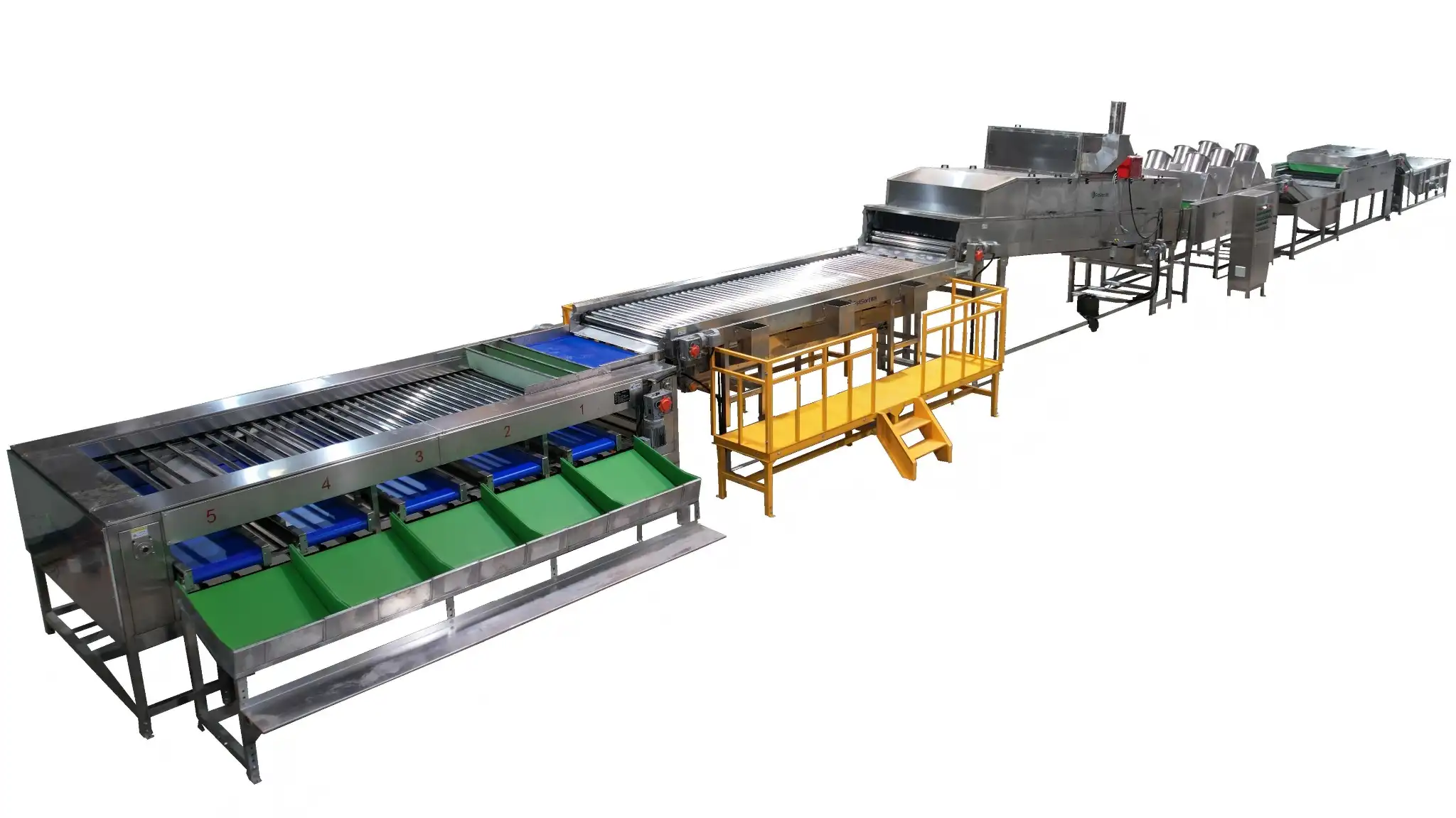
Fstsort sweet potato processing line: washing, brushing, drying, and sorting. Choose roller grader (diameter) or AI optical sorter (detects mechanical damage, rot, cracks, deformities, foreign objects). 3–18 t/h, ±3g accuracy. CE certified. Get quote.
Product Overview – Complete Processing Line for Sweet Potatoes
This Fstsort sweet potato washing, drying and sorting line is designed for high-capacity commercial processing. It consists of:
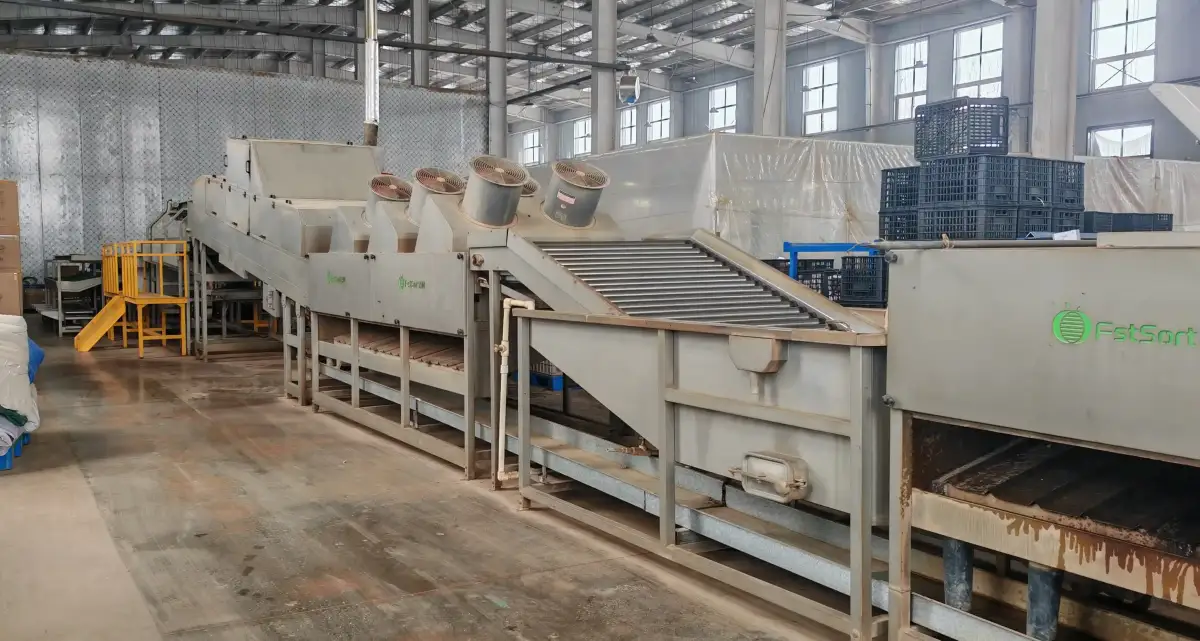
Water tank with roller elevator – pre-washing and feeding
Brushes bed with high pressure water sprayers – deep cleaning
Air drying machine – removes surface moisture (hot air dryer optional)
Size grader or AI optical sorter – final sorting (you choose)
✅ Fully stainless steel line – all food-contact parts are stainless steel.
Key features:
High efficiency
Strong and cleanable water tank
Soft and durable brushes – reduces chance of damaging products
Variable speed
With CE certificate
Gently delivers product – minimum damage on fresh produce
Roller inspection table can be added if you need manual sorting
Hot air dryer can be added if complete drying is required
Typical parameters (customizable):
Parameter
Typical Reference Range
Capacity
8–10 t/h
Number of grades
3–6 (customizable)
Dimension (mm)
16010*1630*1270 (reference)
Voltage
380V / custom
Power
12.2 KW (reference)
Material
Fully stainless steel (food contact)

Two Sorting Options for Sweet Potatoes
After washing and drying, you can choose between two sorting technologies:
Sorting Option | Principle | Best for |
|---|---|---|
Roller Grader | By diameter | Basic size grading, high capacity |
AI Optical Sorter | By external defects (AI deep learning) | Removing damaged, rotten, deformed, or contaminated sweet potatoes |
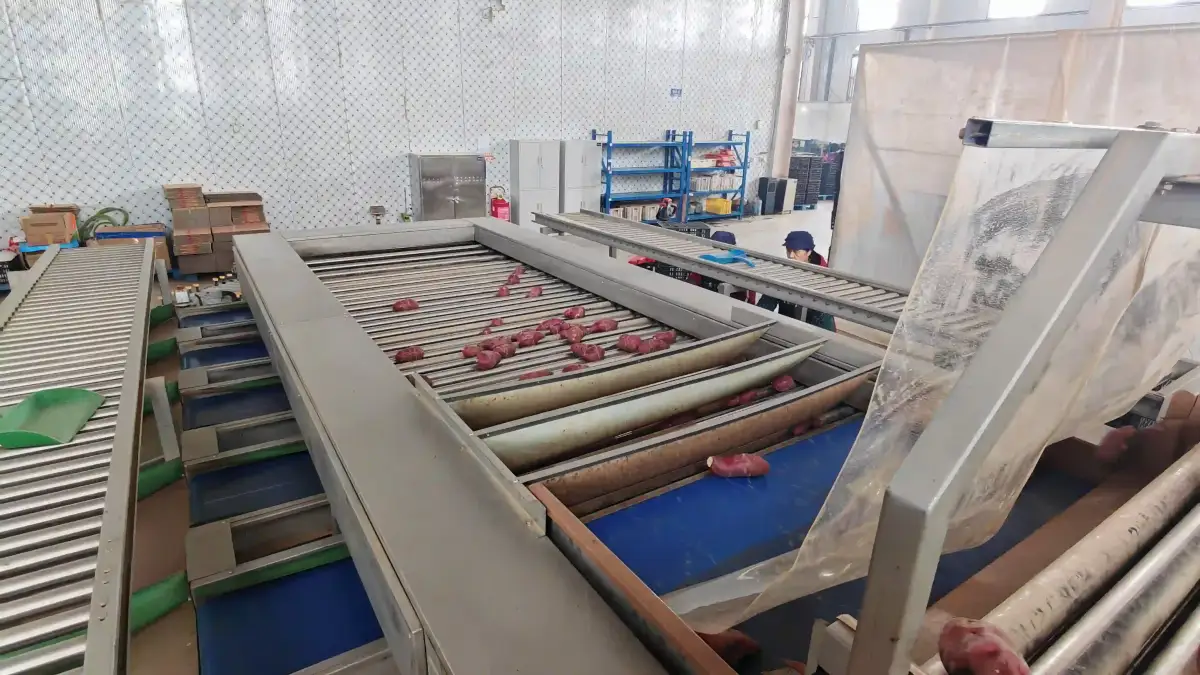
Option 1 – Roller Grader (Diameter Sorting)
The roller grader sorts sweet potatoes by diameter. It is a reliable, high-capacity solution for basic size grading.
Typical parameters (customizable):
✅ Fully customizable – Grade count, capacity, and dimensions can be adjusted to your requirements.
Option 2 – AI Optical Sorter (Deep Learning Defect Detection)
The FstSort AI sweet potato sorter uses a deep learning convolutional neural network (CNN) to detect and remove defective sweet potatoes with exceptional accuracy.
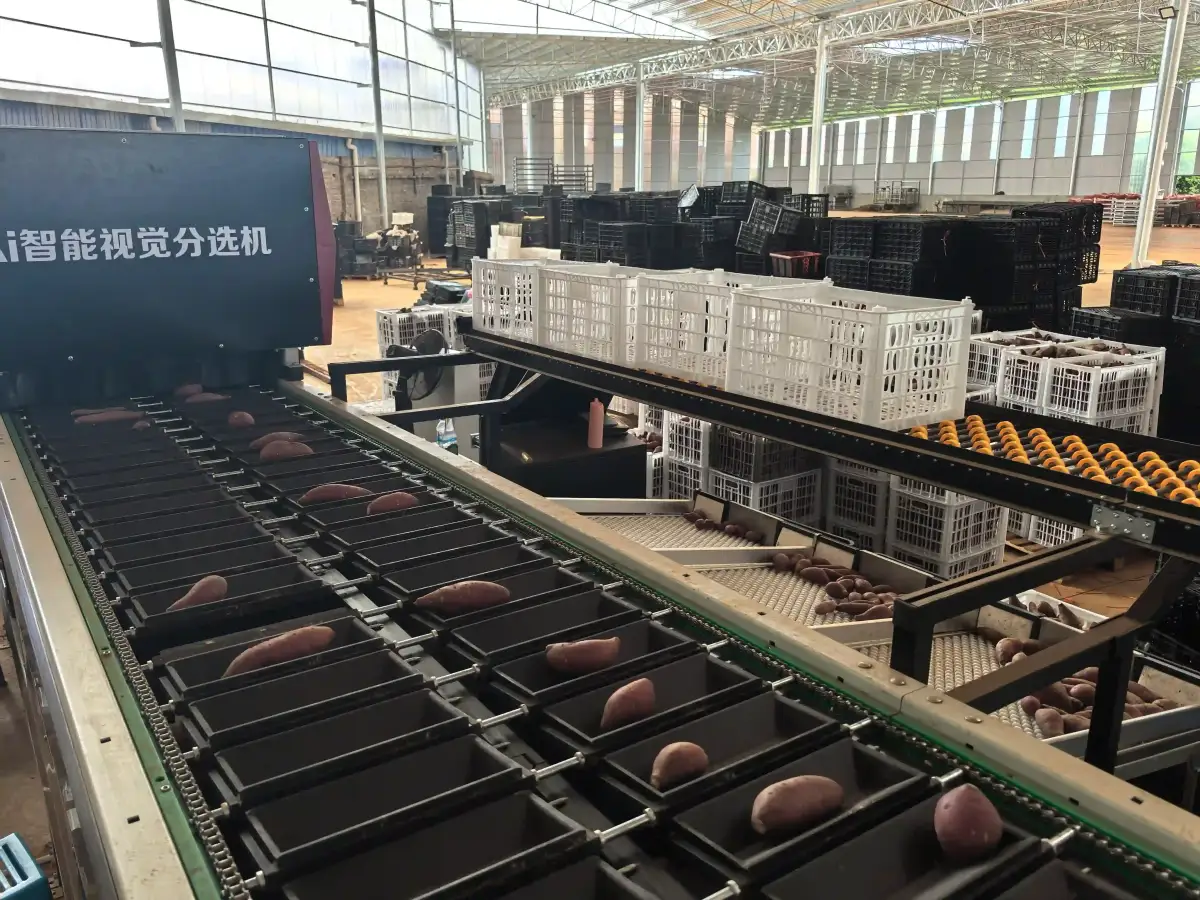
How AI Technology Works
During initial setup or product changeover, the system is trained by analyzing thousands of sweet potato images (including both acceptable and defective products). The AI then builds its own "acceptable" and "unacceptable" criteria based on your preferred features – such as surface integrity, color uniformity, and size.
💡 The AI learns your standards – not just fixed rules.
Detectable Defects
This machine is specifically designed to address the unique challenges encountered in sweet potato processing. It accurately identifies and removes:
Defect Category | Specific Defects |
|---|---|
Mechanical damage | Cuts, abrasions, impact marks |
Pathological problems | Externally visible rot, sour rot, black rot |
Physiological problems | Growth cracks, rust spots, deformed / misshapen products |
Foreign objects | Stones, stems, leaves, clumps of mud |
✅ Any defect that affects market appearance – the AI can be trained to detect it.
Technical Specifications
Parameter | Value |
|---|---|
Weight sorting accuracy | Dynamic weighing, error < ±2g |
Camera coverage | Two cameras per channel – cover >85% of surface |
Missed detection | Negligible |
Capacity per channel | 3–4 t/h |
Number of channels | 1–6 channels (configurable) |
Total capacity | 3–18 t/h |
Channels & outlets | Customizable |
Integration with Existing Lines
Yes. The AI sorter can be seamlessly integrated with your existing production line:
Upstream – after washing, before peeling
Downstream – final inspection before packaging
Custom connections – we offer custom pipe connections and hopper designs to fit your existing layout
Easy Operation & Maintenance
Operation:
Brief training enables anyone with basic computer skills to operate
Computer-based control unit supports remote assistance and video guidance
Maintenance:
Wear parts – Fruit cups can be replaced individually in 2–5 minutes
Sensors – Periodically check load cells; remove debris with compressed air
Calibration – Perform monthly or as needed; takes about 2 minutes
Software – No routine maintenance; remote upgrades available
Design – Tool-free cleaning of observation window; LED lights rated for 50,000+ hours to minimize downtime
Return on Investment (ROI)
Most customers recover their investment within 6 to 18 months. AI intelligent sorting delivers:
Benefit | Impact |
|---|---|
Reduced labor costs | Replaces dozens of manual sorters; one worker can manage 2–3 packing conveyors |
Increased output | Stable, efficient operation unaffected by working hours or fatigue |
Lower losses, higher yield | Consistent sorting standards eliminate subjective human error |
Food safety & enhanced image | Automatically removes rotten or moldy sweet potatoes; modernizes production with AI technology |
Complete Line Configurations (Customizable)
We have built several configurations for sweet potatoes. Below are reference examples – your line will be customized to your needs.
Not sure where to start? Let our Sweet Potato Grader Buying Guide walk you through→
Sweet potato washing drying sorting machine we customized
Configuration A – Standard Washing + Drying + Roller Grader
Bubble washing → High pressure sprays & brushes → Brushes & air drying → Inspection table→ Roller grader
Best for: Satandard washing cleaning, basic drying(remove water droplets only) and diameter sorting.
Sweet potato processing line for Nigeria
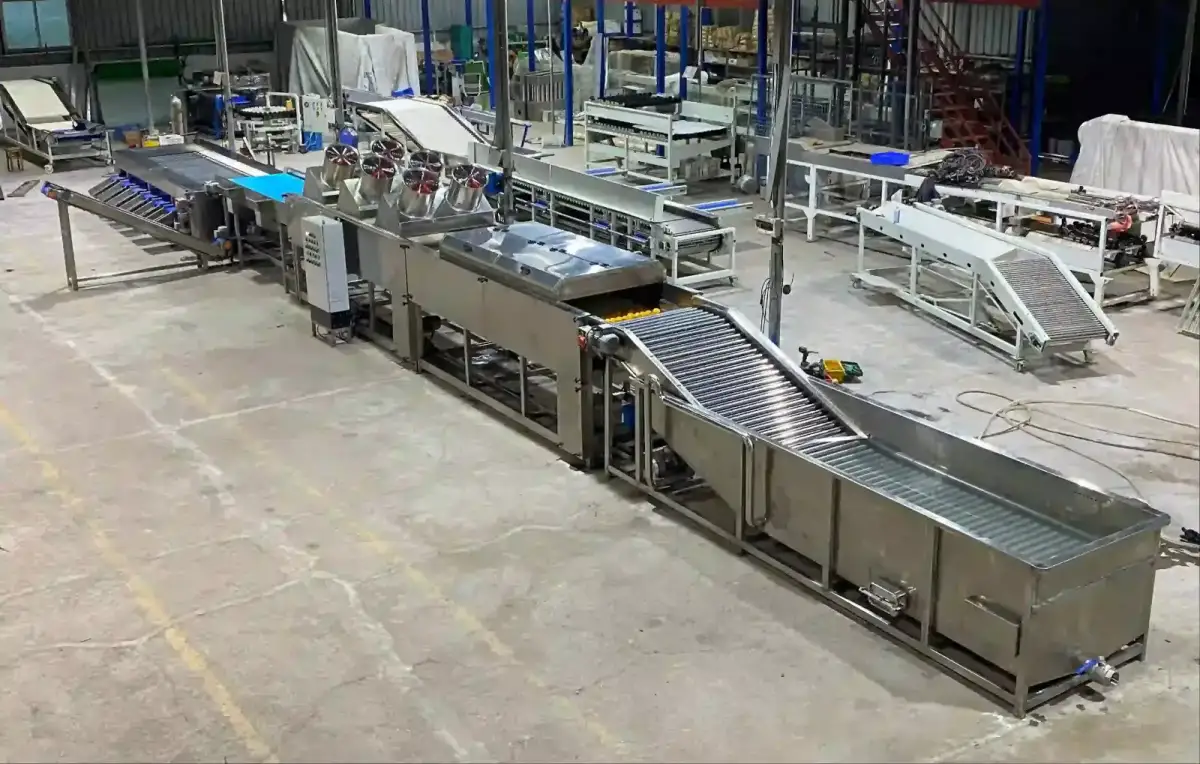
Configuration B – Extra Drying + Roller Grader
Bubble washing→High pressure sprays&brushes→(Chemical tank)→Brushes& air drying→Hot drying→ Inspection table→Roller grader with packing table
✅ We customized this line to ensure 100% dry on sweet potatoes – essential for long-term storage or bagging.
Configuration C – Washing + Drying + AI Optical Sorter
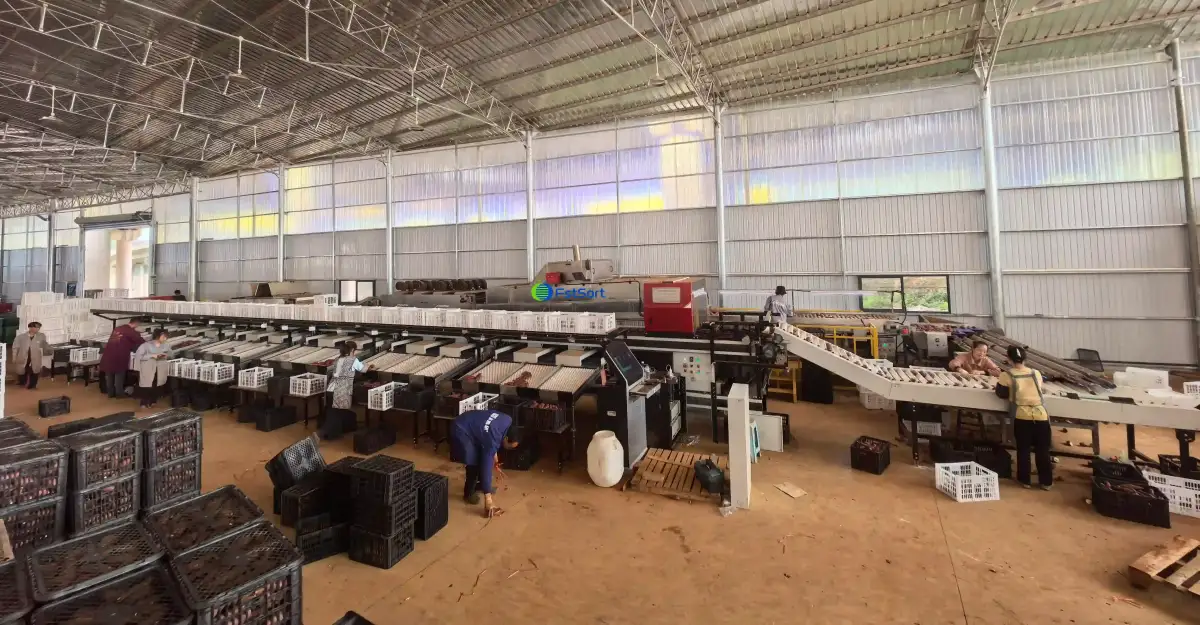
Sweet Potato Washing, Drying & AI Optical Sorting Line installed in China
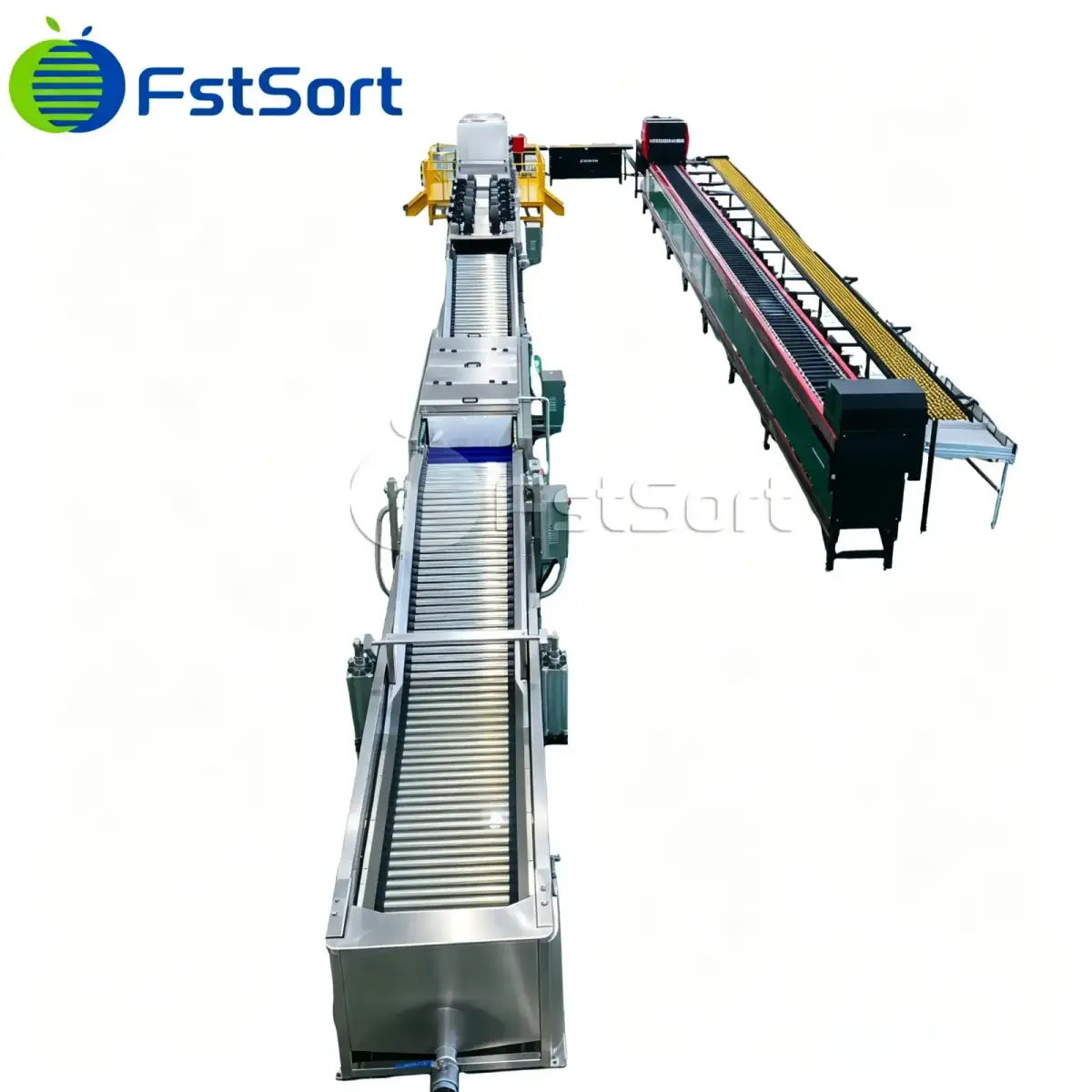
Sweet potato optical sorting line for European client– removes defective sweet potatoes automatically with deep learning technology.

Frequently Asked Questions
Key questions customers usually ask before choosing this solution.
Will the washing and grading process damage the thin skin of sweet potatoes?+
No. Our equipment is specifically engineered for thin-skinned produce. We use soft, durable nylon brushes similar to those used for tomatoes to ensure deep cleaning without scratching the surface. Additionally, our latest models have reduced the drop height between stages to just 7cm, providing one of the gentlest handling processes in the industry.
Can this line handle sweet potatoes from very muddy or clay-heavy soils?+
Yes, we offer customized cleaning configurations based on your soil type. For sweet potatoes from sandy soil, a bubble washing tank and light brushing are sufficient. For those from mud-heavy or clay soil, we integrate high-pressure overhead sprayers and a 50-brush cleaning system to ensure every crevice is thoroughly cleaned.
How dry will the sweet potatoes be after the drying stage?+
We offer two levels of drying. Our standard high-pressure blowers effectively remove water droplets from the surface. If your market requires a "completely dry" product for immediate retail packaging, we can integrate a dedicated hot air drying tunnel into the line.
Can the grading size be adjusted for different sweet potato varieties?+
Yes, we offer two types of grading systems: Fixed-size Roller Graders and Adjustable-size Roller Graders. The adjustable version is highly recommended if you process multiple varieties (such as Beauregard vs. Japanese Sweet Potatoes). It allows you to change the gap between rollers instantly, ensuring precise sizing without the need to replace components.
How does the FstSort washing tank handle heavy mud and debris without clogging?+
Traditional tanks with net-chain elevators often get jammed by sediment. Our advanced system combines a Bubble Washing Tank + Roller Elevator + Air Generator with a unique Pneumatic/Power Lifting Function. With a simple button press, the entire elevator and roller bed lift up, exposing the tank bottom for easy access. Combined with our oversized drainage valves, even large debris like roots and heavy sludge can be flushed out quickly, minimizing maintenance downtime and keeping your line running at peak capacity.
How does AI technology detect defects in sweet potato sorting?+
Our machine uses a deep learning convolutional neural network (CNN). During initial setup or product changeover, the system is trained by analyzing thousands of sweet potato images (including both acceptable and defective products). The AI then builds its own "acceptable" and "unacceptable" criteria based on your preferred features (such as surface integrity, color uniformity, and size).