
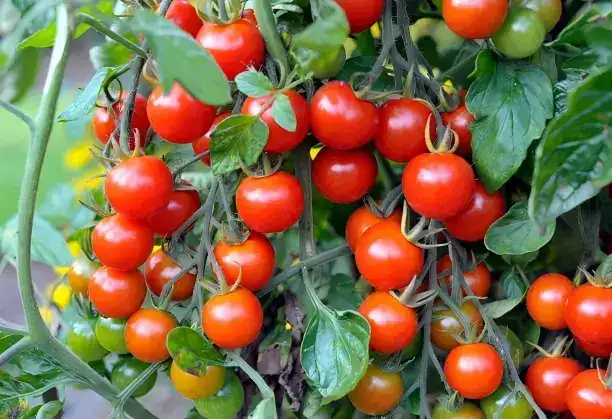
Manual grading is often less than 70% accurate, leading to post-harvest losses of 20–30%. For thin-skinned cherry tomatoes, this means margin quietly disappears at the grading stage. This article looks at that hidden cost and explains how Fstsort's integrated wash–dry–grade design delivers accurate grading without damaging the fruit.
Cherry Tomato Margin Is Being Sorted Away at the Grading Stage
Cherry tomatoes command a significant premium in fresh markets, yet much of that margin is lost at the grading stage.
Manual grading typically achieves less than 70% accuracy, contributing to 20–30% post-harvest losses—not just a speed problem, but one of misgrading, damaged fruit, and eroded premium value.
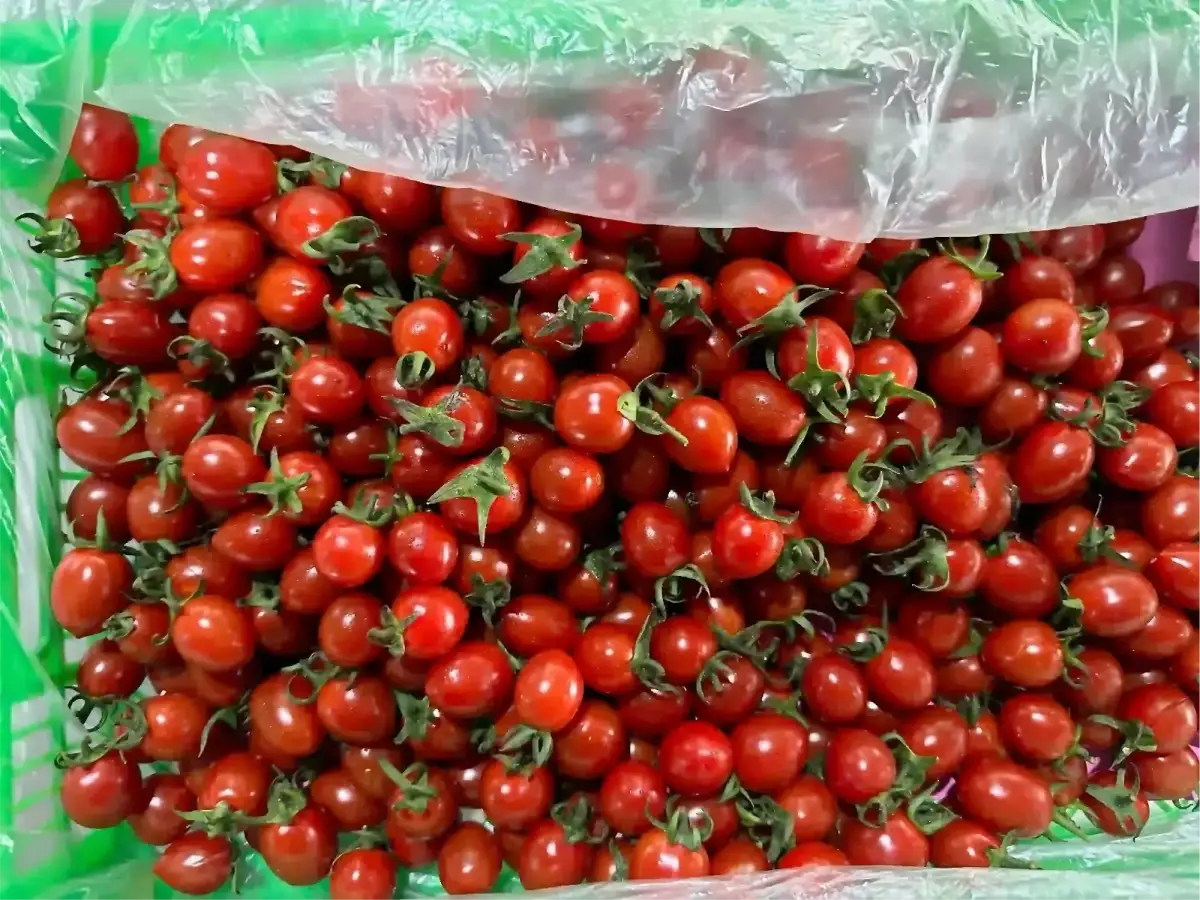
Thin-skinned and high in water content, cherry tomatoes are easily injured; once scratched or bruised, appearance degrades and decay accelerates. Manual sorting—repeatedly picking up and turning each fruit—creates new damage in the process.
Manual grading also relies on "experience" rather than "size," so the same batch can yield different outcomes depending on the worker—making specification consistency across export markets impossible to guarantee.
These are exactly the problems Fstsort's cherry tomato cleaning and grading machine is designed to solve—by replacing human judgment with physical precision and combining washing, drying, and grading into one damage-free flow.
Fstsort Cherry Tomato Cleaning and Grading Machine: Three Stages, One "No-Damage" Flow
The design logic is not to bolt together a washer, a dryer, and a grader—it is to make them work together in one continuous flow that solves three problems at once: clean thoroughly, protect the skin, and grade accurately.
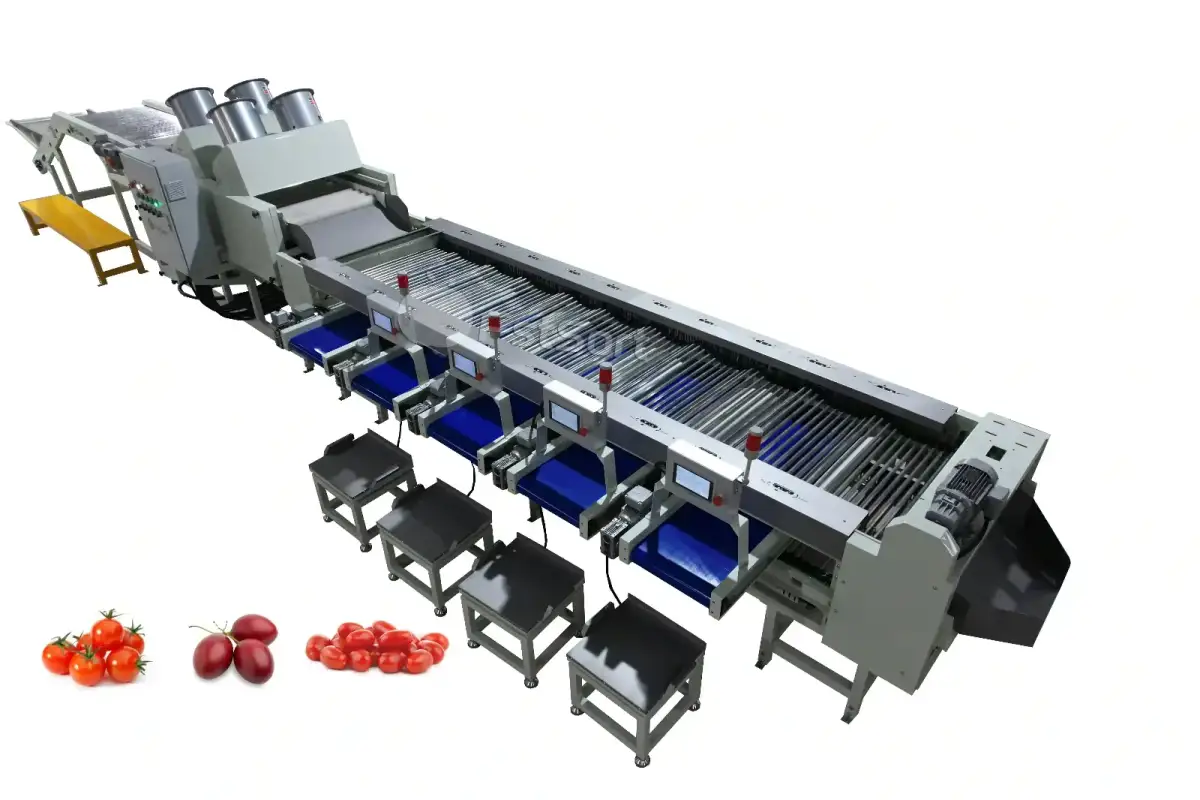
1. Gentle washing + brush polishing + air drying: clean without scrubbing
Thin-skinned cherry tomatoes are easily damaged by harsh friction. Fstsort's cherry tomato cleaning and grading machine uses a gentle approach in the washing and drying stages—water loosens surface debris, brushes polish and dewater softly, and airflow removes residual moisture. The goal is clean fruit with intact skin, minimizing mechanical impact throughout the process.
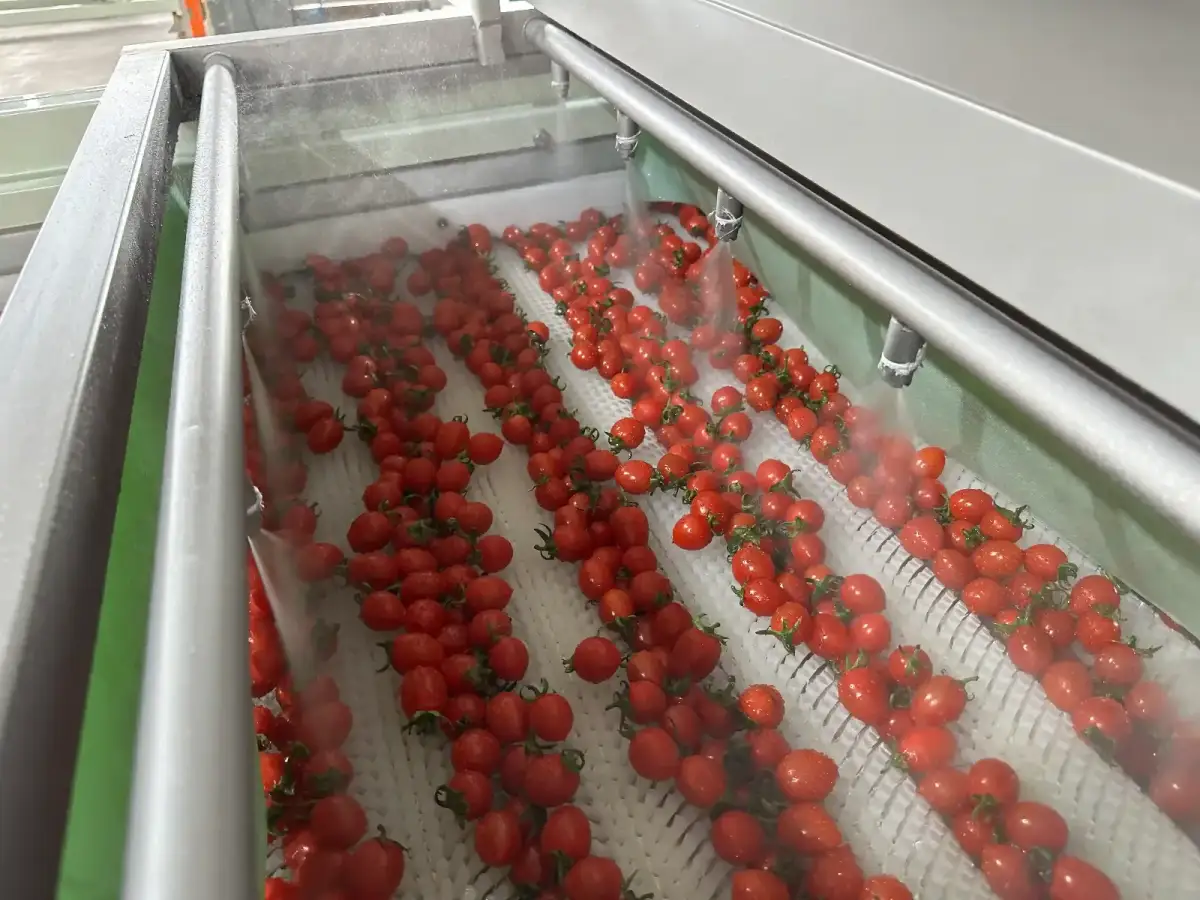
2. Roller-gap grading: physical dimensions replace human judgment
The grading section uses gradually increasing roller gaps—as cherry tomatoes move forward on the rollers, smaller fruit falls through smaller gaps, larger fruit continues until it reaches the gap corresponding to its size. The process does not rely on human judgment, ensuring highly consistent results batch after batch.
Based on Fstsort's industry experience, cherry tomatoes are small and the size difference between grades is subtle—5 grades are sufficient to cover the specification requirements of most export markets. The number of grades can be adjusted, but the core of accuracy lies in the physical precision of the gaps, not the number of outlets.
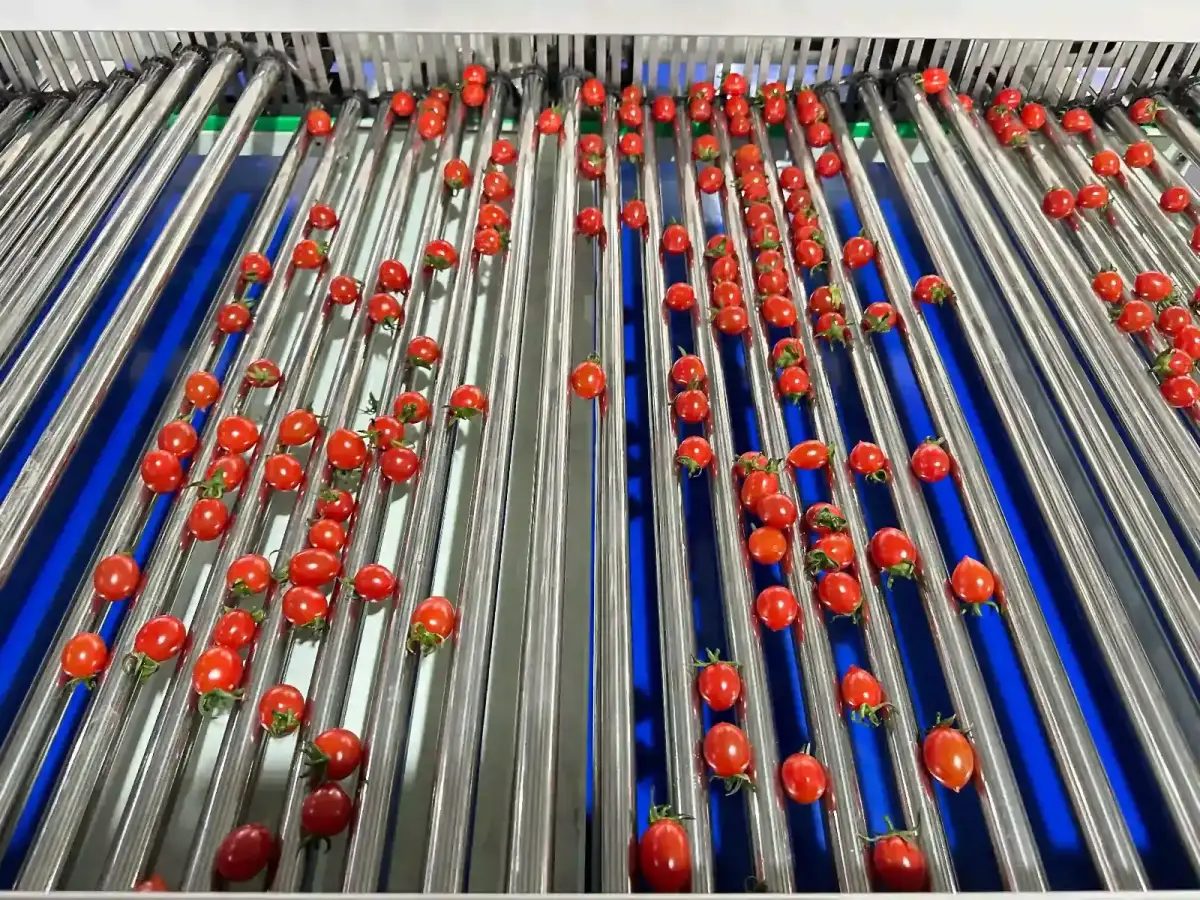
3. Integrated continuous flow: less handling means less damage
Washing, drying, and grading are connected as one continuous line—cherry tomatoes move from infeed to graded output without manual transfer between stages. Every manual transfer is a potential bruising opportunity; the integrated design eliminates those opportunities at the process level.
Key Process Stages Overview
Stage | Function | What it means for cherry tomatoes |
|---|---|---|
Washing & polishing | Bubble-loosened cleaning, gentle action | Avoids brush-roller friction and skin damage |
Elevator + air drying | Brushes and airflow for dewatering and polishing | Cleans and finishes the surface in one pass |
Inspection table | Manual removal of defective fruit and foreign matter | Keeps defects that machines cannot judge in human hands |
Roller grading | Physical diameter grading, adjustable gaps | Fixed standards, batch-to-batch consistency |
From Standalone Machine to Complete Line: Grading Is Just the Starting Point
Fstsort's cherry tomato cleaning and grading machine can run as a standalone unit or be combined with a box filling and weighing system to form a complete line from washing and grading to precise-weight packaging.
The cherry tomato industry is shifting from "mixed packs and volume" to "graded premium pricing." Manual grading's 70% accuracy and the 20-30% post-harvest loss can no longer support the quality demands of export markets—the precision and fruit-protection capability of the grading stage are becoming the critical variables that determine whether processors can turn a high unit price into real profit.
Want your cherry tomato sorting to move from "experience-based" to "size-driven"? Learn more about Fstsort's cherry tomato cleaning and grading machine→