
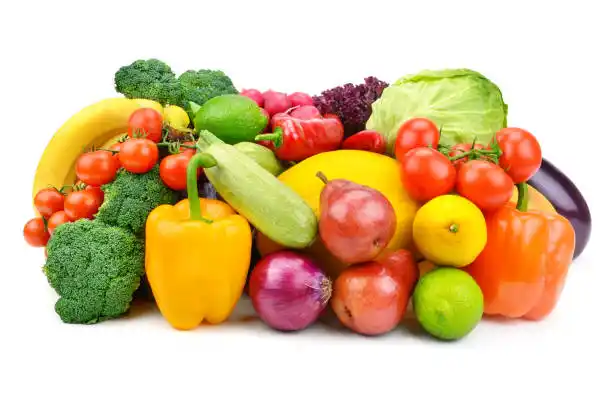
Size consistency is key to market access, pricing, and brand trust. Using bell peppers as an example, this article explains three grading technologies that help packers achieve precision at scale.
In the fruit and vegetable processing industry, size grading has evolved from a "nice-to-have" into a non‑negotiable competitive advantage.
Consumers expect consistency. Supermarkets demand uniform sizing for appealing displays. Export markets enforce strict grade standards that leave no room for variation. And processing plants need specific fruit sizes for juicing, canning, or freezing lines.
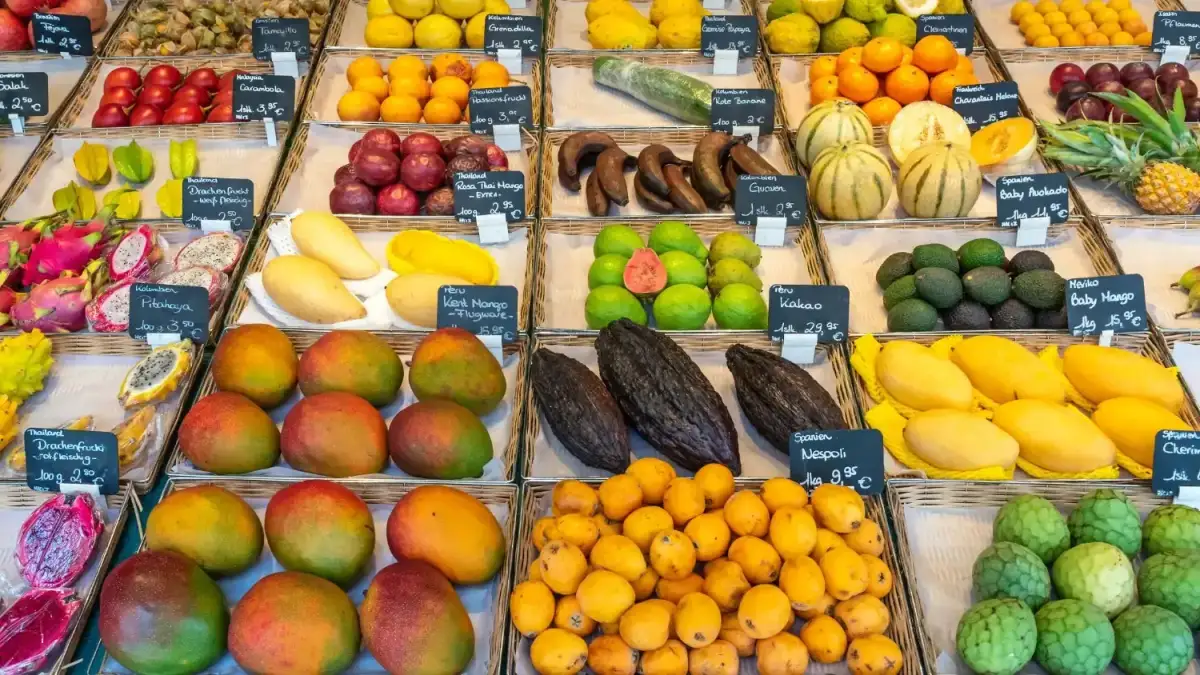
But here's the challenge that every packer knows too well: no two bell peppers are exactly alike. Some are large and blocky – the kind that premium retailers fight over. Some are medium-sized – reliable movers that keep wholesale volumes steady. Others are small and irregular – perfect for processing, but easily overlooked if your grader can't handle the variability.
If your grading line treats them all the same, you're leaving money on the table – at every size.
Why size consistency drives profitability
When sizes are mixed | When sizes are sorted |
|---|---|
Export shipments get rejected or downgraded | Every fruit meets buyer specifications |
Large fruits sell at bulk prices instead of premium | Large fruits capture premium pricing |
Small fruits get discarded instead of finding their highest‑value use | Small fruits go to processing (juice, sauces, value‑added) |
Retailers lose confidence in your brand | Retailers trust your consistency – repeat orders follow |
The conclusion is clear: precision grading isn't a cost center – it's a profit driver.
How do you achieve precision grading at scale?
The answer depends on what you're grading for. For bell peppers – and many other fruits and vegetables – there are three core technologies, each solving a different problem.
1. Roller sizer – sorting by diameter
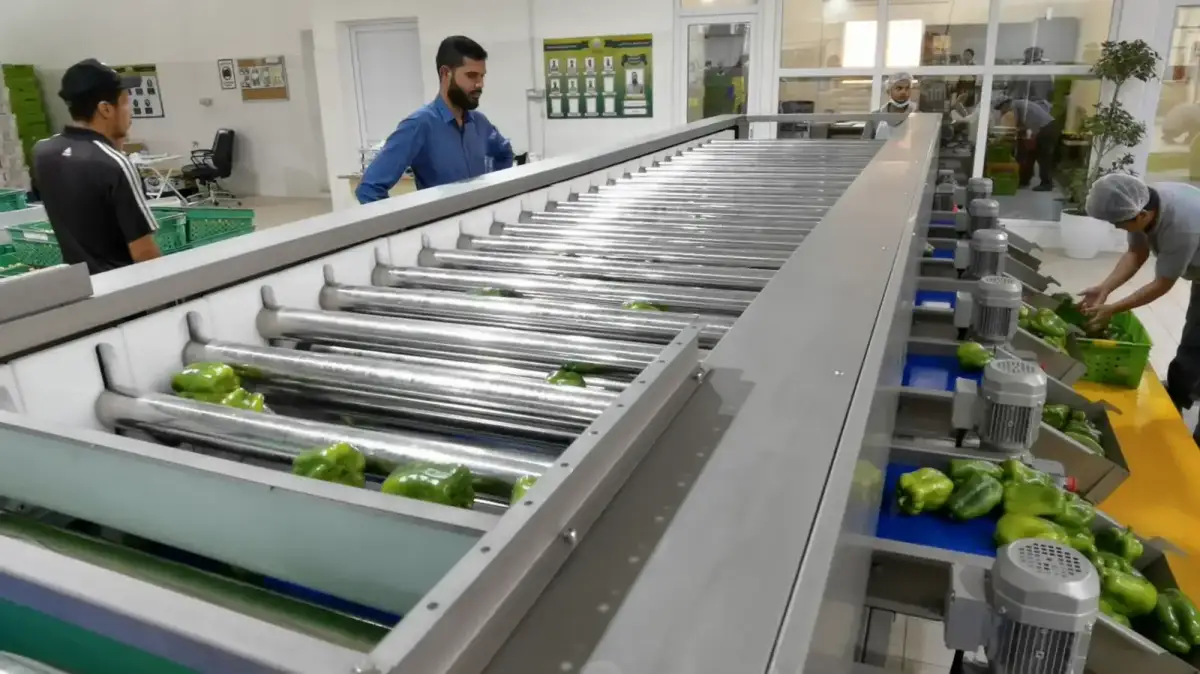
Bell peppers come in a wide range of sizes. The roller sizer uses a series of rotating rollers with gaps that gradually increase from the infeed end to the discharge end. Smaller peppers fall through early gaps; larger ones continue until they find the gap that fits.
What it solves for your operation:
· Manual sorting is slow and inconsistent – a roller sizer runs 5–8 tons per hour, handling peak volume without bottlenecks
· Different markets need different sizes – 3–5 adjustable grades let you match wholesale, retail, or export requirements
· Peppers have delicate skin – food‑grade soft belts and smooth rollers protect every fruit from bruises
· Different varieties need different speeds – adjustable speed gives you full control
Best for: Bell peppers, tomatoes, apples, oranges, potatoes, lemons, and other round or oval produce.
2. Weight sorter – sorting by weight
Sometimes diameter doesn't tell the whole story. Two peppers can have the same diameter but completely different densities – some are thick‑walled and heavy, others thin‑walled and light. Depending on your market, weight might be what determines the price.
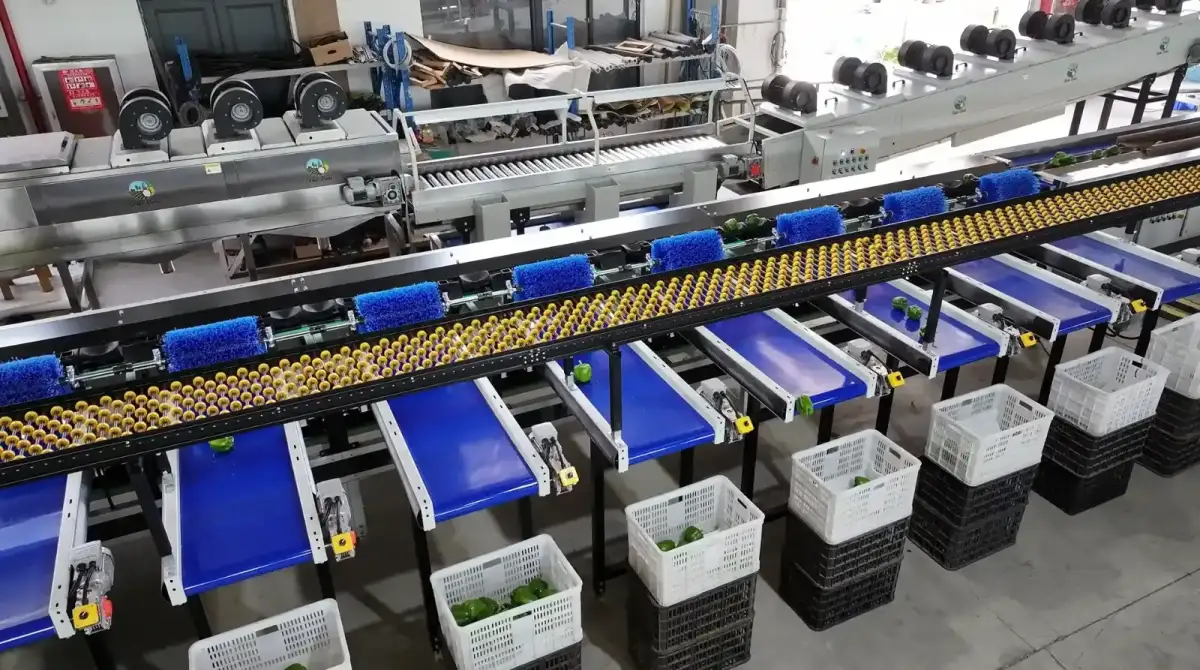
The weight sorter conveys each pepper to an individual weighing cup. Every fruit is weighed independently with ±2g accuracy and directed to the corresponding exit – typically 9 to 20 weight grades per lane.
What it solves for your operation:
· Diameter grading can misclassify peppers with the same size but different densities – weight grading removes that blind spot
· Export contracts often specify weight ranges – ±2g accuracy ensures every pepper meets the spec
· You may handle multiple crops year‑round – 1–4 lanes with 9–20 exits each gives you flexibility to switch between crops seamlessly
· Weight graders are compact, sturdy, and easy to maintain – they keep running season after season
Best for: Bell peppers (especially when weight consistency matters), mangoes, avocados, onions, potatoes, tomatoes, and any fruit where weight determines grade.
3. Optical sorter – sorting by color and defects
For premium export markets, size and weight are just the starting point. Buyers demand perfect appearance – consistent color, no scars, no sunburn, no rot.
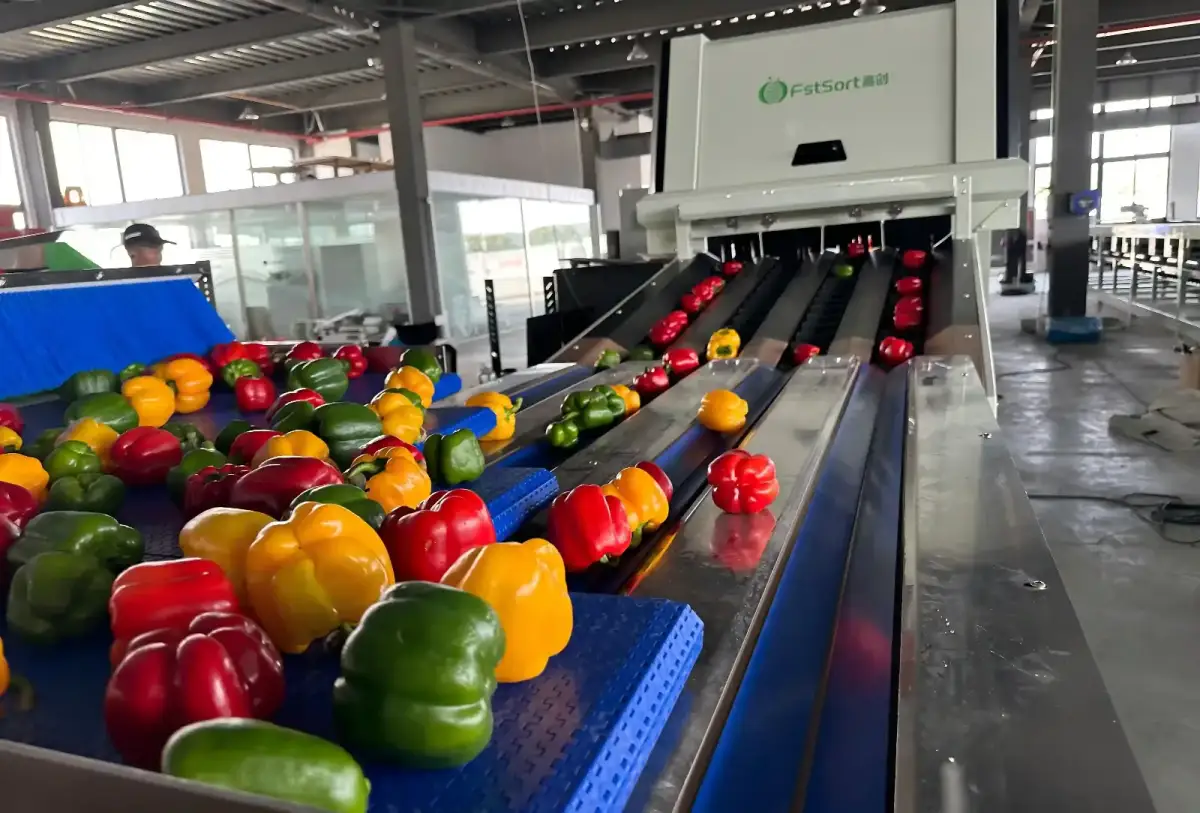
Bell peppers are a prime example: a deep, uniform red or yellow commands a significantly higher price than a pepper with uneven color or blemishes. The optical sorter uses high‑speed cameras to scan every pepper, detecting color (green, red, yellow, orange) and surface defects (scars, sunburn, rot, insect damage, mechanical marks). A computer processor makes a split‑second decision – keep or reject – and a precisely timed air blast deflects the reject into a separate chute.
What it solves for your operation:
· Manual color sorting doesn't scale – optical sorters match the speed of roller and weight graders, creating no bottleneck
· Premium retailers demand visual perfection – zero physical contact from cameras means no damage to delicate skin
· One crop may have multiple color grades – the optical sorter can separate them all in a single pass
· Defective peppers that slip through reduce your brand value – optical sorting catches what human eyes miss
Best for: Bell peppers, apples, citrus, tomatoes, and any produce where appearance determines market value.
Which technology is right for your line?
Most packers don't choose just one. The smartest operations combine technologies based on their specific needs:
Your situation | Recommended combination |
|---|---|
Local wholesale markets | Roller sizer (3–5 grades) is usually sufficient |
Multiple export markets with different size specs | Roller sizer + weight sorter – diameter first, then weight |
Premium retail chains demanding perfect appearance | Roller sizer + optical sorter – size plus color/defect removal |
Both retail and processing | Roller sizer + weight sorter + optical sorter – full control |
Handling multiple crops year‑round | Modular combination – add or remove as needed |
The good news: Fstsort's grading systems are modular. You can start with one technology and add others as your market requirements evolve. Need just a roller sizer today? Done. Want to add an optical sorter next season? Easy – we integrate it seamlessly into your existing line.
Built for bell peppers – built for your business
Fstsort's grading technologies are already at work for bell pepper packers in Mexico, the United States, Australia, Jordan, Qatar, and many more countries – plus 22 cities across China.
Whether it's a roller sizer, weight sorter, optical sorter, or any combination, every system is customized to your operation – your crop varieties, your volume, your target markets, your facility layout.
And because we offer turnkey solutions – from bubble washing and drying to grading and packing – you get a complete line designed around your peppers, not a one‑size‑fits‑all template.
Ready to choose the right grading technology for your line?
Whether you need a roller sizer for diameter grading, a weight sorter for precision by weight, an optical sorter for color and defect removal – or any combination – Fstsort can design a solution that fits your crop, your volume, and your target markets.
Explore our bell pepper grading solutions →