
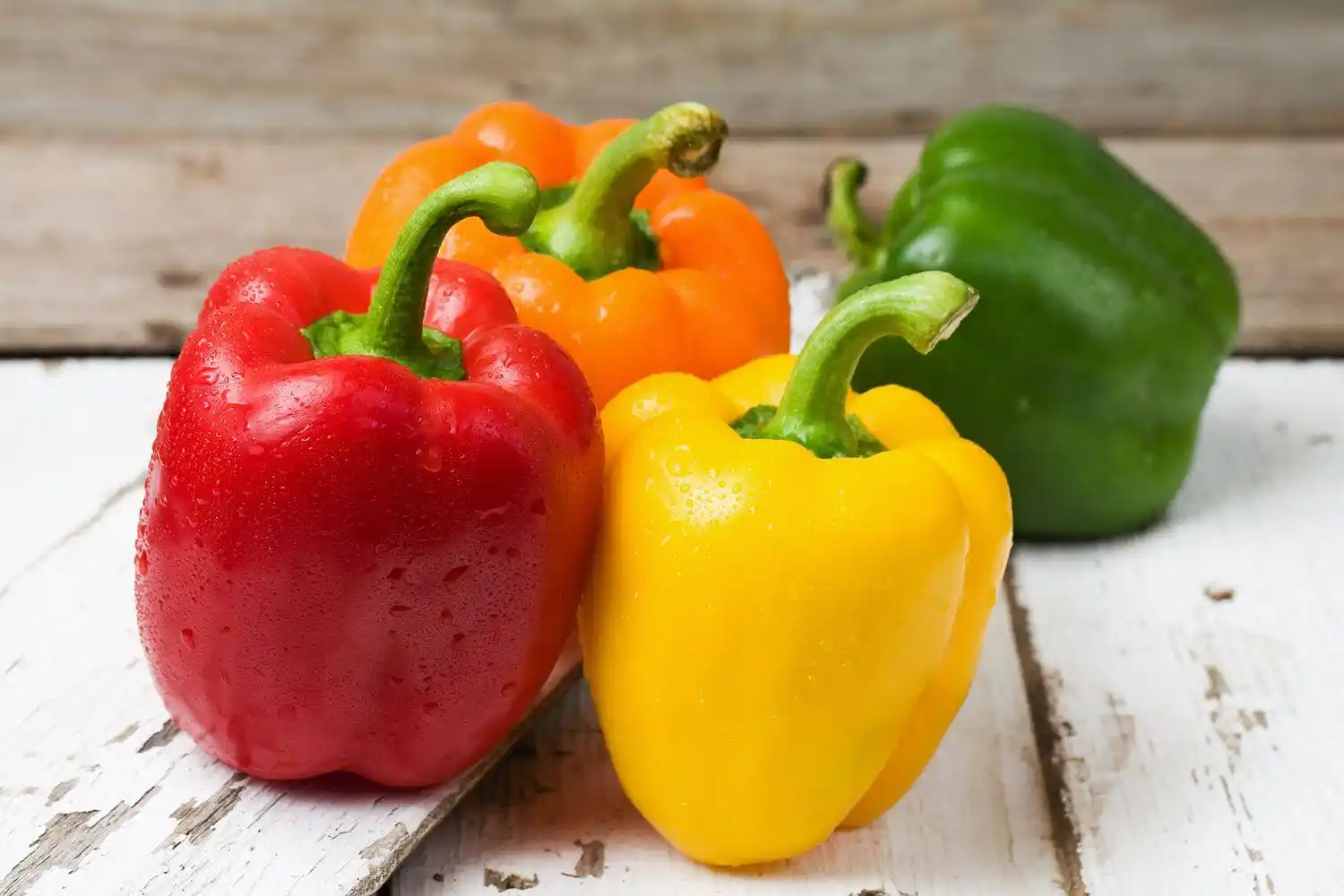
The global bell pepper market is valued at over $80 billion in 2025, with Mexico holding 29% of export share and Egyptian exports to Europe tripling. This rapid export growth demands higher precision and efficiency in pepper sorting. This article examines global bell pepper trade trends and sorting challenges, and explains how Fstsort's optical sorter uses AI vision technology to transform the inconsistency of manual sorting into standardized, high-efficiency grading.
The Global Bell Pepper Market Is Expanding Rapidly
Bell peppers are among the most heavily traded vegetables worldwide. According to market research, the global bell pepper market was valued at approximately $80.59 billion in 2025 and is projected to reach $165.2 billion by 2034, at a CAGR of 8.3%.
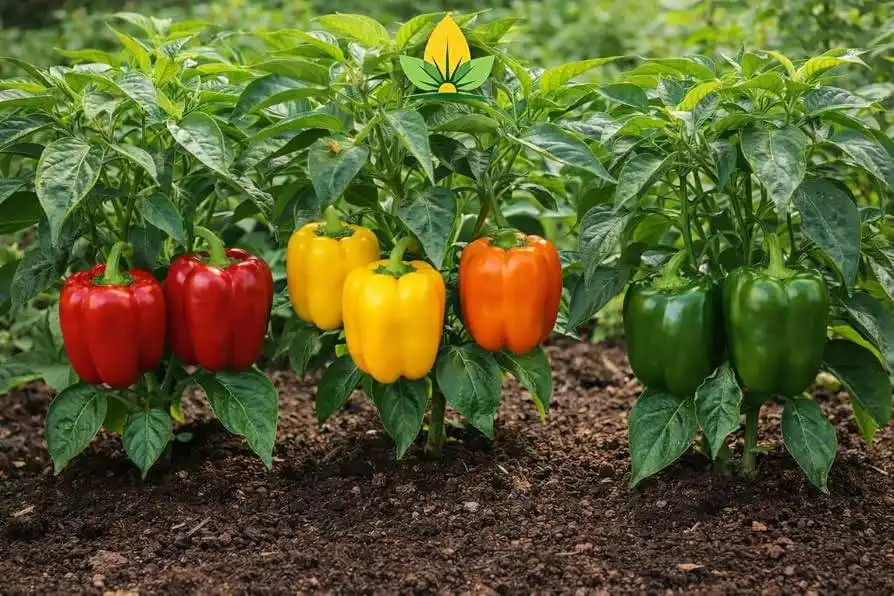
On the export front, this growth trend is even more striking. Mexico is the world's leading fresh bell pepper exporter, holding 29% of the global market share, with the United States as its primary destination. In 2025, Sinaloa—one of Mexico's key pepper-producing states—began exporting bell peppers to Japan, a milestone achieved through years of effort to meet Japan's stringent health standards. Meanwhile, Egyptian bell pepper exports to Europe have tripled compared to the same period last season.
This rapid expansion in export markets is pushing growers and processors worldwide to rethink their post-harvest sorting operations.
Bell Pepper Sorting: Deceptively Simple, Surprisingly Complex
Sorting bell peppers is far more challenging than it appears.
Challenge one: multiple standards, human error. International buyers impose strict requirements on bell peppers—color grading across green, red, yellow, and orange, uniform sizing, and defect-free surfaces (no scars, sunburn, rot, insect damage, or mechanical marks). Traditional manual sorting is not only slow but also error-prone—studies show misclassification rates of 15-20%. A worker sorting thousands of peppers daily is bound to make mistakes due to fatigue.
Challenge two: peppers are fragile. Bell peppers have delicate skin and are easily scratched. The repeated handling during manual sorting itself causes secondary damage to the fruits. Post‑harvest losses due to improper handling range from 10% to 30%—meaning 1 to 3 out of every 10 peppers are downgraded or rejected simply because of sorting‑related damage.
Challenge three: manual sorting can't keep up with export volumes. Manual sorting is slow and limited in throughput. During peak export seasons, processors often need to hire large numbers of temporary workers—labor costs soar while quality consistency suffers.
Accurate sorting, high efficiency, no fruit damage—pepper processors face this triple challenge every day.
Optical Sorter: Turning Pepper Sorting from "Experience-Based" to "Data-Driven"
It is precisely in this market environment that Fstsort's optical sorter was developed. At its core, this machine gives pepper processors a pair of "AI eyes that never tire."
Step one: precision inspection—sees more and sees better than human eyes.
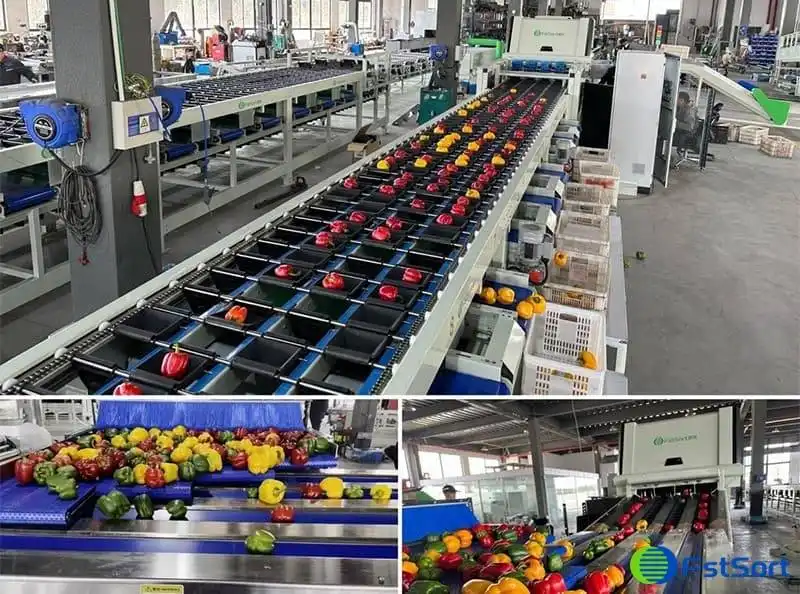
Peppers enter through an elevator, are aligned on a V-shape belt, and then pass through an AI intelligent inspection machine. The system's vision technology simultaneously inspects every pepper for multiple parameters—color (green/red/yellow/orange), size, weight, and surface defects (scars, sunburn, rot, insect damage, mechanical marks). All inspections happen in an instant.
Step two: intelligent grading—faster and more consistent than manual sorting.
Once inspection is complete, the system automatically directs each pepper to the appropriate outlet based on preset grading standards. The entire process involves zero physical contact—only cameras "see" the fruit, with no mechanical parts touching the skin. This means peppers suffer no additional friction or compression during sorting.
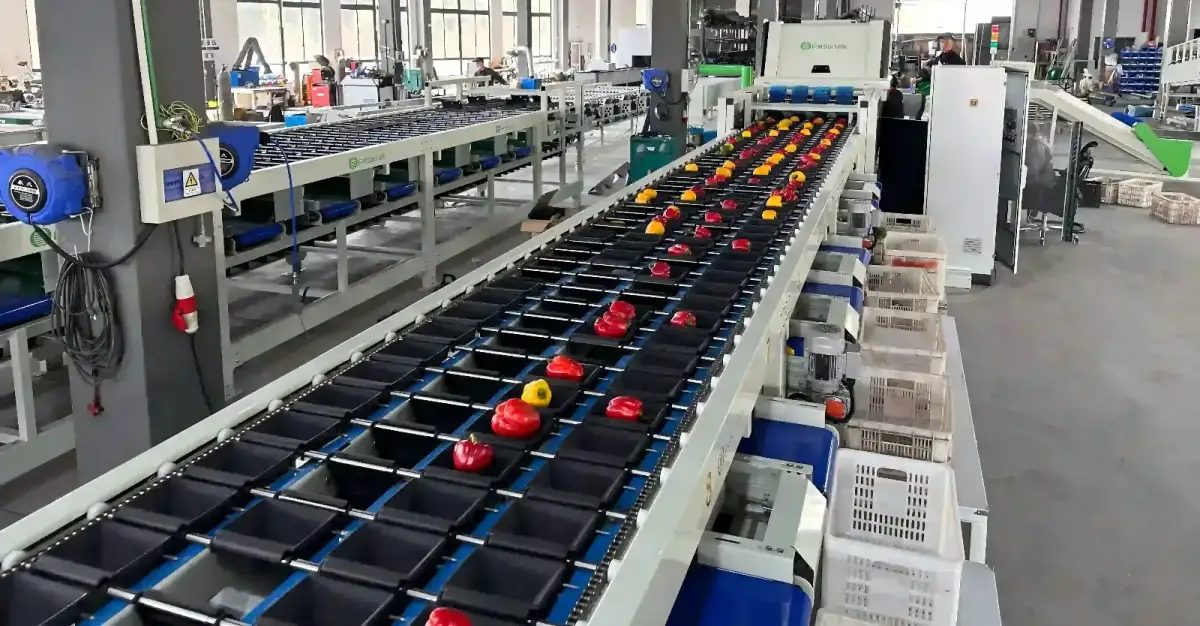
Step three: value creation—helping every pepper reach its full market potential.
The ultimate value of an optical sorter comes down to one word: premium pricing. After the machine automatically grades peppers into different quality tiers, exporters can price each tier separately—the best batch sells at the best price, mid-tier goes to mid-tier markets. This "grade-based pricing" model directly increases overall profits for growers and exporters.
For countries and regions with high labor costs but equally high quality requirements, the value of optical sorting is even more compelling—reducing reliance on manual labor, increasing sorting capacity, and improving product quality consistency.
From Optical Sorting to Complete Processing Solutions
Optical sorting is just one link in bell pepper post-harvest processing. Fstsort offers complete pepper processing solutions covering washing, grading, and packing—from roller sizers (diameter sorting, 5-8 t/h) to weight sorters (electronic weighing, ±2g accuracy) to optical sorters (color sorting and defect detection), all modules can be flexibly configured based on fruit characteristics and target market requirements.
Competition in the global bell pepper export market is intensifying. Mexico is entering the Japanese market, Egypt's exports to Europe are doubling—as export volumes continue to climb, the precision and efficiency of the sorting stage are becoming critical determinants of export competitiveness.
For more bell pepper processing solutions, please visit our product page of bell pepper grading machine→