
For apple exporters, the difference between a premium price and a discount often comes down to what the eye can see — and what it can‘t. Here’s how optical sorting technology is changing the game.
The Export Challenge: When ‘Good Enough’ Isn‘t Good Enough
Exporting apples is not the same as selling them locally. International buyers — whether in Europe, North America, or Asia — have strict quality standards that go far beyond what domestic consumers expect.
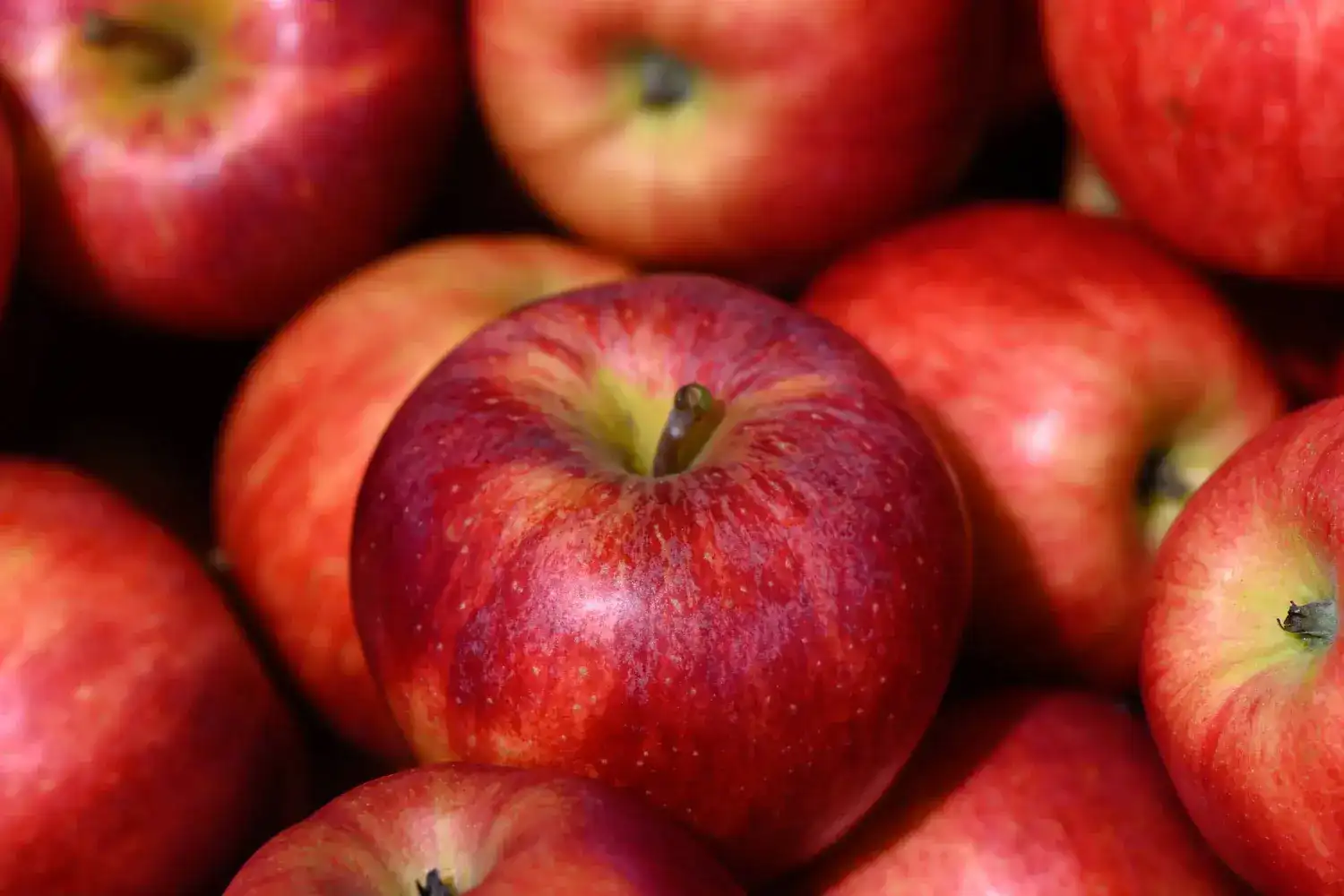
For red apple varieties destined for premium export markets, color is often the deciding factor. A 90% red apple commands a significantly higher price than one with 70% red coloring. Size must be uniform. And any visible defect — a bruise, a crack, a patch of russeting, or signs of rot — can mean rejection at the destination port.
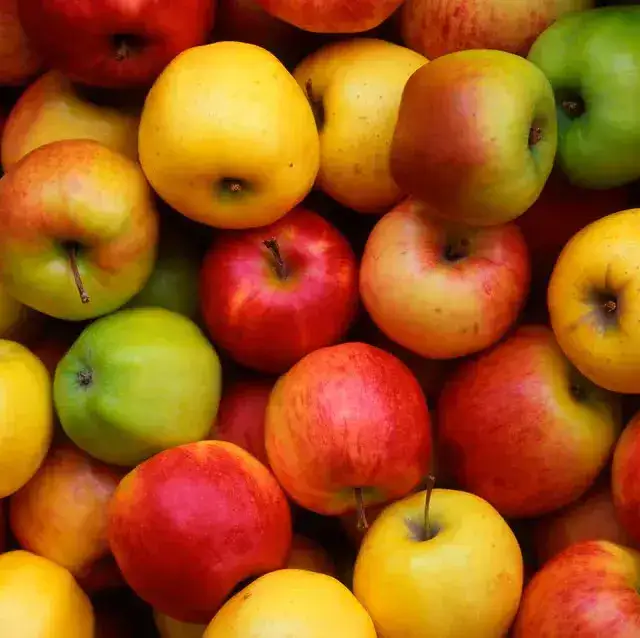
But here‘s the problem: apples are among the most variable fruits in the world. Even within a single orchard, no two apples are exactly alike. Some are redder. Some are larger. Some have hidden bruises that only become visible after storage.
For packers supplying export markets, the challenge is clear: how do you consistently deliver apples that meet the tight specifications of international buyers?
The Human Limit: Why Manual Sorting Falls Short
Traditionally, packing houses have relied on manual sorting to separate good apples from bad. Workers inspect each apple by sight and touch, making subjective judgments about color, size, and defects.
But manual sorting has three fundamental limitations:
Limitation | Why It Matters |
|---|---|
Inconsistent judgments | Different workers make different calls — one may reject an apple that another would pass. Fatigue makes the problem worse as the day goes on. |
Slow throughput | A human can only inspect so many apples per hour. During peak harvest season, this creates a bottleneck that delays shipments and risks missing market windows. |
Rising labor costs | Finding and paying skilled sorters is increasingly difficult and expensive — especially in developed export markets like Europe and North America. |
For packers who need to process millions of apples to export standards, manual sorting is no longer sustainable. The math is simple: the more apples you process, the more you need automation.
A Better Way: Optical Sorting in a Single Pass
This is where Fstsort‘s optical apple grader comes in.
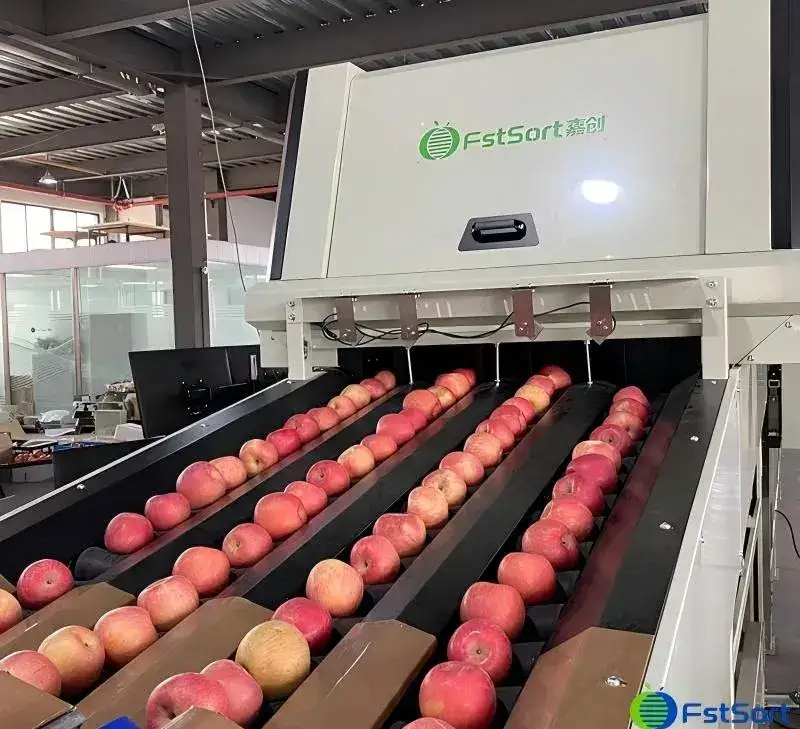
Unlike traditional mechanical graders that physically touch and roll fruit, an optical sorter uses high-speed cameras and advanced image processing to inspect every apple in a single pass — without any physical contact.
What optical sorting delivers
· No physical contact, no damage — Cameras only. The fruit never touches anything during inspection. This is the gentlest sorting method available for delicate apples.
· Sorts by what matters — The system analyzes color (redness percentage, green spots, uneven ripening), size (diameter), shape, and external defects (bruises, scars, russeting, rot, insect damage, mechanical marks) — all in one pass.
· Consistent, repeatable decisions — The machine doesn‘t get tired. It applies the same standards to every apple, every time. No subjective judgments, no fatigue-induced errors.
· Real-time data — For each sorting outlet, data on volume, size, defects, and weight are available — giving packers unprecedented visibility into their quality control.
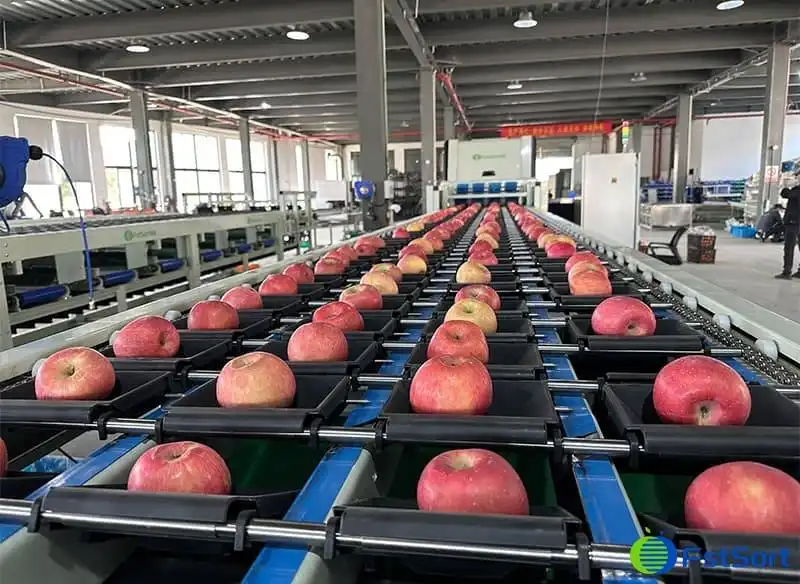
The result: apples that are sorted accurately, consistently, and gently — ready for the most demanding export markets.
Built for Every Scale
Fstsort‘s optical apple grader is available in configurations to match different operations. Single and dual-lane sorters are ideal for small to medium packing warehouses, but can also be connected to larger multi-lane sorters for high-volume export operations.
Ready to see how optical sorting can transform your apple export operation? Explore the full specifications on our apple sorting machines page →
The Future of Apple Sorting Is Optical
Export markets are becoming more demanding, not less. Color specifications are getting tighter. Defect tolerances are shrinking. Labor is getting harder to find.
The packers who succeed will be the ones who can inspect, sort, and grade millions of apples with consistency that human eyes simply cannot match. Optical sorting makes that possible.
The technology exists. The question is whether your packing line is ready for the next export season.