
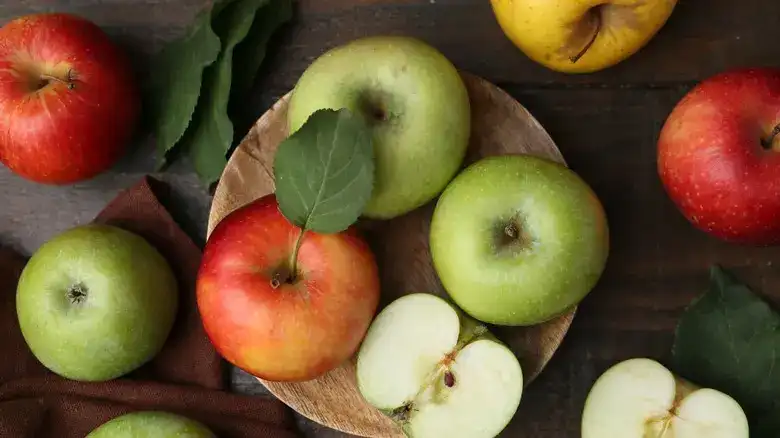
Apples are among the most fragile fruits in the world. One wrong move during sorting — a drop too high, a roll too rough — and the fruit bruises, browns, and loses its market value. Here's how to choose a sorter that protects your apples from orchard to pack.
Why Apples Need Special Handling
Apples are the gold standard for testing equipment gentleness. They bruise so easily that if a machine handles apples well, it handles any fruit well.
The problem with traditional graders: rollers, drops, and mechanical sizing are a recipe for damage. Apple skin is thin. The flesh is delicate. And bruising doesn't always show up immediately — it develops after packing, when the fruit is already on its way to the customer.
Challenge | What It Means for Your Bottom Line |
|---|---|
Thin skin | Even light friction during sorting leaves visible marks — rejected at the buyer's dock |
Delicate flesh | Internal bruising is invisible at packing but turns brown in transit — lost value you can't recover |
Post-sorting browning | Bruised areas rot faster — shorter shelf life means fewer days to sell |
Export standards | Any visible defect = rejected shipment — one bad pack can cost you a customer |
The real question: how do you sort apples fast without turning them into losses?
Three Ways to Sort Apples — Which One Fits Your Operation?
Fstsort offers three apple sorting technologies. All three share one thing in common: no rollers, no mechanical sizing, no fruit contact during measurement.
Option A: Rotary Weight Sorter — Small Footprint, Reliable Output
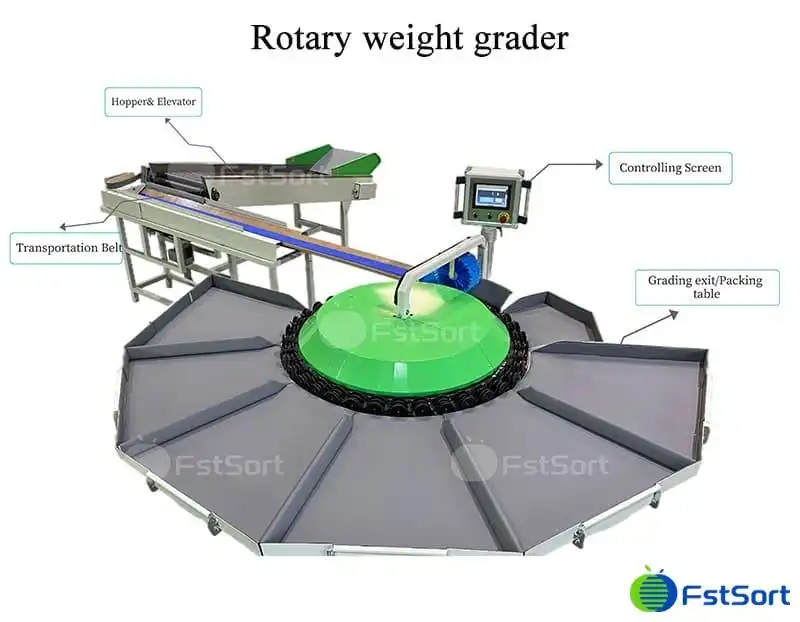
This machine uses a rotating disc to move apples to soft weighing cups. The circular design fits into spaces where linear systems won't.
Capability | What It Delivers |
|---|---|
15,000 pcs/h | Enough throughput for small to medium packing lines |
5+1 weight grades | Basic grade separation for local or regional buyers |
30–500 g range | Covers small to large apple varieties |
±2 g accuracy | Every apple goes to the right grade — no guesswork |
Compact layout | Fits where space is tight — no need to rebuild your facility |
A cost-effective entry point for packers who need reliable weight grading without a large footprint or big investment.
Option B: Linear Weight Sorter — High Output, Room to Grow
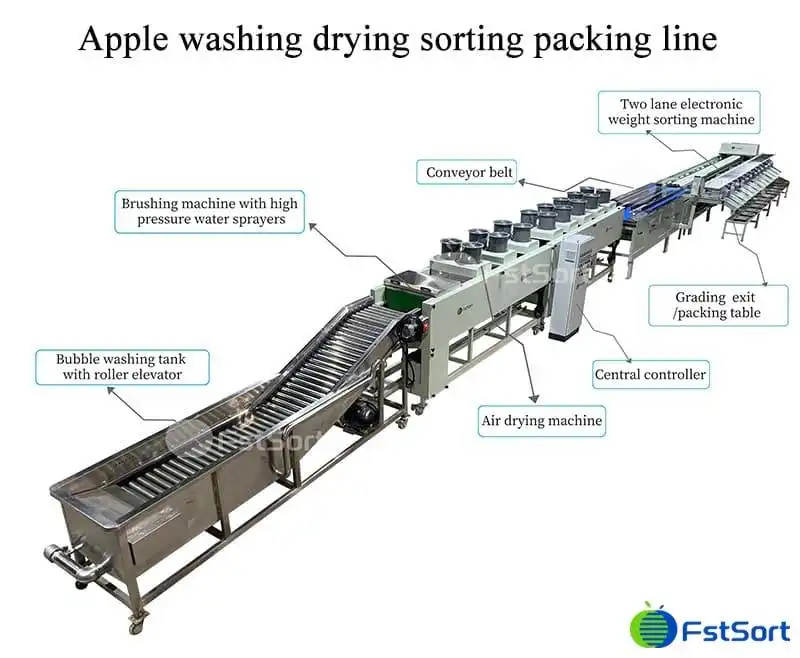
This machine uses a straight conveyor to feed apples to weighing cups. More lanes mean more output — and more grades mean finer market segmentation.
Capability | What It Delivers |
|---|---|
25,000 pcs/h per lane | 1, 2, or 4 lanes — scale up as your volume grows |
7–12 weight grades | Finer grades = better price segmentation for export orders |
20–500 g range | Handles everything from small crabapples to large baking apples |
±2 g accuracy | Meets the tightest buyer specifications — no rejected packs |
Modular lanes | Start with one lane, add more next season — no need to replace the whole machine |
A mid-range investment that grows with your business — ideal for packers who are expanding into export markets.
Option C: Optical Sorter — Zero Contact, Premium Quality
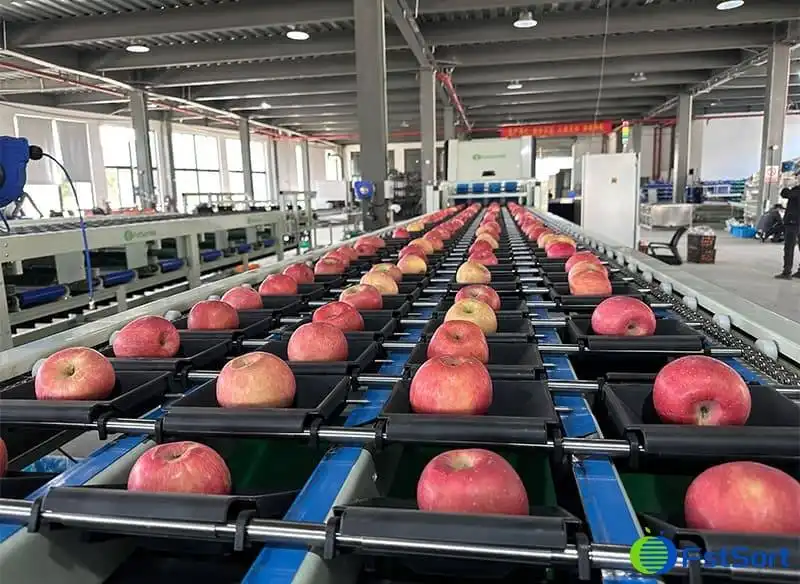
This machine uses high-speed cameras to inspect apples by color, size, and surface condition. The fruit never touches anything during inspection.
Capability | What It Delivers |
|---|---|
8–10 t/h (4 lanes) | High throughput for large-scale export operations |
16+ grades | Fine sorting for color, size, and defects — match any buyer spec |
Color detection | Red percentage, green spots, uneven ripening — sort by what buyers actually pay for |
Defect detection | Bruises, scars, russeting, rot, insect marks — remove bad fruit automatically |
Zero contact | No rollers, no cups, no touching — the gentlest way to sort apples |
A premium investment for premium returns — essential for exporters who need to meet strict color and defect standards.
How to Choose: Match the Machine to Your Operation
Decision Factor | Rotary Sorter | Linear Sorter | Optical Sorter |
|---|---|---|---|
What it sorts by | Weight | Weight | Color, size, surface defects |
Hourly output | 15,000 pcs | 25,000–100,000 pcs | 8–10 tons |
Grade options | 5+1 | 7–12 | 16+ |
Best fit | Small-medium lines | Large-volume export | Premium color/defect sorting |
Investment level | Entry | Mid-range | Premium |
Three questions to ask yourself:
1. How many apples per day? — Under 15,000? Go rotary. Over 50,000? Go linear. Need color sorting? Add optical.
2. Who's buying your apples? — Local wholesale? Rotary is enough. Supermarkets? Linear gives you better grade options. Premium export with strict color specs? Optical is your answer.
3. What's your budget for this upgrade? — Rotary gets you automated grading at the lowest entry cost. Linear delivers more capacity and more grades for a mid-range investment. Optical is a premium tool for premium markets.
Four Ways This Machine Protects Your Apples
Fstsort machines are built on a simple principle: if it can handle apples without bruising, it can handle anything.
Here's how the protection works — and what it prevents:
Protection Feature | What Problem It Solves |
|---|---|
Water flume feeding | Hard drops from dry dumping. Apples float in on water — no impact, no bruising from the very first contact. |
Soft-touch brushes | Scratching and micro-abrasion. Ultra-soft bristles remove dirt without marking the skin. |
Suspended weighing | Rolling and friction during weighing. Apples rest in deep carriers — no movement means no damage. |
Low-drop discharge | Hard landings after sorting. Minimal fall height + soft surfaces = no impact damage. |
The result: Apples leave the line looking exactly as they did when they arrived — no hidden bruises, no post-sorting browning, no rejected shipments.
Programmed for Any Export Standard
Export-grade apples are sorted by diameter, weight, and color — and every market has its own spec. Fstsort's electronic weight sorter can be programmed to match any standard you need: Gala, Fuji, Honeycrisp, Pink Lady, or any local variety. Set the parameters once, save the profile, and recall it instantly for the next season.
Not sure which sorter fits your apples? Explore the full specifications on our apple sorting machines page →
Sort Smart, Sort Gentle
Apples are fragile. But the business of sorting apples doesn't have to be. With gentle handling, pinpoint accuracy, and zero bruising, the right sorter turns your harvest into profit — without the losses that come with traditional graders.
The technology exists. The question is which sorter fits your apples.