
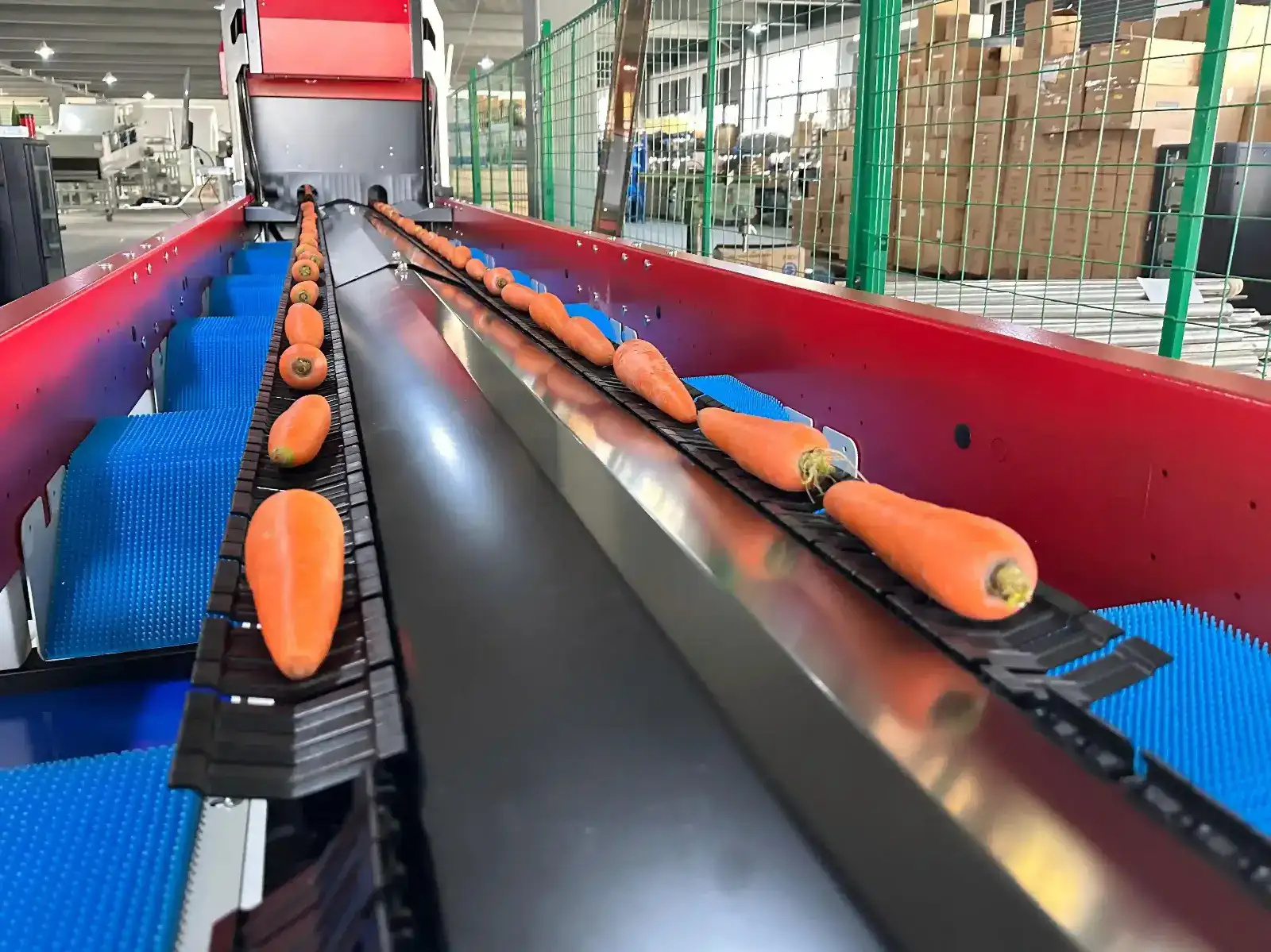
As demand for healthier diets grows, carrot consumption continues to upgrade. Fresh-cut, prepared produce, and export channels now expect more than uniform size—they want clean surfaces, consistent color, and no visible defects. Optical sorting turns appearance quality from "sampling" into "full inspection," driving the carrot market toward high-quality development.
Carrot Sorting: From "Sorting by Specification" to "Seeing Quality"
With healthy eating becoming more widespread, carrots—rich in carotene, dietary fiber, and vitamins—are gaining favor with consumers. The expansion of fresh-cut vegetables, supermarket prepared produce, and export channels is shifting carrot consumption from "buying by the bag" to "buying by quality."
This brings a clear change: the market no longer asks only for uniform thickness. Clean surfaces, consistent color, and freedom from mechanical damage, insect holes, green shoulders, deformities, and foreign matter—these appearance qualities are becoming the key to entering premium channels.
But carrot sorting has long faced a practical problem: many machines can sort size; few can "see" appearance. Conventional sorting can judge size and weight but cannot identify surface defects or foreign matter. Manual sorting can see, but it is slow and inconsistent—hard to sustain in continuous production.
Optical Sorting: Identifying "Invisible Defects" on the Sorting Line
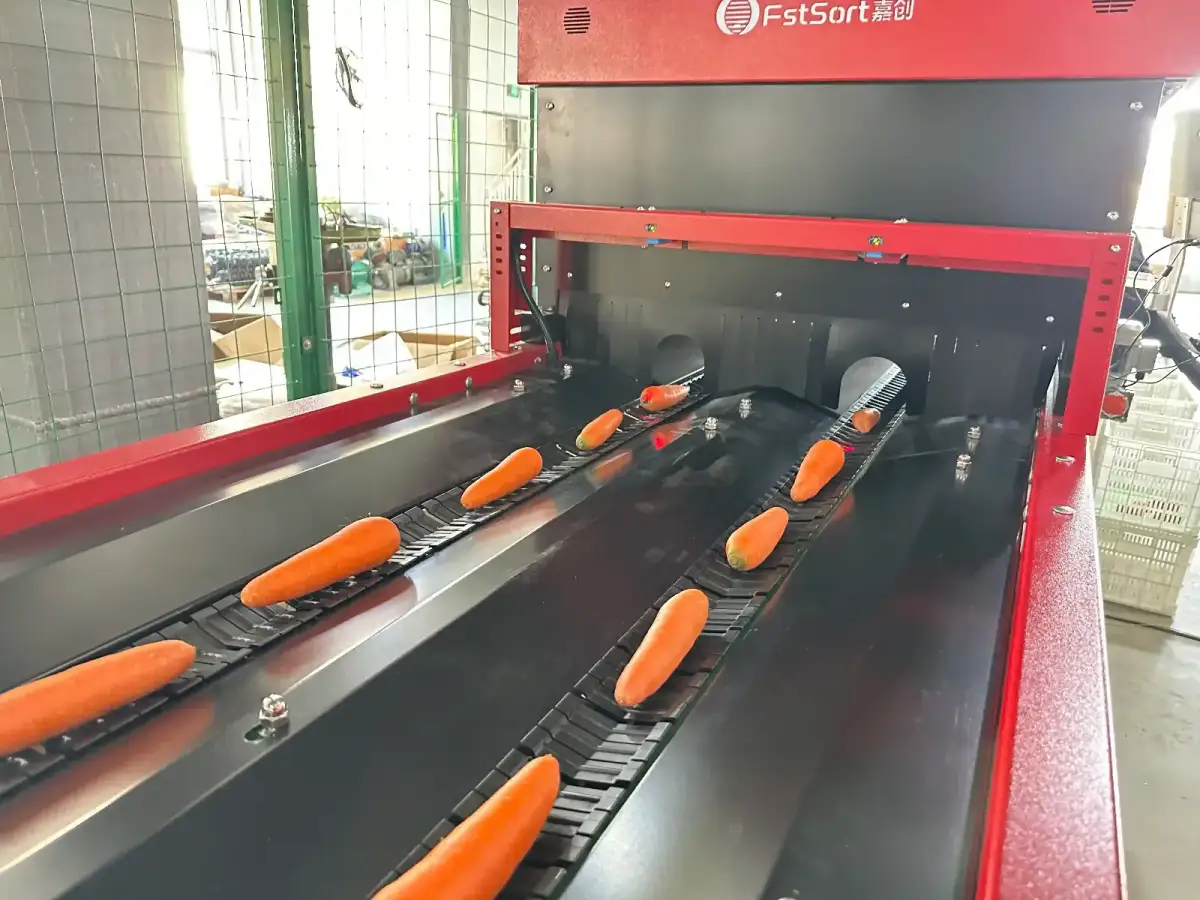
Optical sorting solves exactly what conventional sorting cannot see. As carrots pass through high-resolution cameras and spectral sensors, the system captures color, shape, surface defects, and foreign matter in real time and diverts according to preset standards.
Specifically, optical sorting can identify and remove:
· Color defects: white, green, and dark blemishes—often linked to immaturity, sunburn, or quality decline
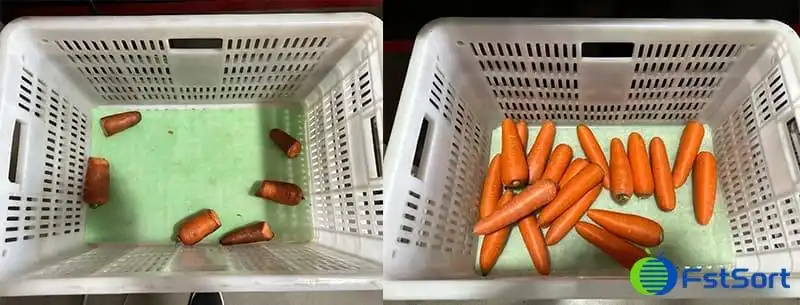
· Surface defects: mechanical abrasion, insect damage, cracks, deformities
· Foreign matter: stones, insects, plastic, wood, glass, cardboard, and other contaminants
For carrots—long, slender, high surface area, and prone to diverse defects—the value of optical sorting is not just "sorting faster," but turning appearance quality from "sampling" into "full inspection." Deep-learning-based AI optical sorting analyzes large volumes of acceptable and defective samples to build its own judgment criteria, delivering stable identification of color, shape, and surface defects for continuous production.
Why Optical Sorting Is Driving "High-Quality Development"
First, reducing hidden downgrades. Carrots with surface defects "pass" on a conventional line and are rejected or returned at the retail end—a loss invisible at the sorting stage. Optical sorting moves defect identification upstream, converting after-sales losses into sorting-stage removal.
Second, supporting premium channels. Supermarket prepared produce and export markets set explicit appearance thresholds. Only batches that consistently deliver "uniform color, clean surface, no foreign matter" qualify for these channels. Optical sorting is not "nicer sorting"—it is the access capability for higher-priced channels.
Third, reducing reliance on manual labor. Manual sorting cannot sustain speed and consistency under rising volumes and tightening standards. Automated optical sorting runs continuously at high accuracy, replacing "human eyes" with "system judgment," so quality consistency no longer fluctuates by shift or hour.
From Standalone Optical Sorting to Complete Carrot Handling Solutions
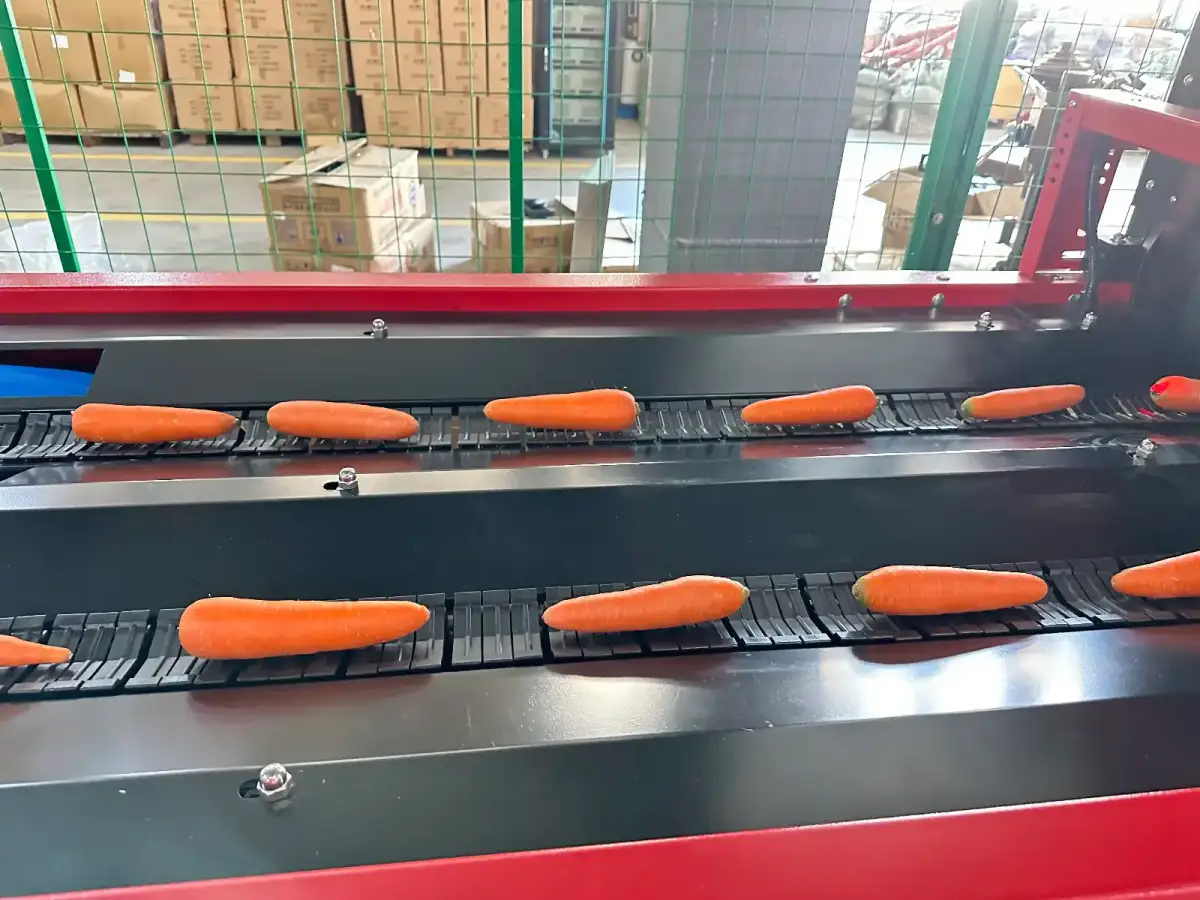
Optical sorting is just one step in carrot post-harvest handling. Fstsort's carrot optical sorting solutions can connect with washing, drying, and packing to form a continuous flow from infeed to finished product. The optical module can be embedded into an existing line or operated as a standalone sorting section, flexibly configured to capacity and site conditions.
Competition in the carrot market is shifting from "having supply" to "whether appearance quality is consistently stable batch after batch." When consumers and channels simultaneously demand "defect-free," defect detection capability and full-inspection coverage at the optical sorting stage directly determine whether processors can turn "high-quality development" from a slogan into a deliverable product standard.
Want your carrot sorting to upgrade from ”sorting by specification” to “seeing quality”? Learn more about Fstsort’s optical sorting solutions→