
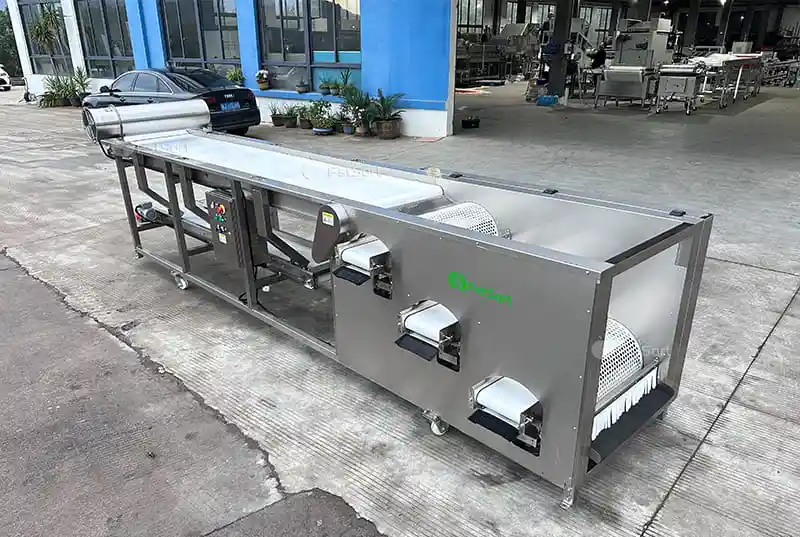
For a small blueberry farm, hand sorting works fine. A few hundred kilos a day, a table, a few workers—done. But when the farm grows, the berry volume grows with it. And that table doesn't get any bigger. Here's how a drum grader becomes the next logical step.
The Moment Hand Sorting Stops Making Sense
Every blueberry grower remembers the season when hand sorting stopped working.
It's not one big failure—it's a thousand small bottlenecks. Workers can't keep up with the harvest. Berries sit in the field too long. Quality slips because fatigue sets in. And the labor that was easy to find last year is harder to find this year.

That's the moment a grower starts looking for a machine.
The Fstsort blueberry drum grader is designed for exactly that moment. It's not the biggest grader on the market. It's not the fastest. But it's the grader that takes a farm from hand sorting to machine grading—without overcomplicating the operation or breaking the budget.
What a Drum Grader Does
The principle is straightforward. Blueberries are fed into a gently rotating drum. The drum has rows of holes in different sizes—small holes at the start, medium holes in the middle, larger holes at the end.
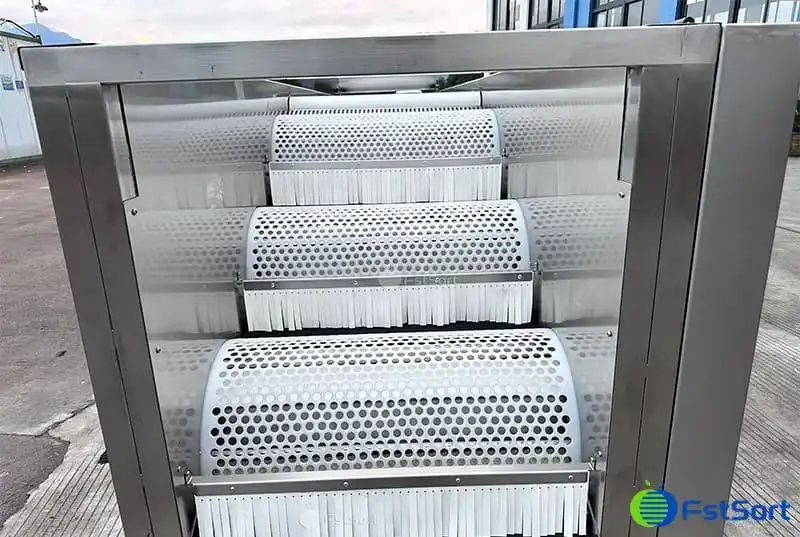
As the drum turns, berries tumble gently and fall through the hole that fits their size. Small berries drop first. Medium berries drop next. Large berries carry on to the end. Each size collects in its own outlet.
That's it. Simple, reliable, and effective.
Why It Works for Blueberries
Blueberries are delicate. Their bloom—that silvery-white powder on the skin—is easy to rub off. Friction, rough handling, and hard drops all damage it.
The drum grader is designed with blueberries in mind:
· Soft brushes inside the drum keep berries from getting stuck and guide them through without bruising.
· Soft materials at all connection and drop points mean berries don't take hard falls.
· A blower separates berries that are stuck together, so each berry gets sorted individually.
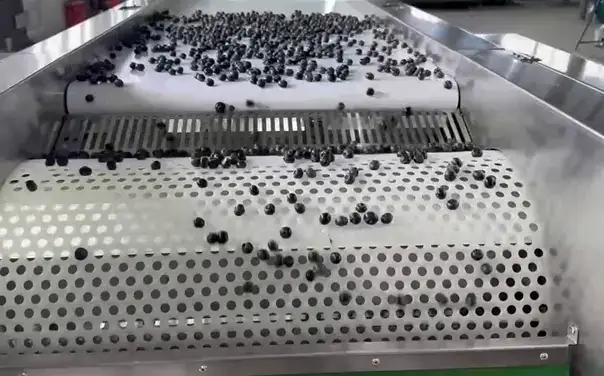
What you get at the end is berries sorted by size—with their bloom intact, shelf life preserved, and market value protected.
What the Specs Actually Mean
Specification | What It Means for You |
|---|---|
300–500 kg/h | Enough to handle a medium-sized farm‘s daily harvest. Not too fast, not too slow—just right for steady, reliable sorting |
2–4 grades | Sort your berries into small, medium, large, and jumbo grades—sell each grade to the right market |
Adjustable sorting speed | Set the pace to match your harvest rhythm. Slow it down for delicate varieties, speed it up when you need to clear the line |
Stainless steel models available | CE certified—export-ready from day one |
Compact design | Fits into most packing sheds without a major renovation |
Easy maintenance | Simple construction means less time fixing, more time running |
The drum grader doesn‘t try to do everything. It does one thing well: sort blueberries by size, gently and consistently.
One Step Up. Not a Giant Leap.
A drum grader isn't the most advanced blueberry sorter on the market. It's not meant to be. It's meant to be the first step—the machine that turns a hand-sorting farm into a machine-grading packing house.
It's affordable enough for a growing farm to justify. Simple enough for workers to learn in an hour. Reliable enough to run day after day through the whole season.
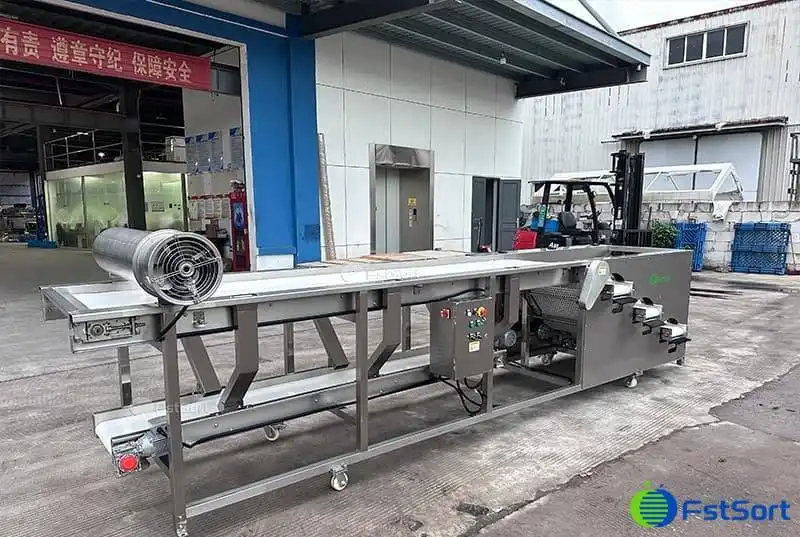
And when the farm grows again—when daily volume hits a ton or more—there will be a next step. But for now, the drum grader does exactly what it needs to do.
Explore the full specs on our blueberry grading machine page →
Start with the Step That Makes Sense
Not every farm needs a high-capacity belt grader. Not every grower can justify a multi-lane optical sorter. But every grower who's outgrown hand sorting needs a reliable way to sort by size.
The drum grader is that way. It's the step that makes sense for where you are right now—and it's the foundation for where you‘re going next.
The question isn't whether you need a grader. It's whether you're ready to stop sorting by hand.