
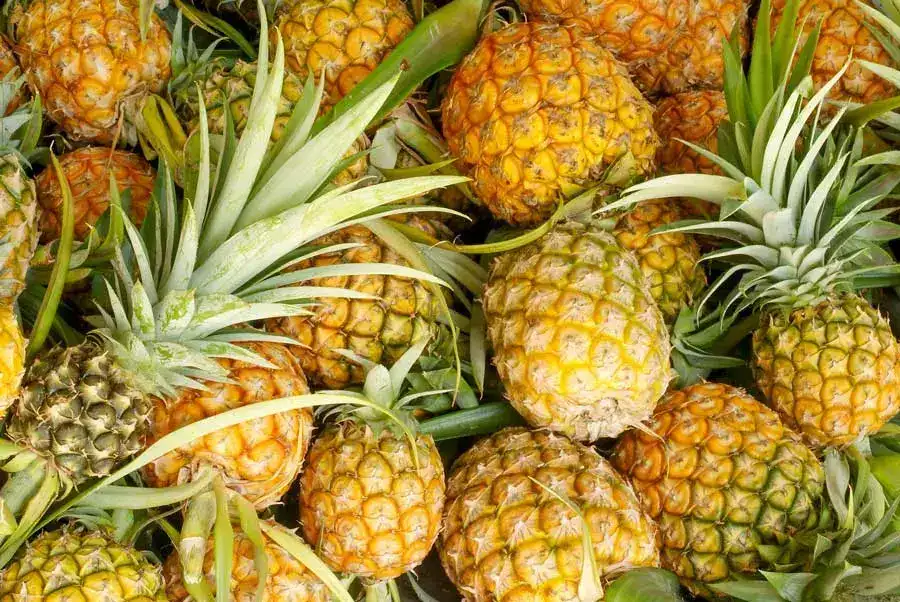
Pineapples look rugged, but post-harvest damage is less about "dropping" and more about "compression"—the principal mechanical injury in pineapple, with bruising often hidden beneath the skin until the shelf. This article examines the compression logic of pineapple packing and how a packing line reduces compression and stacking at every transfer, from water pool to drying, vision sorting, electronic weighing, and boxing.
Pineapple Packing: More Damage Comes from Compression Than from Drops
Pineapples are among the most heavily traded tropical fruits. Global pineapple exports reached approximately 3.7 million tonnes in 2025, with the Philippines as the second-largest exporter, shipping about 810,000 tonnes, up roughly 19%, driven largely by Chinese demand. Import demand in the US, EU, and China continues to support global pineapple trade.
But pineapples carry an easily underestimated contradiction: they look rugged, yet what they fear most is compression. Post-harvest research explicitly identifies compression as the principal form of mechanical injury in pineapple, typically occurring during transport and transfer. Pineapple bruising is also deceptive—a slight skin depression or discoloration can correspond to deeper damage inside the flesh, and that damage accelerates decay.
This means the design logic of a pineapple packing line is not "connecting machines and boxing as fast as possible," but reducing the opportunities for compression, stacking, and repeated handling at every transfer point.
From Water Pool to Boxing: Every Step Answers "Where Does Compression Come From?"
After receiving requests from US customers for pineapple packing lines, Fstsort surveyed the local industry. Local post-harvest handling combines mechanization with manual labor, and a complete packing line typically includes the following stages. Each stage can be understood through the lens of compression control:
1. Harvest and transport → Large water pool transfer: the first transfer node, no dry drops
After harvest, pineapples are transported to the processing facility and enter a large water pool for transfer to processing equipment. The point is not just washing—water provides natural cushioning. Pineapples float and move in water, avoiding dry drops and hard impacts between harvest and infeed. For compression-sensitive pineapple, using water buoyancy instead of dry drops at the very first transfer node is the foundation of damage control across the line.
2. Water pool → Horizontal blow-dry section: no stacking, no compression
From the pool, pineapples are conveyed to the horizontal blow-dry section. The conveying method must avoid stacking and mutual compression on the belt—stacking is a major source of compression injury. Horizontal conveying reduces impact and stacking pressure compared with drop-style transfers.
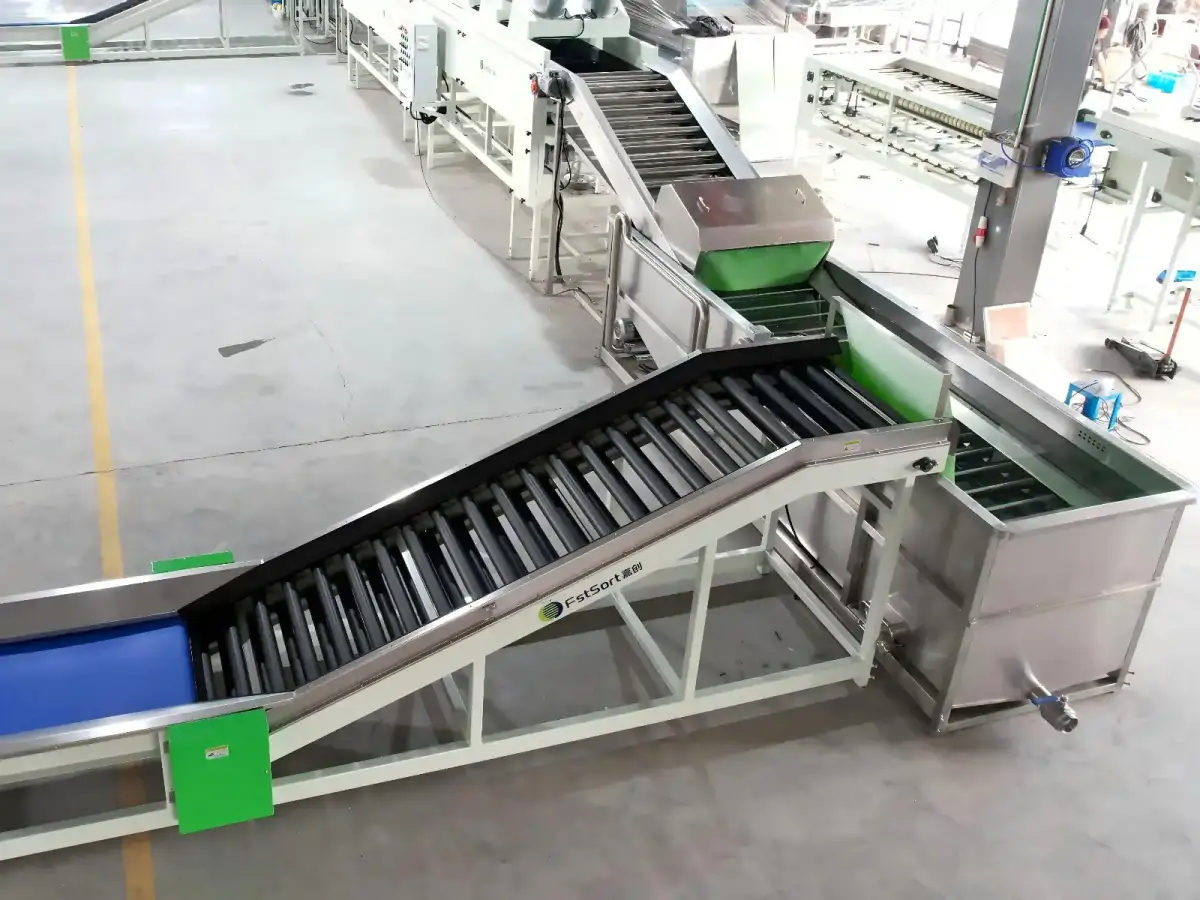
3. Vision sorting: identify already-damaged fruit before waxing and weighing
After drying, pineapples enter vision sorting. The position of this step is critical: it happens before disinfectant/wax application and weight sorting. Fruit with surface damage or existing skin defects is identified and diverted here, rather than being discovered after waxing, weighing, and boxing. Front-loading defect identification reduces secondary handling of already damaged fruit—fruit that has already been compressed should not be compressed again.
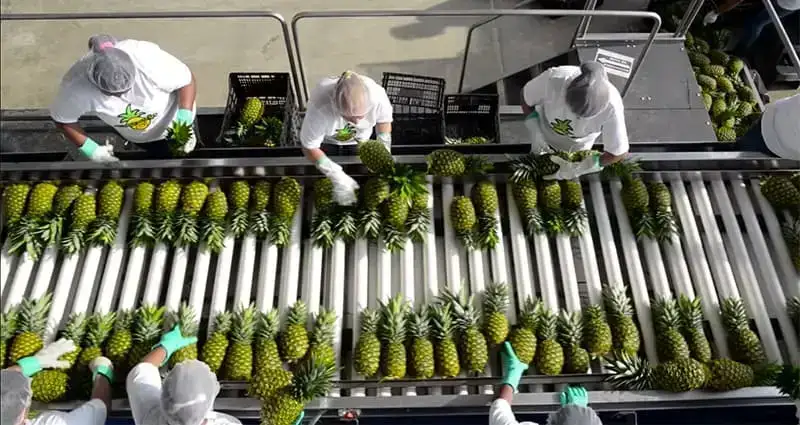
4. Disinfectant/wax → Weight sorting: grading by individual fruit weight, not repeated manual handling
After vision sorting, pineapples are treated with disinfectant and wax, then enter the weight sorting line, with results based on individual fruit weight, not manual handfeel or visual judgment. For a category as large, irregular, and compression-prone as pineapple, individual weighing and data-based grading means the fruit does not need to be repeatedly picked up, turned, and put down during sorting—grading standards are set by weight data, reducing compression opportunities from manual handling.
5. Manual boxing → Labeling → Palletizing → Cold storage: control compression upstream so boxing can "travel light"
After weight sorting, workers pack pineapples by grade, label, palletize, and move them into cold storage. Boxing still involves manual handling, but if the water pool transfer, drying, vision sorting, and weighing stages have already controlled compression and drop risks, boxing does not need to compensate for hidden problems left earlier by "being extra careful." The value of a packing line is making "compression control" a built-in process capability, not an extra burden at the final step.
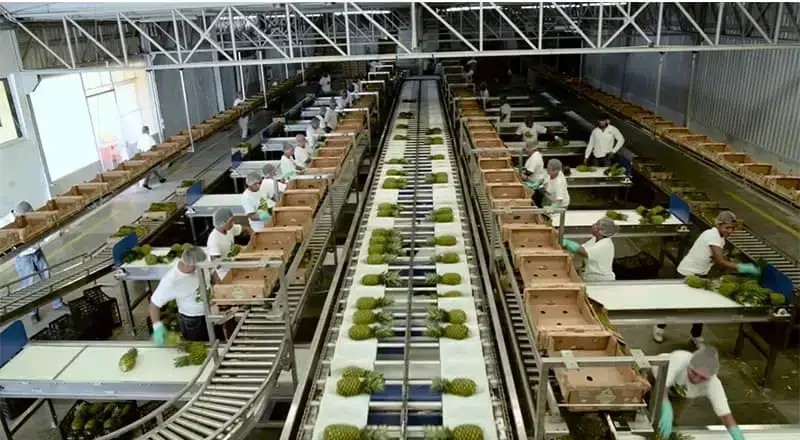
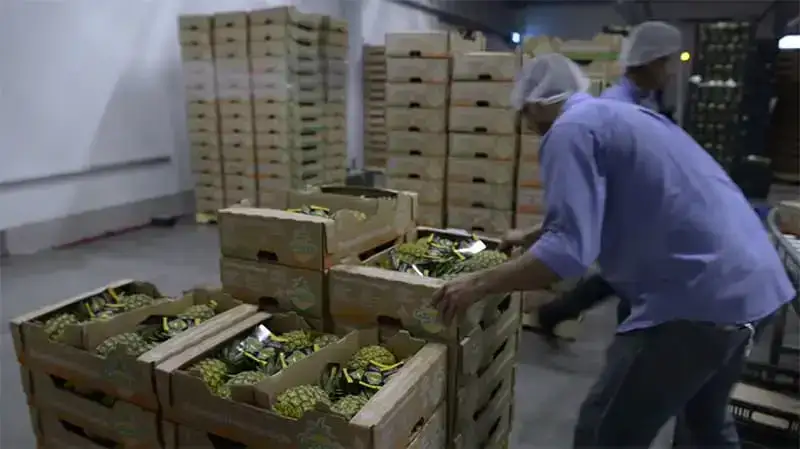
From Process to a Customizable Pineapple Packing Line
Based on its survey of the local industry flow, Fstsort provides a complete pineapple packing line that can be customized to the customer's production scale—from water pool transfer, drying, vision sorting, waxing, and weight sorting to boxing and cold-storage connection, with each stage flexibly configured to capacity and site conditions. The core design principle is not "stacking equipment," but minimizing compression, stacking, and unnecessary handling at every transfer from infeed to boxing.
Competition in pineapple packing is not about "boxing speed," but about how many times pineapple is unnecessarily compressed or stacked across the chain from harvest to boxing. When pineapple bruising hides beneath the skin and accelerates decay on the shelf, the compression-control capability of the packing line at the transfer and sorting stages directly determines how much fruit is truly intact on arrival.
Want your pineapple packing line to reduce compression and stacking from the very first transfer node? Learn more about Fstsort's packing solutions→