
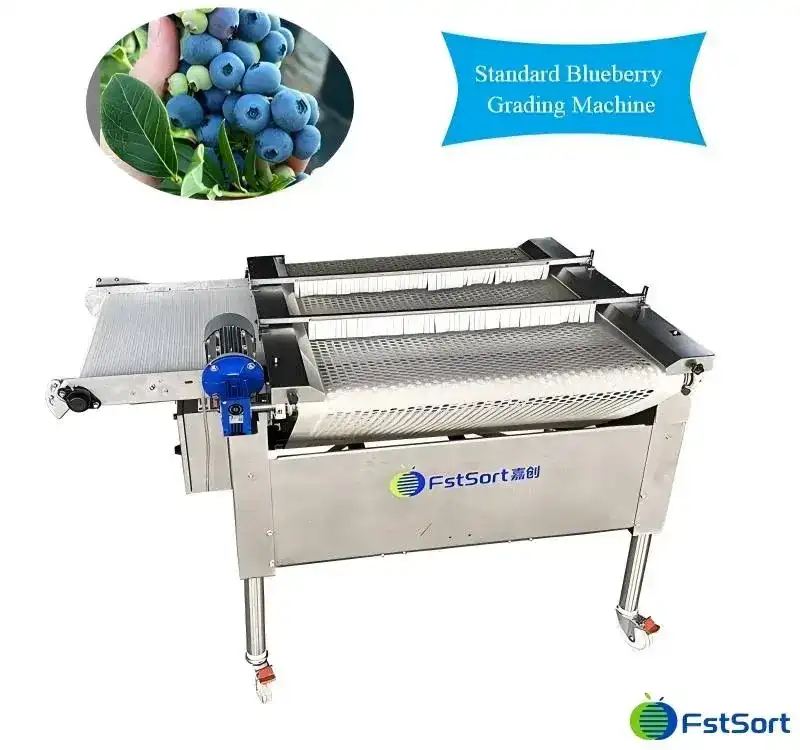
You know what's frustrating? Picking perfect blueberries—then watching them lose their bloom before they even make it to the pack. Here's why medium to large packers are swapping their drum graders for belts.
The One Thing That Separates Premium Blueberries from Discount Ones
If you pack blueberries, you know this: bloom isn't just nice to have. It's what buyers look for first. No bloom, no premium price.
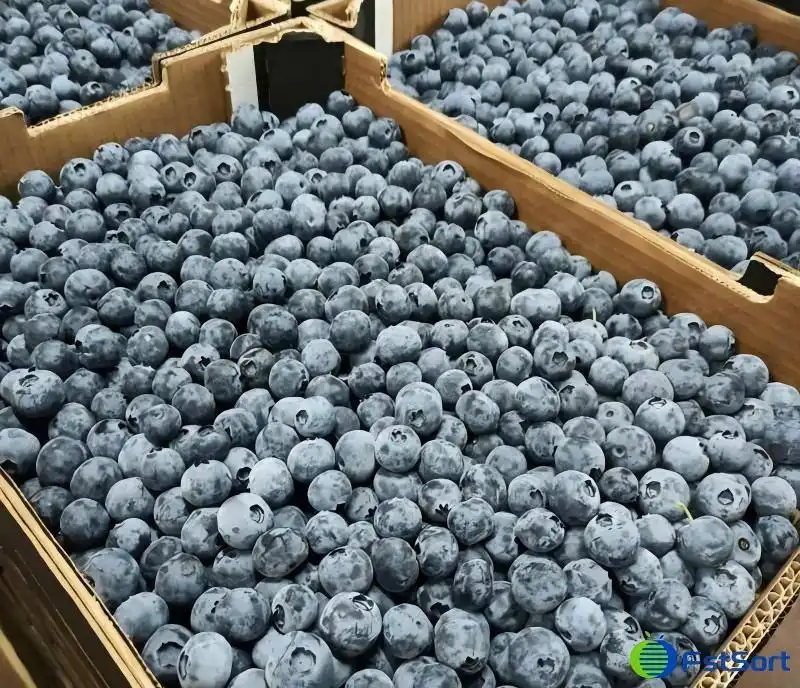
But here's the problem. A drum grader works fine for small volumes—a few hundred kilos a day, no big deal. But once you start pushing higher throughput, the tumbling starts taking its toll. Berries knock against each other. They rub against the drum. By the time they come out the other end, some of that silver-white powder is gone.
And that powder? You can't put it back.
A belt grader handles the same volume without the tumbling. Berries glide flat on a perforated belt. They don't roll. They don't rub. They don't knock into each other. They just slide through, sorted by size, with their bloom intact.
What You Gain When You Switch
So what changes when you move from a drum to a belt? Pretty much everything that matters.
· More throughput, less friction. A drum grader tops out around 300–500 kilos per hour. A belt grader runs up to a ton per hour—and does it without rubbing the bloom off.
· Flexibility that doesn't require a second machine. With a drum, changing sizes is a whole operation—heavy drums, tools, extra hands. With a belt, it's a latch and a slide. One person, a couple of minutes. Switch between size specs without stopping the line for half a day.
· Speed that matches the fruit. Not all blueberries are the same. Some are more delicate than others. Variable speed means you can slow it down when you need to, speed it up when you don't.
What That Actually Looks Like in a Packing House

Here's the short version:
Drum Grader | Belt Grader |
|---|---|
Berries tumble—friction rubs off bloom | Berries glide—bloom stays on |
300–500 kg/h | Up to 1,000 kg/h |
Changing sizes takes time and tools | Changing sizes takes a minute and one person |
Fixed speed | Adjustable—slow down for delicate fruit |
That's the difference between a machine that works for a farm and a machine that works for a packing house.
Who's This For?
This isn't about which grader is "better" in some abstract sense. It's about which one matches your scale.
· If you're a small grower handling 300–500 kg per day, a drum grader is a solid, cost-effective choice. It sorts berries, it's simple to run, and it doesn’t overcomplicate your operation.
· But if you're processing a ton or more per day, the math changes. At that volume, the tumbling action of a drum grader doesn't just slow you down—it starts costing you money. Every berry that loses its bloom loses value. Every minute spent changing drum sizes is a minute your line isn't running.
· And if you're supplying supermarkets or export markets, the margin for error is even thinner. Buyers inspect visually. They reject dull berries. They pay premiums for fruit that looks freshly picked.
That's where the belt grader comes in. It gives you the throughput you need without the bloom loss you can't afford. It's built for that volume, that quality, and that market.
If the drum grader is starting to feel like a bottleneck, you're already in belt territory.
Drum graders have their place. For small operations, they're a solid choice. But for medium to large packers—the ones who need volume and quality at the same time—belt grading is the upgrade that pays for itself.
If you want to dig into specs, visit our blueberry grading machine page →