
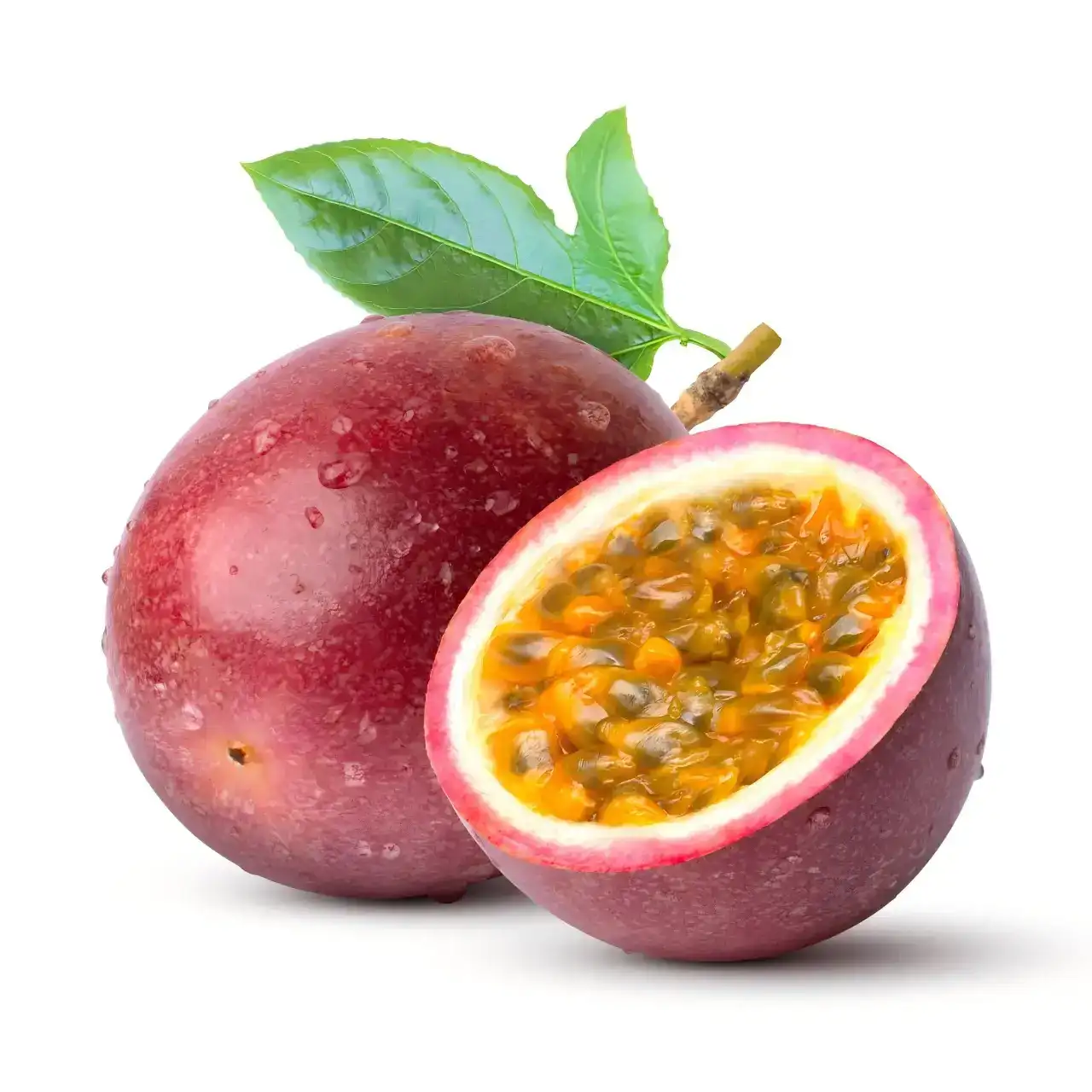
Passion fruit bruises easily, with post-harvest losses of 25–40%, while export-grade fruit sells for 2–3× the price of ungraded produce. Grader selection should weigh three long-term costs—bruising, lost premiums, and manual grading drift—not just equipment price. This article examines the hidden economics and how Fstsort balances speed with gentleness.
Choosing a Passion Fruit Grader: The Real Comparison Is Not Price
The most common mistake is comparing equipment quotes without calculating long-term losses.
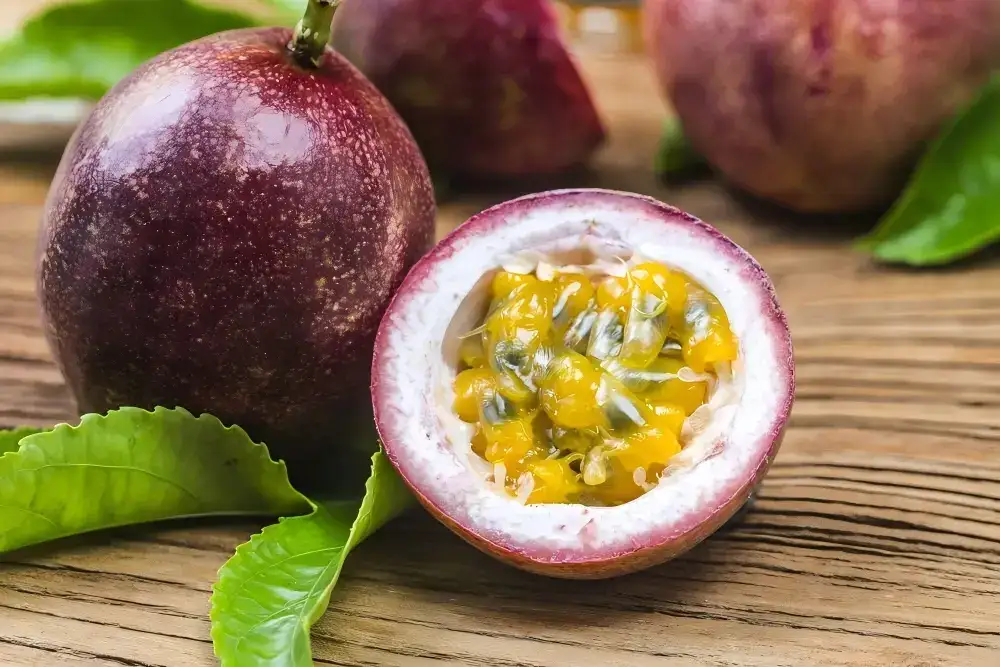
Passion fruit is one of the most bruise-sensitive fruits, with industry post-harvest losses at 25–40% and drops over 30 cm shortening shelf life. Whether a grader is "expensive" or "cheap" depends on how much avoidable bruising it creates over its service life.
Export premiums tell the same story: export-grade fruit commands two to three times the price of ungraded produce. Accurate, gentle grading decides whether a batch moves through the premium channel or into price competition.
Manual grading carries its own invisible cost—industry research notes it is inefficient and costly, with worker-dependent standards that make export consistency impossible to guarantee.
Two Technologies, Two Different "Cost Structures"
Fstsort offers two grading technologies for passion fruit. They are not "good versus better"—they correspond to different priorities and different cost structures.
Roller Grader: Sorts by diameter, best for "speed-first, budget-conscious" operations
The roller grader sorts by diameter through gradually increasing roller gaps—passion fruit gently rotates on straight rollers and falls through at the point matching its size. Capacity is approximately 4 t/h, with 3–6 adjustable grades and a proven, lower-investment design.
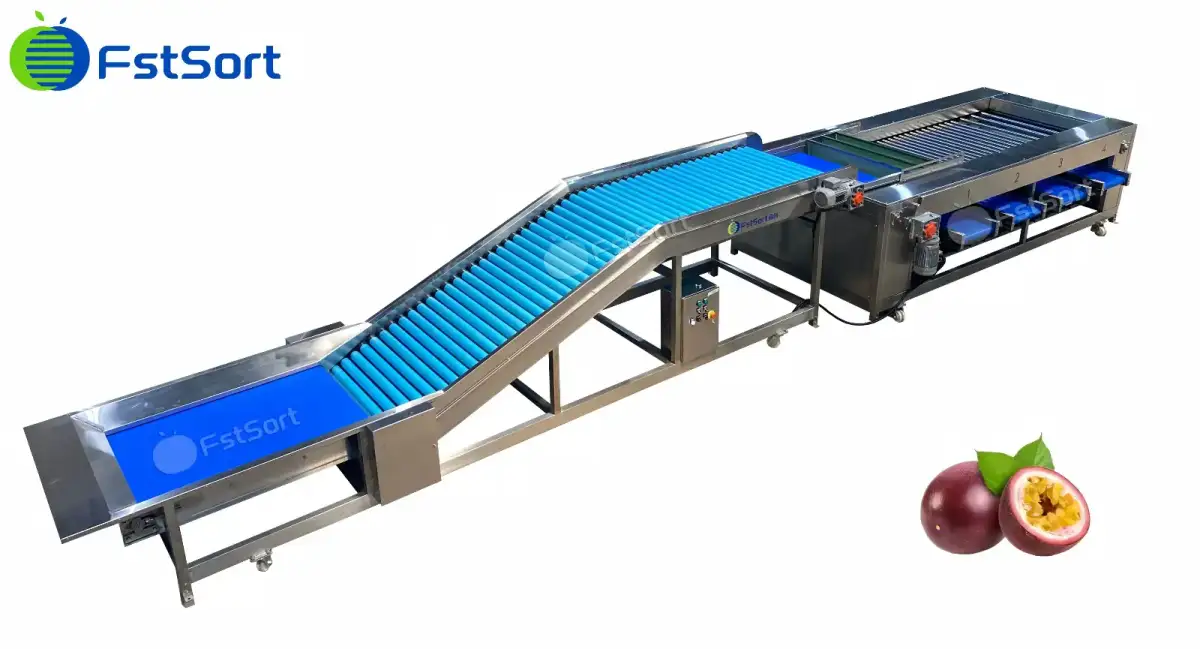
Its value is not "the gentlest possible handling," but completing high-volume grading with acceptable contact. For processors handling mainly processing-grade or less-than-fully-ripe fruit, or operating on a tighter budget, the roller grader is a pragmatic balance between speed and cost. It should be noted that roller graders have higher drop heights than electronic weight sorters—for very soft or fully ripe fresh-market passion fruit, it is not the optimal choice.
Electronic Weight Sorter: Sorts by weight, best for "export-premium-first, very fragile fruit"
The electronic weight sorter grades by individual fruit weight with ±2g accuracy, 6–12 adjustable exits, capacity of approximately 20,000 pcs/h per lane, and a 30–500g range covering all passion fruit varieties.
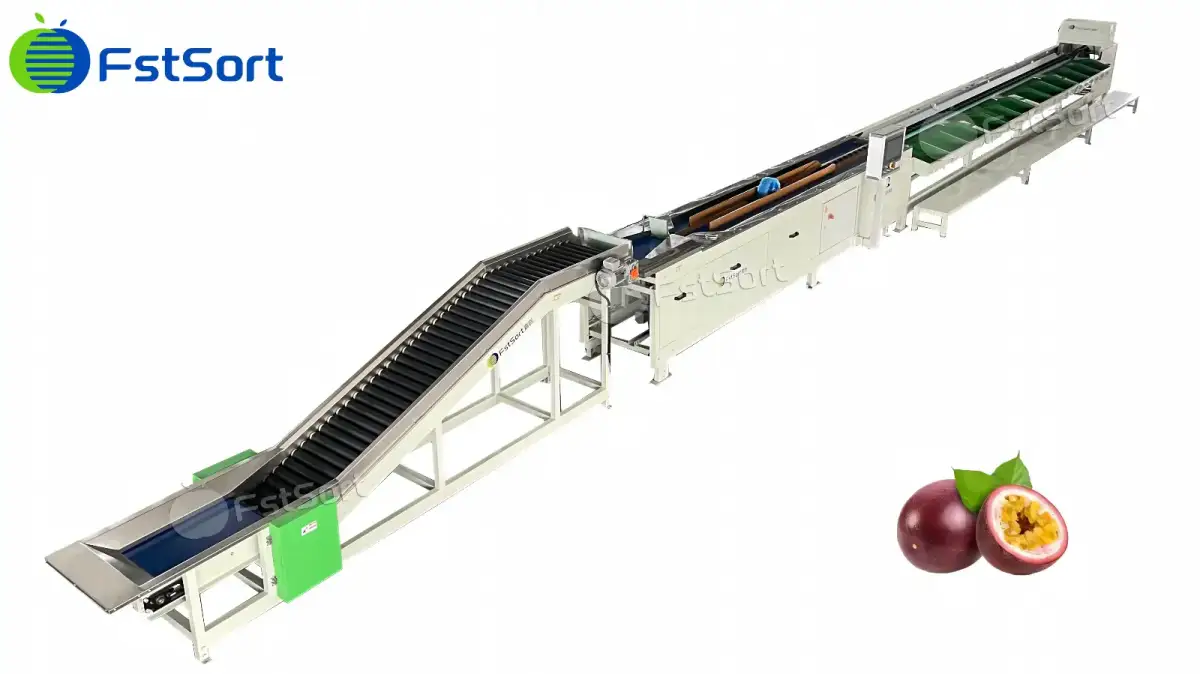
Its core difference is not "it can also sort," but that soft protection is built into every touch point: foam-wrapped elevator tubes, elastic joints, sponge padding, and rounded PVC weighing cups.
For processors supplying European exports, premium retail, or fully ripe fresh-market channels, the electronic sorter's low drop height and full-contact soft protection directly correspond to the two long-term returns: reducing bruising losses and protecting export premiums. It requires higher investment, but every percentage point of bruising reduction pays for itself in premium capability.
The Key Question: Where Does Your Passion Fruit Ultimately Go?
The choice between the two routes comes down to one question: in what form and through what channel does your passion fruit reach the market?
· If your focus is processing-grade or less-than-fully-ripe fruit, with high volume and budget control → the roller grader is a rational starting point.
· If your focus is fresh export, premium retail, or fully ripe fruit, where bruising losses and specification consistency directly determine price → the electronic weight sorter's soft protection and weight accuracy are the better match.
Both Fstsort models share the same design principles: variable speed, adjustable grade sizes, optional inspection tables, and soft mats available at discharge conveyors. The essence of selection is not "which machine to buy," but choosing the path with the lowest losses and highest returns for your fruit and your channel.
From Grader to Complete Line
Grading is just one step in passion fruit post-harvest handling. Fstsort's grading solutions can be combined with elevators, inspection tables, discharge conveyors, and automatic box filling and weighing systems to form a continuous line from infeed to packing. Passion fruit moves from infeed to graded output with reduced manual handling and intermediate transfers—compressing the opportunities for bruising at the process level.
Competition in passion fruit exports is shifting from "having supply" to "grading accurately and bruising less." When export-grade fruit commands two to three times the price of ungraded produce, the gentleness and precision of the grading stage directly determine whether processors can carry the premium consistently to the end market.
Want your passion fruit grading to find the right line between speed and gentleness? Learn more about Fstsort's passion fruit graders and complete line solutions→