
Fstsort has launched two new weight sorting machines featuring optimized designs that minimize fruit damage during high-speed operation. The machines offer significantly improved sorting speed, accuracy, and flexibility to meet diverse production needs, aiming to enhance product standardization and competitiveness for fruit businesses.
Weight Sorting: The Last Mile of Standardized Packing—and the Most Damage-Prone
Before fruit reaches the packing stage, what often determines its price and channel is not "size," but weight specification. Supermarket pre-packs require consistent net weight per tray; export orders specify exact gram ranges per carton; processors need to sort fresh fruit into precise weight grades—inaccurate grading means discounted prices or rejected shipments.
Manual sorting has a structural limitation here. Workers judge weight by handfeel and experience; the same batch can be graded differently by different workers, and after prolonged repetitive work, both standards and speed decline.
Weight sorting machines solve this by transferring the "weight standard" from human handfeel to physical measurement in the weighing unit. But there is an overlooked tension: weight sorting must run at high speed, and high speed itself can become a source of damage. Every contact and drop during conveying, weighing, and discharge can cause bruising or scuffing. At the same time, processors face increasingly diverse markets, and one machine must switch quickly between different categories and weight specifications.
The New Machine Targets These Two Tensions
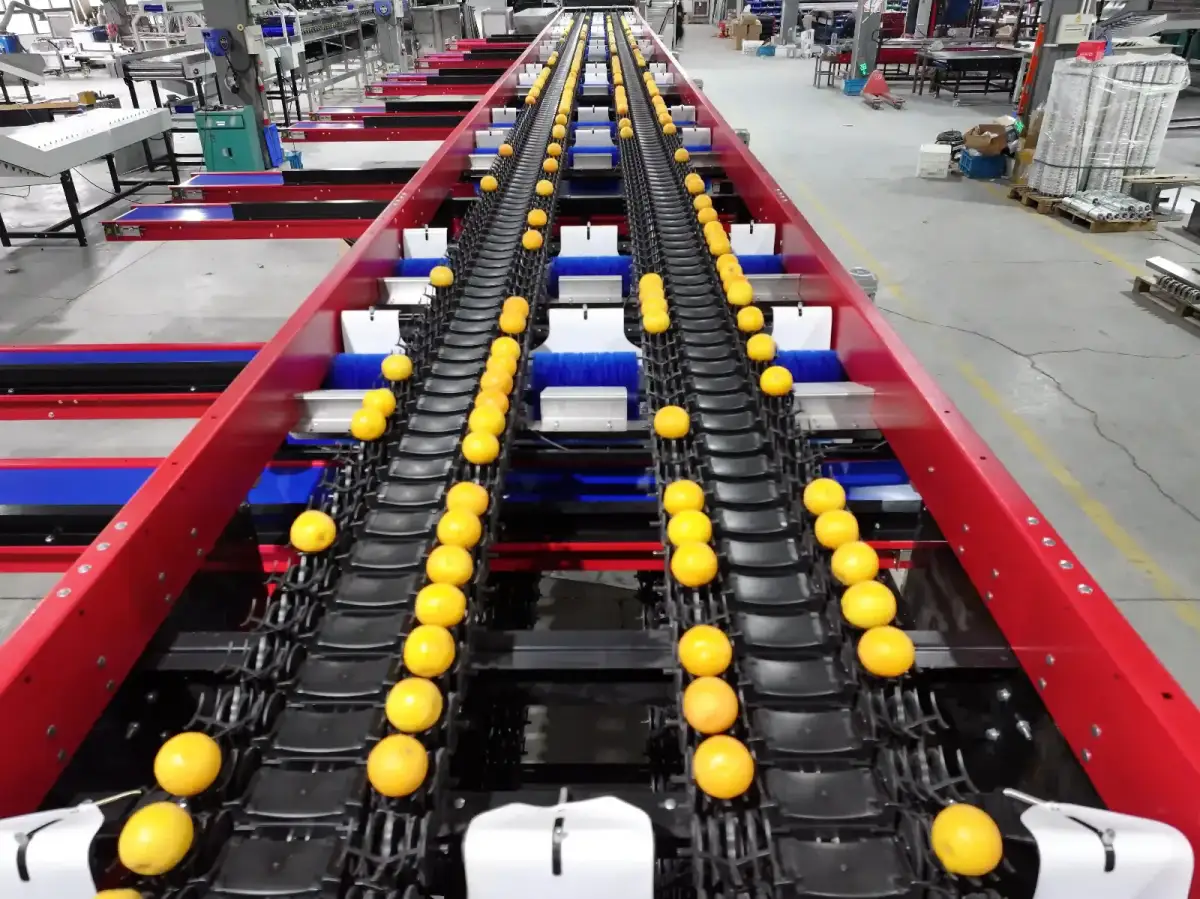
Fstsort's newly launched weight sorting machine does not position "accuracy" as the sole selling point. Instead, it optimizes around the two tensions above at both the structural and control levels.
1. Structural optimization: high-speed operation without bruising as the price
The new model makes targeted adjustments to the conventional weight-sorting structure, with the core goal of reducing collision and friction during high-speed operation. The conveying and weighing sections have been redesigned so that fruit enters the weighing unit and is discharged with gentler contact, lowering the risk of skin scuffing and bruising. For thin-skinned, soft-fleshed categories such as cherry tomatoes, plums, and apricots, this structural protection means the fruit's appearance after grading is closer to the state it was in when it entered the machine. The value of weight sorting is not just "weighing accurately"—it is "weighing accurately while the fruit is still intact."
2. Flexible changeover: spec switching through the control system, not downtime
The other efficiency breakthrough is the ability to adapt quickly across different categories and specifications. The intelligent control system can rapidly recall different grading recipes—from small specialty fruits to large-volume commodities, from one weight range to another—without lengthy mechanical adjustment. For processors serving multiple channels or handling different categories across seasons, this flexibility translates directly into equipment utilization and delivery responsiveness. During peak season, the line does not need to stop just to "change the spec."
From Weight Sorting to Complete Packing Solutions
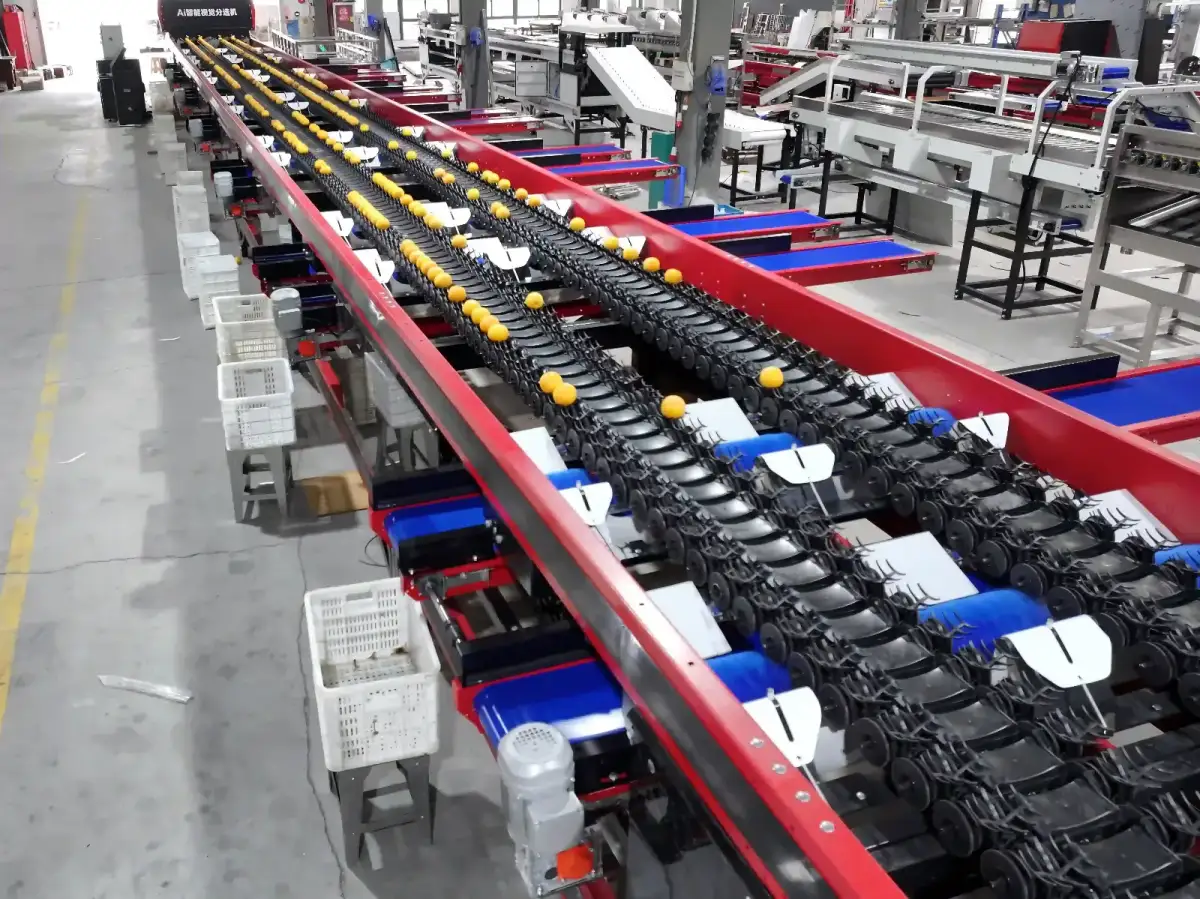
Weight sorting is not an isolated step. Graded weight classes need to connect with downstream boxing, weighing, filling, and labeling to turn "grading accurately" into "delivering accurately." Fstsort's weight sorting solutions can integrate with inspection, conveying, and packing modules to form a continuous flow from infeed to precise-weight boxing, reducing manual handling and secondary contact after grading.
When manual grading's 70% accuracy and 20–30% post-harvest losses can no longer support standardized packing and export delivery, the "protection at speed" and "flexible changeover" of the weight sorting stage are becoming the critical variables that turn specification consistency into a deliverable commercial result.
Want your weight sorting to protect fruit at high speed and avoid losing capacity to spec changes? Learn more about Fstsort's weight sorting solutions→