
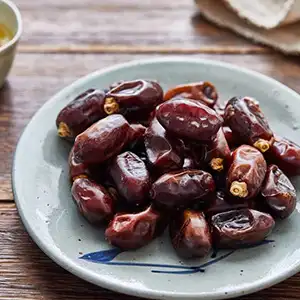
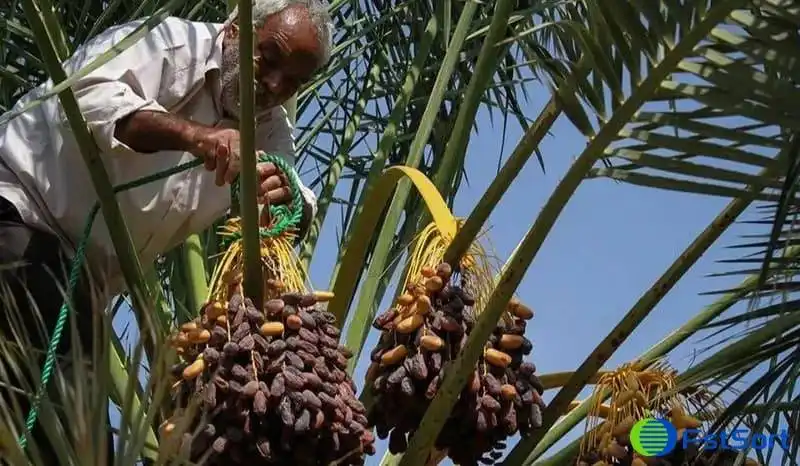
Dates grow naturally on trees. They are harvested by hand. Each tree produces hundreds of kilograms — but no two dates are exactly alike. Some are large. Some are small. Some are ready for premium shelves. Some are better for processing. Here's how grading turns a natural harvest into a marketable product.
The Natural Variety That Makes Grading Essential
Dates are one of the few fruits that can ripen and dry naturally on the tree. They don't require artificial processing to become the sweet, chewy product that consumers love.
But here's what many people don't realize: natural growth means natural variation.
A single date palm can produce hundreds of kilograms of fruit each season. But within that single tree's harvest, you'll find dates of different sizes, different moisture levels, different degrees of ripeness, and different surface qualities.
For a family eating dates at home, this variation doesn't matter. But for a commercial operation supplying supermarkets, export markets, or food processors, it matters a great deal.
Buyers don't pay a single price for "dates". They pay different prices for different grades. Large, flawless dates command premium prices. Smaller or blemished dates go to different channels — food processing, date paste, or bulk export.
The question isn't whether to grade. It's how to grade efficiently.
The Manual Sorting Bottleneck: Why 20 Workers Isn't Enough
In many date-producing regions, grading is still done by hand. Workers sit at tables, sorting dates one by one by size and appearance.
Manual sorting has three problems that become more acute as production scales up:
Problem | The Real Cost |
|---|---|
Slow | Sorting hundreds of kilograms by hand takes days — delays that cost market opportunities |
Inconsistent | Different workers, different standards — one person's "large" is another person’s "medium" |
Expensive | Labor costs are rising everywhere, and seasonal workers are increasingly hard to find |
For a processor handling tons of dates per season, manual sorting isn't just inefficient — it's a bottleneck that limits how much you can sell.
A mechanical date grader, by contrast, processes 2–3 tons per hour — equivalent to the workload of 20 manual sorters. It doesn't get tired, doesn't make subjective calls, and does't slow down at the end of the day.
What a Grader Actually Does
A date grader sorts by diameter — the width of each date. Dates move along a series of rollers with gradually widening gaps. Smaller dates fall through first, medium dates through the next, and the largest continue to the end.
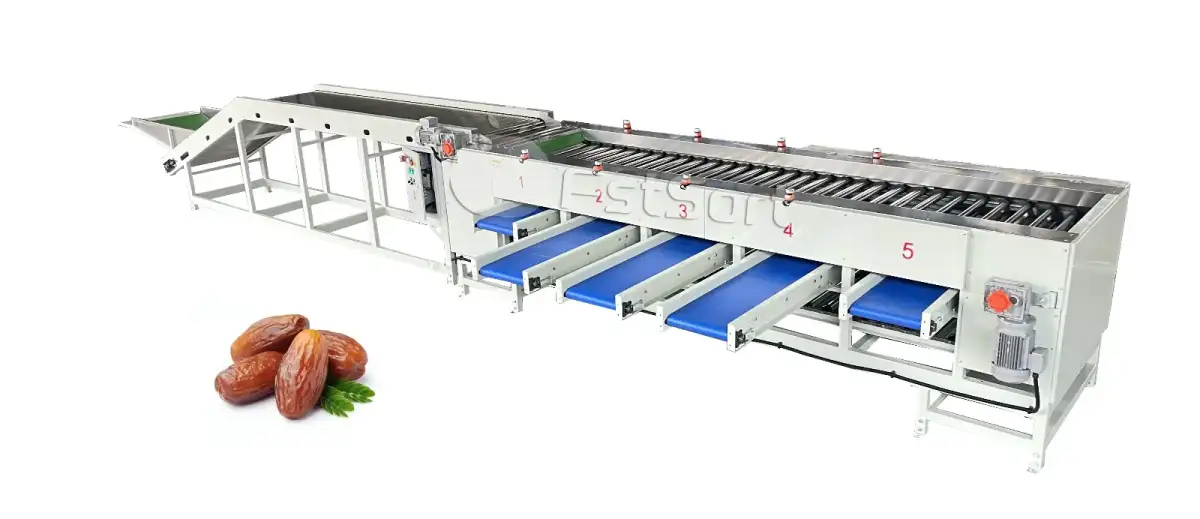
Each size exits through a separate outlet, ready for its specific market channel:
· Largest dates — Premium export, high-end retail, gift packs
· Medium dates — Supermarket shelves, standard consumer packs
· Smaller dates — Date paste, confectionery, food processing
Every date finds its right market — and every market gets the product it expects.
Depending on the processor's needs, the grader can be configured as a standalone machine for size sorting, or integrated into a complete line that includes cleaning, polishing, drying, and packing — all in one continuous flow.
Built for Date-Producing Regions
Fstsort date grading equipment is already operating in India, Saudi Arabia, Libya, and other date-producing regions.
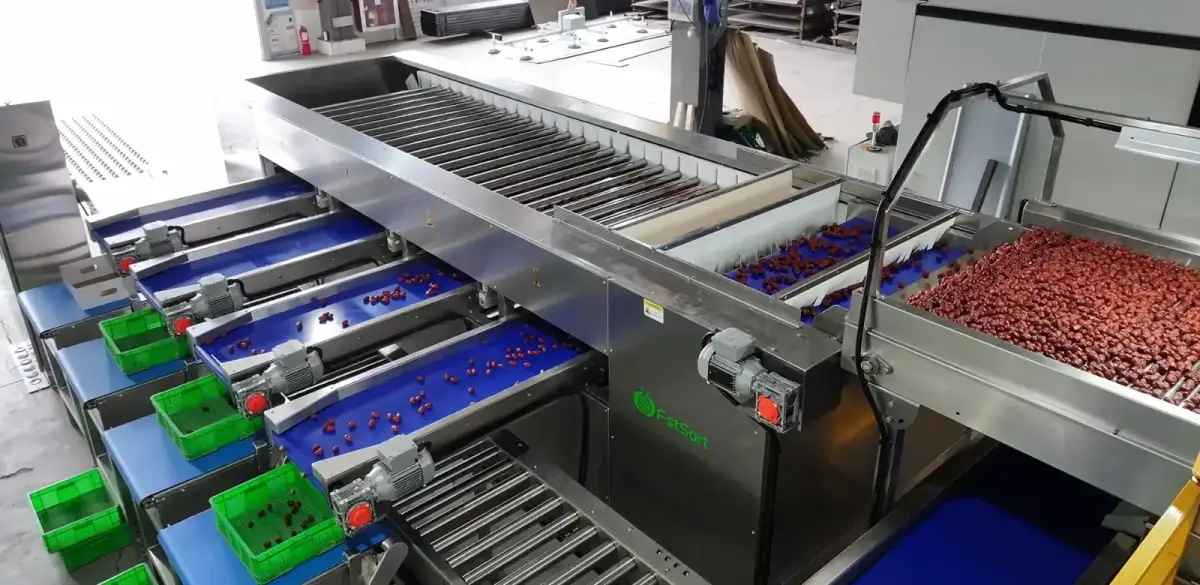
The grader is adjustable — 3 to 6 sizes to match your market requirements. It handles all common date varieties — Medjool, Sukkari, Ajwa, and more.
For processors who need more than just sizing, Fstsort also offers polishing graders for semi-dry dates with surface dust, and complete washing-drying-grading lines for fresh or sticky dates that require deep cleaning. Each solution is designed for a specific date condition and processing need.
Explore the full specifications on our dates grading machine page →
From Tree to Market: The Grading Difference
Dates start on the tree — natural, varied, unprocessed. They end on the shelf — graded, consistent, market-ready.
The difference between those two points is grading. It's what turns a harvest into a product, and a product into a profit.
The technology exists. The question is whether your grading line is keeping up with your harvest.