
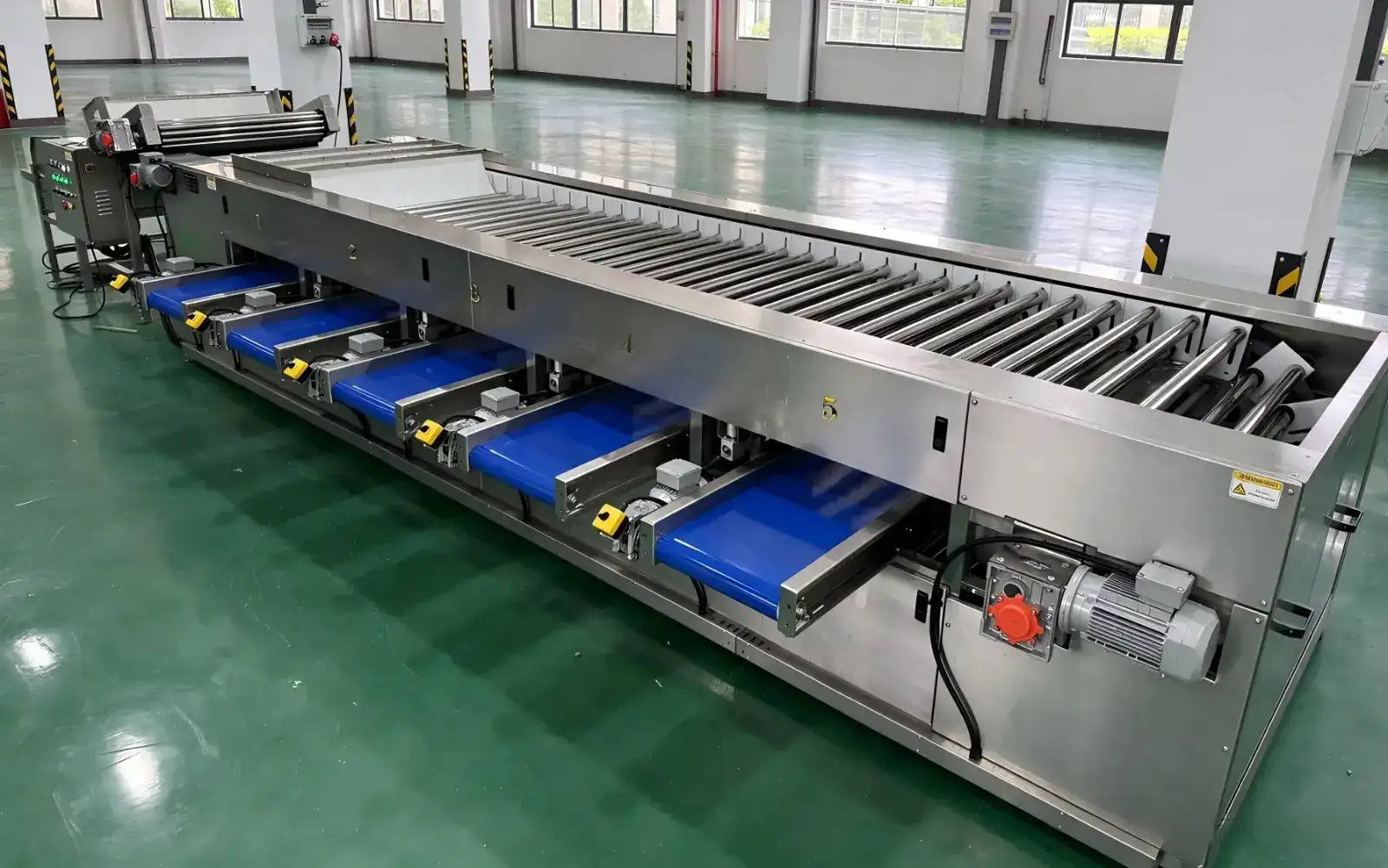
Qianjiang's crayfish industry exceeded RMB 87 billion in comprehensive output value in 2025, generating approximately $300 million in annual export revenue. Grading premiums are significant—price differences between large, medium, and small crayfish can reach RMB 10 per jin. This article examines export growth and grading premium logic, and explains how Fstsort's crayfish automatic grading machine helps processors improve grade consistency and capture export premiums.
The Crayfish Export Market Is Accelerating
Crayfish has grown from a local delicacy into a global trade commodity. In 2025, Qianjiang's crayfish industry exceeded RMB 87 billion in comprehensive output value, generating approximately $300 million in annual export revenue and reaching over 30 countries and regions worldwide. China's crayfish exports reached approximately 50,000 tonnes in 2025, with potential for over 10% annual growth over the next five years driven by RCEP benefits.

Growth in specific markets is equally striking. From January to April 2026, Xiantao Customs supervised 617.3 tonnes of crayfish product exports, up 29.8% year-on-year. Seasoned crayfish and crayfish tails have become flagship products for Chinese specialty agricultural exports.
This rapid export expansion is pushing crayfish processors to rethink their post-harvest grading operations.
Crayfish Grading: An Underestimated Profit Link
Crayfish grading directly affects processor profitability.
1. Grading premiums are significant. Under industry standards, 10-20g is small, 20-30g is medium, 30-45g is large, and above 45g is jumbo. Price differences between grades can reach RMB 10 per jin. The more precise the grading, the better the price premium.
2. Manual grading pain points persist. Manual sorting is inefficient and cannot match production line standards; visual judgment varies by worker, leading to inconsistent grades within the same batch; fatigue causes missed and misjudged items.
3. Export scale demands standardized grading. International buyers demand strict size consistency. Inconsistent manual grading means mixed grades in the same batch, directly impacting delivery quality and buyer trust.
Fstsort Crayfish Automatic Grading Machine: Replacing Human Judgment with Automation
It is precisely in this market environment that Fstsort's crayfish automatic grading machine was developed. Its core value can be understood from three dimensions crayfish processors care about most:
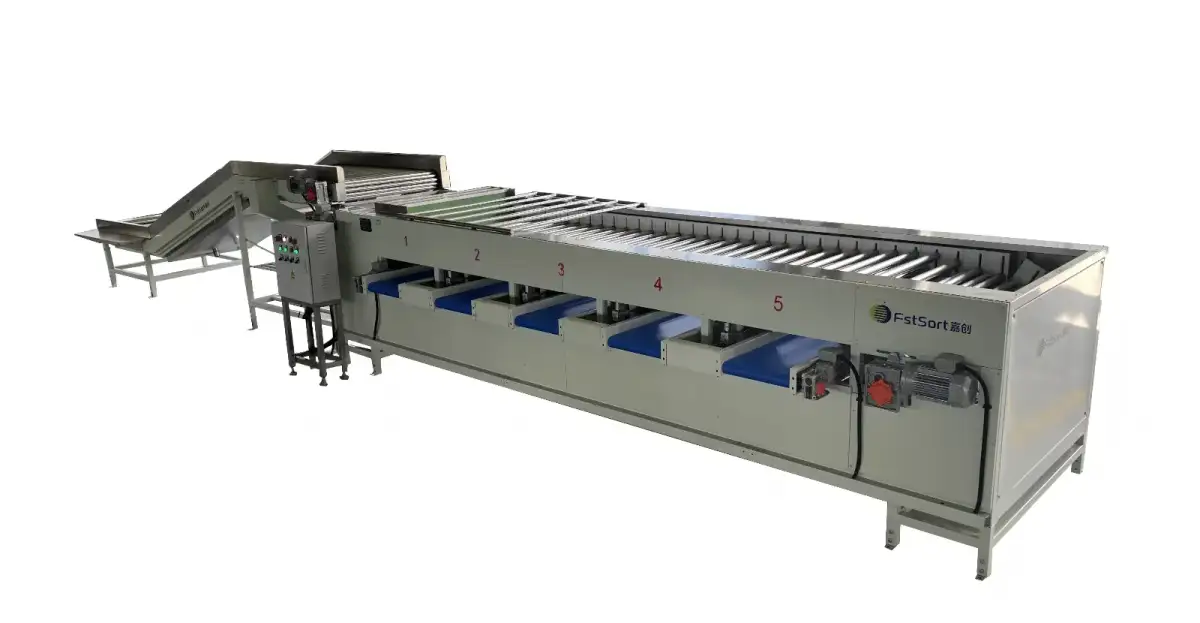
1. Accurate: from "experience-based" to "standard-driven"
Fstsort's crayfish grader uses the physical dimensions of roller gaps to achieve grading—as crayfish move forward on the rollers, smaller ones fall through smaller gaps, larger ones continue. The process does not rely on human judgment, ensuring highly consistent results batch after batch.
Unlike manual sorting's "human error," mechanical grading standards are fixed—no deviation due to fatigue or lack of experience. For export processors, this means more stable grade consistency.
2. Fast: one machine replaces multiple workers
Manual sorting is slow, often requiring large numbers of temporary workers during peak seasons. Fstsort's crayfish automatic grading machine can quickly sort crayfish into 6 grades, running continuously with throughput far beyond manual labor.
Industry data shows automated grading equipment can achieve 10x the efficiency of manual labor—one machine's hourly output equals 10 workers' hourly output. For peak export season processing demands, this efficiency gain directly translates into delivery capability.
3. Gentle: preserving product integrity
Crayfish shells are hard but the body is fragile—collisions and squeezing during sorting easily cause damage. Fstsort's grader uses a roller structure—crayfish roll forward gently on the rollers rather than being squeezed or pinched, minimizing mechanical damage to the body.
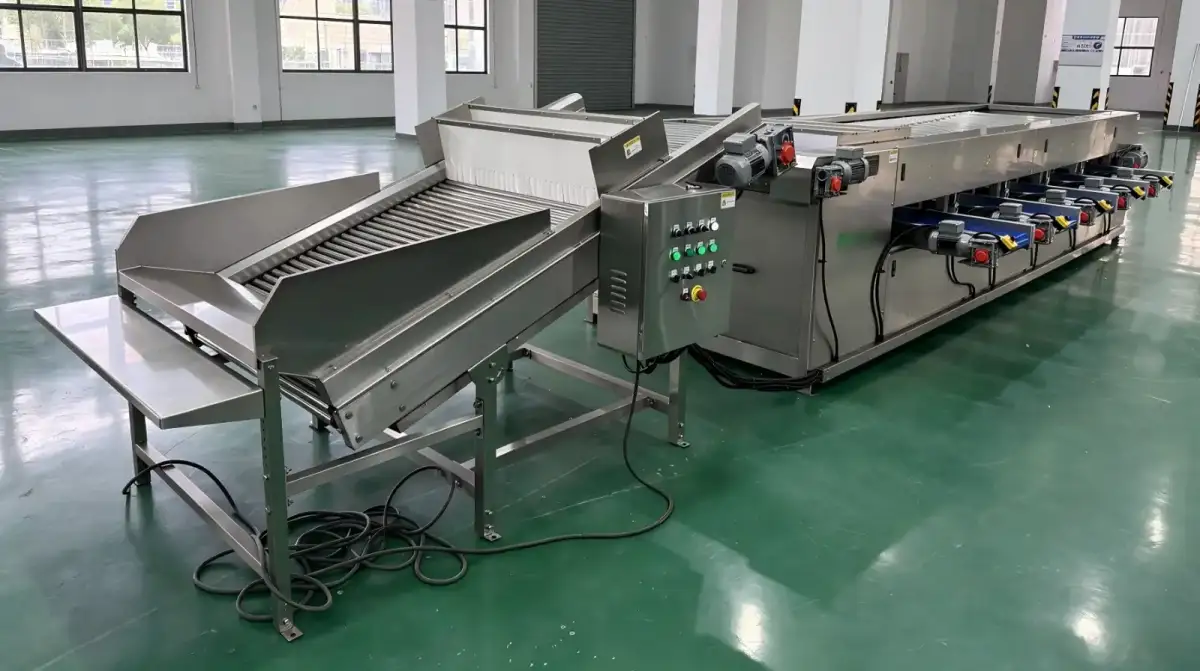
Key Specifications Overview
Parameter | Specification |
|---|---|
Sorting principle | Gradually increasing roller gaps |
Sorting grades | 6 grades |
Sorting standard | Head/body diameter |
Material | Stainless steel (food-grade) |
Operation | Continuous operation, single operator manageable |
Applicable products | Crayfish, lobster, shrimp, crab, etc. |
The above is a key specifications overview of Fstsort's crayfish automatic grading machine. For complete technical specifications and selection guidance, please contact us→.
From Grading Machine to Complete Processing Solutions
Grading is just one link in crayfish post-harvest processing. Fstsort offers complete crayfish processing solutions covering from washing, grading to weighing and packing—from roller graders to automatic box fill and weigh systems, all modules can be flexibly configured based on processing scale and target market requirements.
Competition in the global crayfish export market is intensifying. While China's crayfish exports continue to grow in Europe, the US, East Asia, and Southeast Asia, RCEP tariff benefits are opening more emerging markets—as export volumes continue to climb, the precision and efficiency of the grading stage are becoming critical determinants of whether processors can capture export premiums.
Want your crayfish processing line to replace manual labor with automation and earn market premiums through precision grading? Learn more about Fstsort's crayfish automatic grading machine and complete processing solutions—contact us for a customized solution