
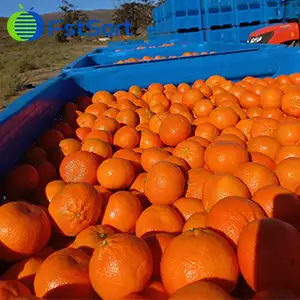
In citrus post-harvest processing, the air drying stage directly impacts wax preservation effectiveness, packaging quality, and long-term operating costs. Fstsort's fruit and vegetable air dryer, featuring ambient-temperature drying technology and optimized airflow organization, delivers practical value across multiple dimensions in commercial citrus packinghouse operations. This article examines the critical role of air drying equipment in commercial citrus lines from four perspectives and explores how it fits into integrated processing solutions.
The global citrus industry has experienced sustained growth over the past decades. Oranges, lemons, tangerines, and grapefruits are the most common traded varieties, primarily consumed as fresh fruit, juice, or concentrate. From small family farms to large-scale commercial plantations, the diverse scale of citrus cultivation presents varied challenges in post-harvest handling.

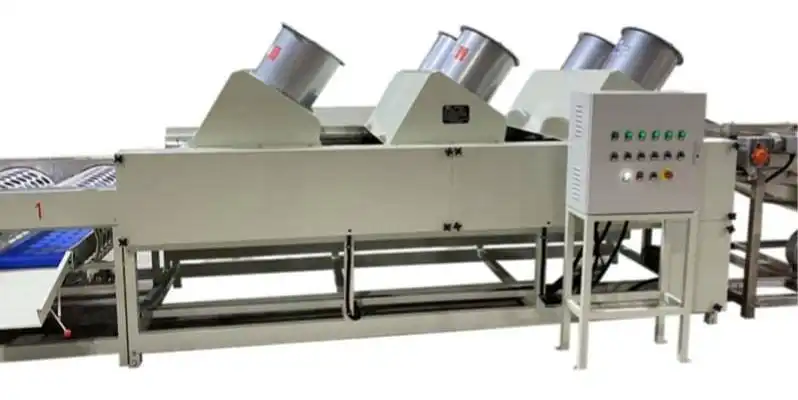
In citrus packinghouse operations, washing, drying, and waxing are three inseparable basic unit operations. Traditional natural drying methods are limited by weather and space constraints—inefficient and uncontrollable. As an alternative, Fstsort's fruit and vegetable air dryer is increasingly being adopted by packinghouses worldwide—it rapidly removes free moisture from citrus surfaces after washing, allowing fruit to enter downstream waxing, labeling, and boxing processes in a suitably dry state.
Equipment itself is only the carrier. What truly determines line efficiency and fruit quality is whether the drying stage is backed by sufficient technical depth in actual operation. Fstsort's fruit and vegetable air dryer was designed from the outset around four core requirements of commercial citrus packinghouses:
1. On Effective Surface Moisture Removal
If surface moisture remains on citrus after washing, it not only affects the adhesion of subsequent waxing but also causes issues such as weak label adhesion and carton moisture damage during packaging. In actual operation, Fstsort air drying equipment delivers consistent airflow distribution to quickly remove residual moisture from the surface of washed citrus, allowing fruit to enter downstream processes in a suitably dry state—reducing operational delays and quality risks caused by surface dampness.
2. On Waxing Adhesion Performance
Waxing is one of the key operations for citrus preservation, and whether the wax layer can adhere uniformly depends directly on the dryness of the fruit surface. If residual moisture remains, the wax layer will not spread evenly, directly affecting preservation effectiveness and shelf life. By controlling surface moisture within a reasonable range through the drying stage, the wax layer can achieve more uniform adhesion—creating favorable conditions for subsequent preservation treatments and helping maintain the product's appearance quality during storage and transportation.
3. On Temperature Control Strategy for Quality Protection
Temperature control is a detail easily overlooked in the drying stage. Fstsort adopts an ambient-temperature drying approach—unlike hot air drying, this method effectively protects the natural color and flavor of the material, avoiding damage to the citrus peel and internal quality caused by high temperatures. Studies have also shown that in commercial citrus packinghouses, air recycling can reduce energy requirements by approximately 29.6% while maintaining drying effectiveness—a significant economic consideration for processors facing rising energy costs.
4. On Operational Energy Consumption Optimization
Energy consumption is one of the largest variable costs in the long-term operation of processing equipment. Through optimized air circulation design and operational management, FstSort air drying equipment offers considerable energy-saving potential while meeting drying performance requirements—which, for long-term packinghouse operations, directly translates to processing cost per ton of fruit.
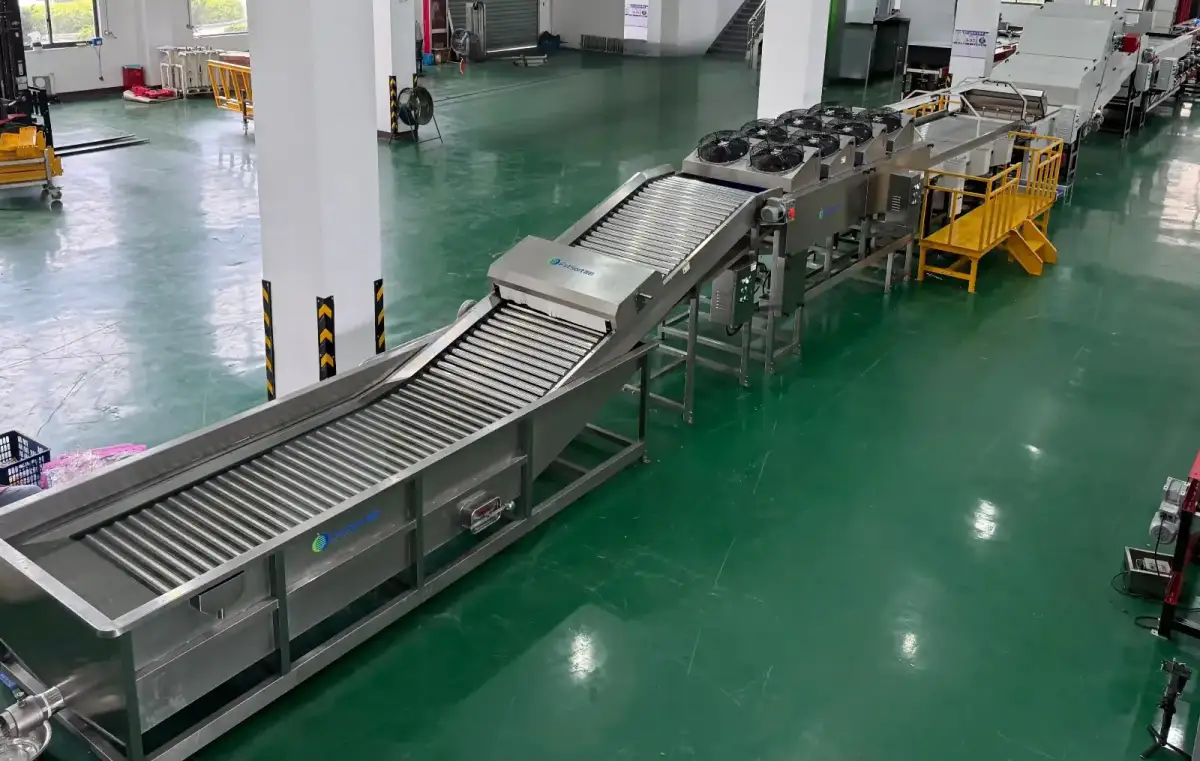
When an air dryer delivers consistent performance across all four dimensions above, it becomes more than just a drying tool—it becomes a quality assurance node for the entire production line. More importantly, Fstsort's fruit and vegetable air dryer does not operate in isolation—it can be deployed independently or seamlessly integrated with washers and graders to form a complete continuous processing solution from infeed, washing, air drying, waxing to grading.
For businesses looking to comprehensively improve processing efficiency, such an integrated citrus processing line is becoming the industry standard. The precise coordination of every step directly impacts the final market value of the product.
The value chain of the citrus industry extends far beyond planting and harvesting. In post-harvest processing, every seemingly simple operation safeguards final product quality and commercial value. And Fstsort air drying equipment stands as a trusted link in this value chain.
Interested in how Fstsort air drying equipment can fit into your processing line? Learn more on our product page of mandarin processing line→