

Hand sorting or machine grading? Here's why the choice isn't just about speed — and why protecting the natural waxy bloom matters more than you think.
The Bloom That Makes Blueberries Valuable
Blueberries are different from most fruits. Their value isn't just about size or sweetness — it's about the natural waxy "bloom" that covers their skin. That powdery, silvery coating is what premium buyers look for. It's the sign of a freshly picked, carefully handled berry.

But here's the problem: the bloom is fragile. A single rough touch, a drop from too high, or friction during sorting can rub it off. Once the bloom is gone, the berry looks dull, loses shelf life, and drops from premium grade to discount bin — sometimes in a matter of hours.
For blueberry packers supplying supermarkets or export markets, the question isn't just "how fast can we sort?" It's "how can we sort without destroying the value of the fruit?"
Hand Sorting: The Traditional Way
In small-scale blueberry farms, hand sorting is still common. Workers sit at tables, picking up berries one by one, removing damaged or rotten fruit, and packing the rest.
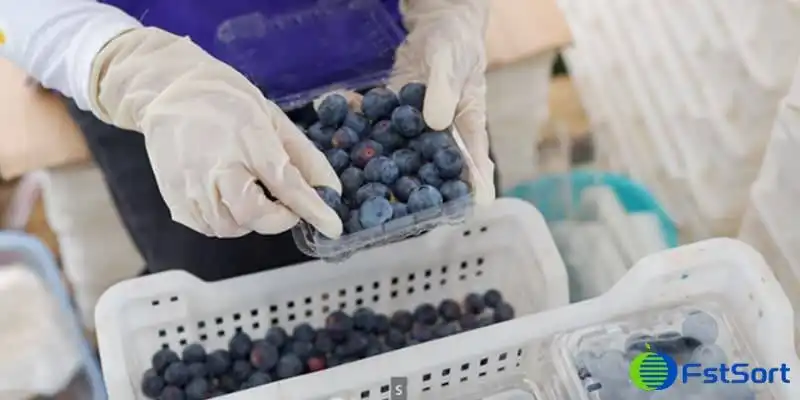
The advantages: Every berry gets individual attention. Quality control is thorough.
But the disadvantages are significant:
· Slow — One worker can only sort so many berries per hour
· Inconsistent — Fatigue leads to mistakes as the day goes on
· Expensive — Labor costs are rising everywhere
· Hard to scale — When the harvest comes in, hand sorting simply can't keep up
As one grower put it: "In the season when we are faced with a large amount of production, manual sorting is even more difficult to achieve."
Machine Sorting: Faster, More Consistent
Machine sorting changes the game. It runs 24 hours a day, delivers consistent results, and reduces labor costs significantly.
But not all machine sorters are the same. For blueberries, the choice comes down to two main types:
Option 1: Drum Grader — For Farms and Small Packing Houses
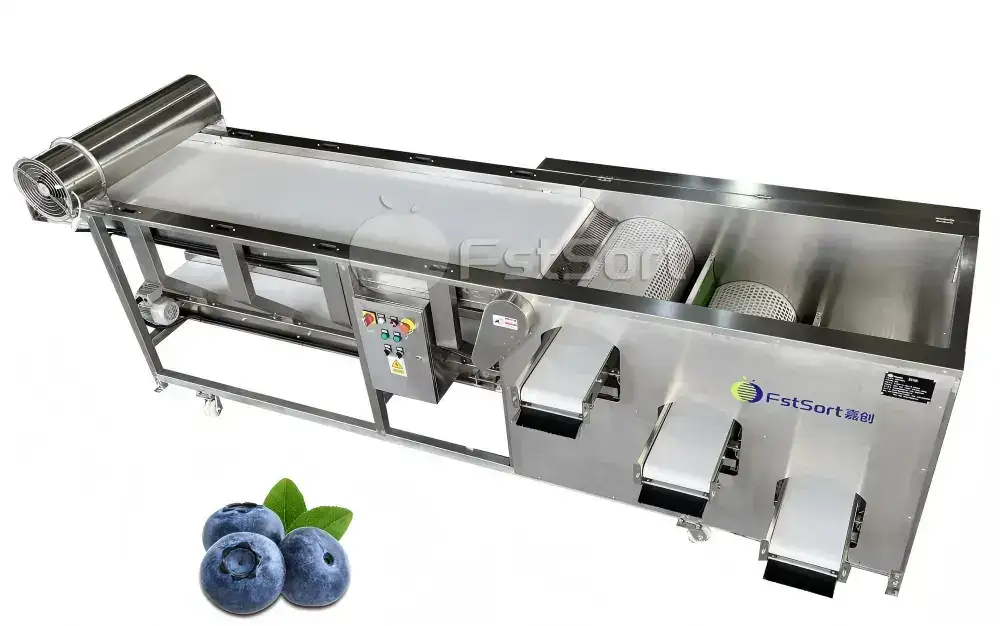
The drum grader uses gently rotating drums with soft brushes inside to sort blueberries by diameter. Soft materials at every connection and drop point prevent bruising and protect the bloom.
Best for: Small to medium operations with 300–500 kg/h capacity needs.
Key advantages:
· Cost-effective entry point for automation
· Compact design — fits in limited spaces
· Adjustable sorting speed and grade sizes
Best suited for: Blueberry farms and small packing houses that need reliable grading without a large investment.
Option 2: Belt Grader — For Medium to Large Packing Houses
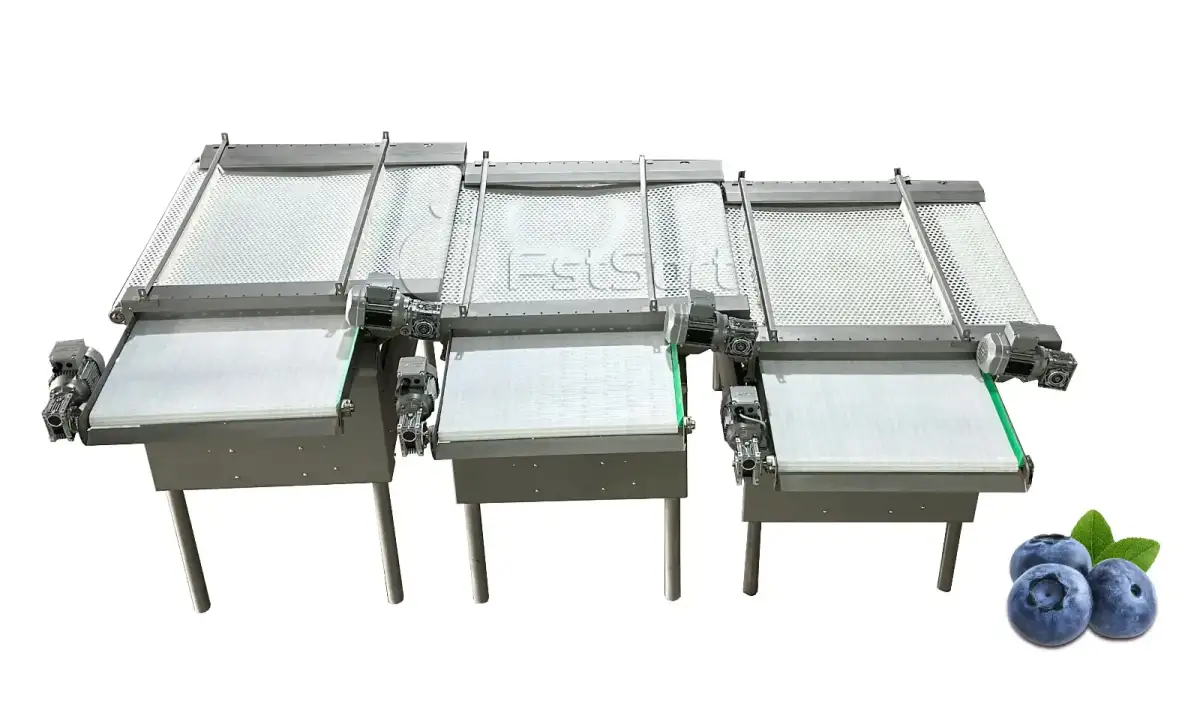
The belt grader uses a food-grade perforated belt system to sort blueberries by diameter with exceptional accuracy. Its ultra-low drop height design and quick-release interchangeable belts make it ideal for high-volume operations.
Best for: Medium to large packing houses with higher throughput requirements.
Key advantages:
· Maximum bloom retention — Engineered specifically to preserve the natural waxy bloom
· Quick-release belt system — Swap belts in minutes for different size requirements
· Variable speed control — Adjust to match throughput and fruit ripeness
· High-precision grading — More accurate than traditional methods, ensuring uniform packaging for export markets
· Modular integration — Seamless connection into existing lines
Best suited for: Operations that need capacity up to 1 t/h with premium fruit protection.
Which One Is Right for You?
Consideration | Drum Grader | Belt Grader |
|---|---|---|
Best for | Farms & small packing houses | Medium to large packing houses |
Capacity | 300–500 kg/h | Up to 1 t/h |
Grades | 2–4 | 2–5 |
Bloom protection | Good (soft brushes, low-drop design) | Premium (ultra-low drop, soft-handling tech) |
Key feature | Cost-effective, compact | Quick-release belts, variable speed |
The bottom line: If you're a small farm looking to move from hand sorting to machine grading, the drum grader is your cost-effective entry point. If you're a medium to large packer supplying export markets, the belt grader delivers the capacity and bloom protection you need.
The Future Is Machine Grading — But Choose Wisely
Hand sorting has its place — for very small operations or specialty batches, it can still make sense. But as blueberry production continues to grow and consumer expectations rise, machine grading is becoming the industry standard.
The key is choosing the right machine for your operation. Not every packer needs a belt grader. Not every farm can justify a drum grader. But every packer needs to protect the bloom — because that's what makes blueberries valuable.
Not sure which grader fits your blueberries? Explore the full specifications on our blueberry grading machine page →