

The global chestnut market reached $4.53 billion in 2025 and is projected to hit $5.58 billion by 2031. Chestnuts are hard to sort—irregular shapes, fragile shells, invisible worm damage. Fstsort's drum screen grader uses "round holes + gentle tumbling" for crack-free, precise grading.
The Global Chestnut Market Is Growing Steadily
Chestnuts are among the world's most beloved nuts, valued for their rich aroma, sweet taste, and high nutritional content. According to market research, the global chestnut market was valued at approximately $4.53 billion in 2025 and is projected to reach $5.58 billion by 2031, at a CAGR of 3.32%.
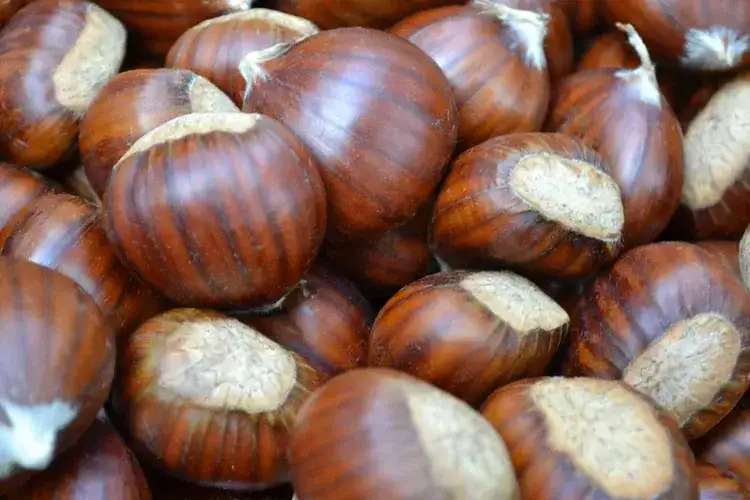
On the export front, the global trade landscape is clear. China is the world's largest chestnut producer and exporter, exporting 45,391 tonnes of fresh/dried chestnuts in 2024, valued at $70.85 million. Italy is Europe's largest chestnut exporter, shipping 12,924 tonnes valued at $75.68 million in 2024. Other major exporters include Spain, Portugal, Turkey, and South Korea.
Notably, chestnut consumption is expanding. Beyond traditional roasted chestnuts, chestnuts are entering plant-based foods, gluten-free baking, and nut milks. A US survey showed 70% of growers reported stronger demand, with half unable to meet all orders. Export and deep-processing demand continues to climb.
But post-harvest sorting of chestnuts has always been the industry's toughest challenge.
Chestnut Sorting: Three Headaches for Processors
1. Chestnuts are fragile. Shaped between round and oval, with hard shells but fragile kernels. Bumps, squeezes, drops can all cause internal damage, cracking, or bruising—invisible at sorting, only appearing during storage or transport.
2. Worm-damaged chestnuts are invisible. A chestnut that looks perfect outside may be hollowed out inside. Nuts with visible holes are one thing—the worst are "invisible bad nuts" with no holes at all. Manual sorting cannot reliably identify them without cracking every nut open.
3. Manual grading can't keep up with export seasons. Harvest is concentrated around September—a narrow window. Manual grading is slow, standards rely on "experience," and worker differences directly cause inconsistent grades. Academic research explicitly notes conventional manual sorting is "labor intensive, inconsistent, and unsuitable for high-throughput operations."
Fstsort Drum Screen Grader: Why Round Holes Are the Only Answer for Chestnuts
It is precisely against this industry backdrop that Fstsort developed the drum screen grader specifically for chestnuts.
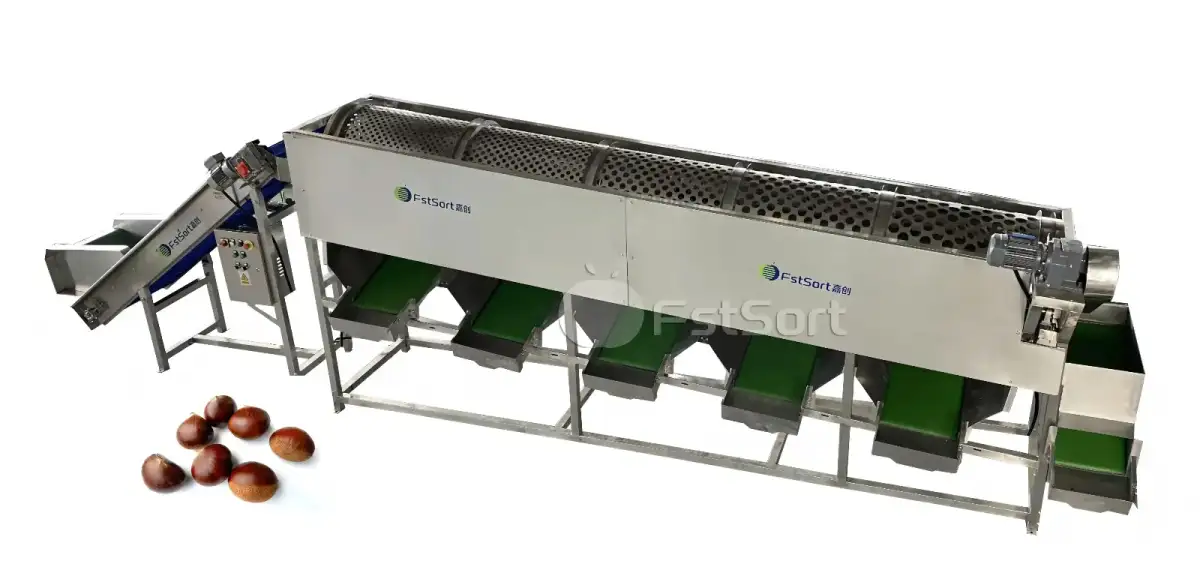
The core design philosophy can be understood from three dimensions chestnut processors care about most:
1. Round holes: designed for the natural shape of chestnuts
Chestnuts have shapes between round and oval. Traditional roller graders use elongated gaps suitable for potatoes, onions, and other long or flat produce—but they simply don't work for chestnuts, which get stuck or squeezed on the rollers.
Fstsort's drum screen grader uses round holes that perfectly match the natural shape of chestnuts. As chestnuts enter the rotating drum, they fall through round holes of increasing sizes—smaller chestnuts fall through smaller holes, larger ones continue until they reach the hole corresponding to their size. Each size category is accurately classified, with standards unaffected by human fatigue or experience differences.
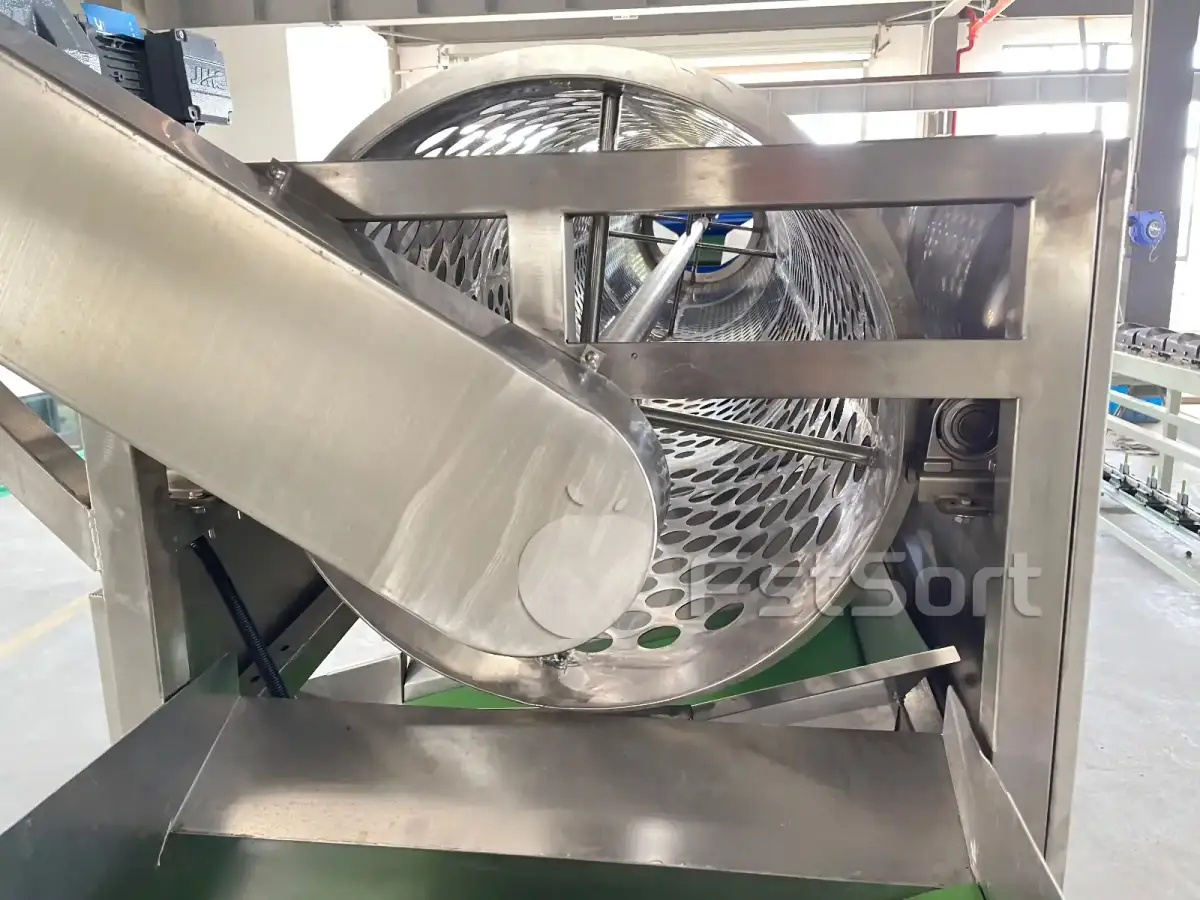
2. Gentle tumbling: no cracking, no jamming, preserving every chestnut
Chestnut kernels are fragile and cannot tolerate rough handling. Fstsort's drum screen grader has smooth inner walls—chestnuts fall naturally during rotation rather than being squeezed or pinched. This "gentle tumbling" design ensures chestnuts don't crack, jam, or break during sorting.
Compared to traditional roller graders, the drum screen grader causes extremely low damage rates. The industry recognizes round-hole drum screening as the preferred grading method for chestnut packers—because it's the only design that truly understands chestnuts' fragile nature.
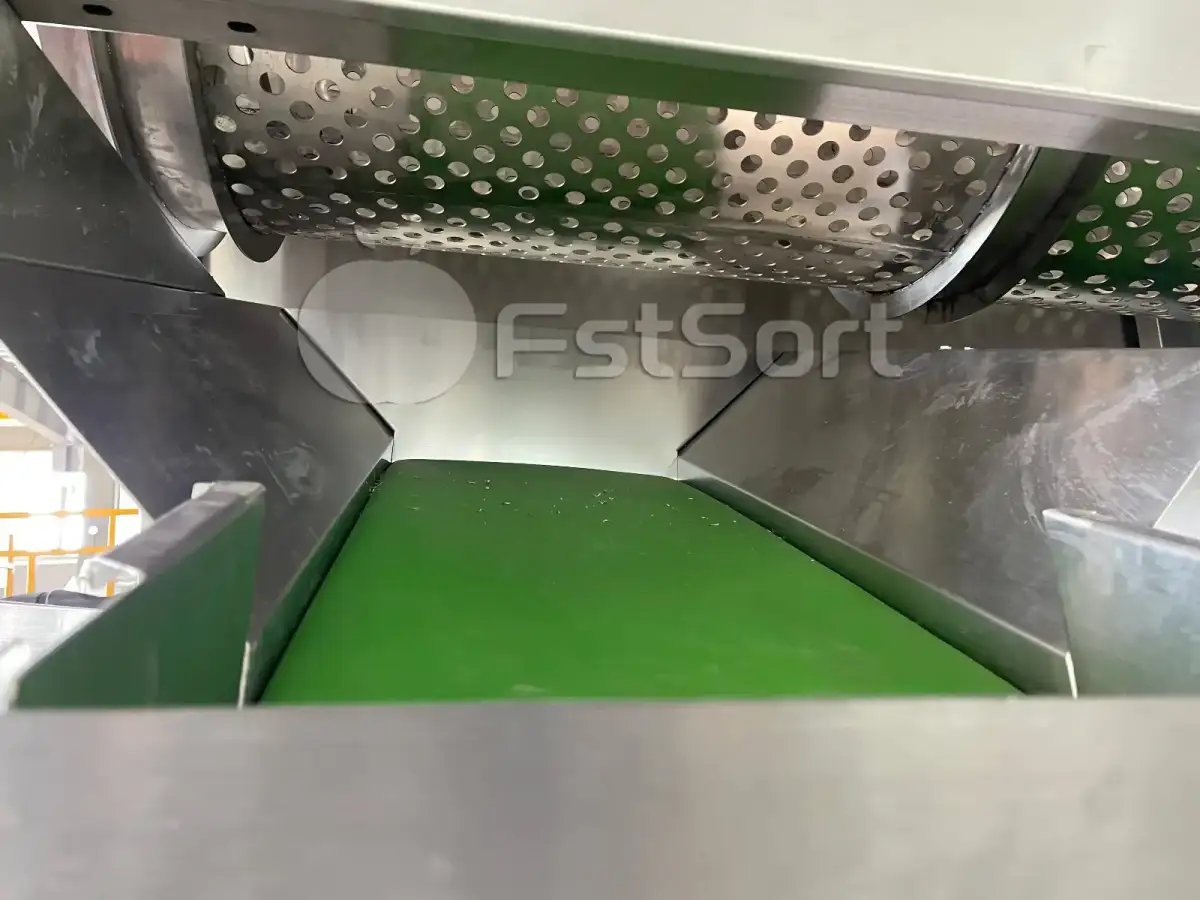
3. Flexible grading: from 3 to 6 grades, customized to market needs
Different markets have different size requirements for chestnuts—standards for Europe often differ from those for Southeast Asia. Fstsort's drum screen grader supports 3-6 flexible grade configurations. Processors can set different hole sizes based on specific target market requirements—no hardware changes, just drum adjustments to adapt to different market needs.
Key Specifications Overview
Parameter | Specification |
|---|---|
Sorting principle | Round-hole drum screening |
Sorting grades | 3-6 grades (customizable) |
Applicable products | Chestnut, chinquapin, etc. |
Capacity | 3-8 t/h |
Material | Food-grade stainless steel |
Operation | Continuous operation, single operator manageable |
The above is a key specifications overview of Fstsort's drum screen grader. For complete technical specifications and selection guidance, please view the product page of chestnut sorting machine→
From Grader to Complete Processing Solutions
Grading is just one step in chestnut post-harvest processing. Fstsort offers a complete line from infeed, washing, drying, grading to packaging.
The washing stage uses a clever principle: good chestnuts sink, bad ones float. In the bubble washing tank, healthy nuts are dense and sink immediately; worm-damaged nuts are hollow and lighter than water, floating to the surface. Floating bad nuts are collected by a filter screen, while good nuts continue—no cracking, no manual inspection needed.

From bubble washing → brush cleaning → air drying → round-hole drum screening → weighing and packing, the entire line runs as a closed loop with no manual transfer, reducing damage from the source.
Global chestnut export competition is intensifying. Sorting precision and quality assurance are becoming key for processors to seize market opportunities.
Want crack-free, precise grading for your chestnut line? Learn more about Fstsort's drum screen grader and complete solutions—contact us for a customized plan.