
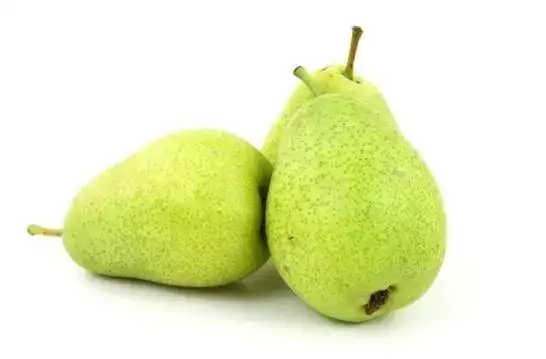
Pears are not a single type of fruit. They come from different families—Asian pears, European pears, and many local varieties in between. Each variety has its own shape, its own weight range, and its own market value. A sorter that treats all pears the same is a sorter that loses money.
The Diversity Problem: Not All Pears Are the Same
Walk into any pear-growing region and you'll find not one kind of pear, but many.
The sand pear is round and crisp. The white pear is larger, juicier, and sweeter. The Ussurian pear is small and hardy. The Western pear—often called the European pear—is the classic pear shape: narrow at the stem, wide at the base.
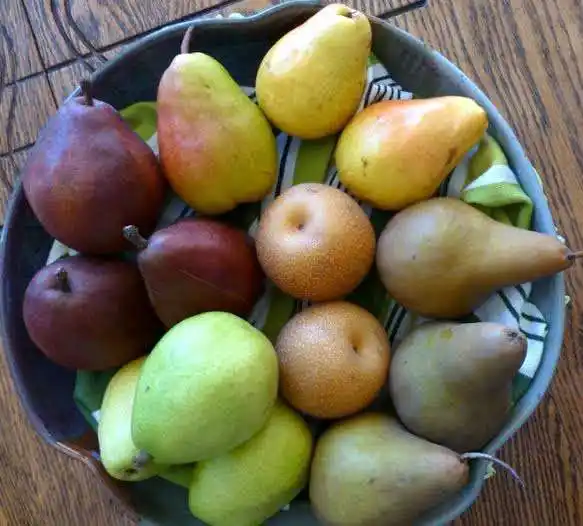
Each of these varieties matures at a different time. Each has a different weight range, a different skin thickness, a different shelf life. Some are destined for fresh export. Others are better suited for processing or juicing.
When all these varieties come through the same packing line, the sorter must distinguish between them—not just by size, but by what the market will pay for. A grader that only sorts by diameter is missing the point. A pear that’s large but belongs to a low-value variety shouldn't command the same price as a medium-sized pear from a premium variety.
The challenge isn't sorting pears by size. It's sorting pears by market value.
Two Weight Sorting Solutions for Pears
Fstsort offers two electronic weight sorting technologies for pears—each designed for a different scale of operation. Both handle pears gently and accurately, regardless of variety or shape.
Option A: Rotary Weight Sorter — Compact & Economical
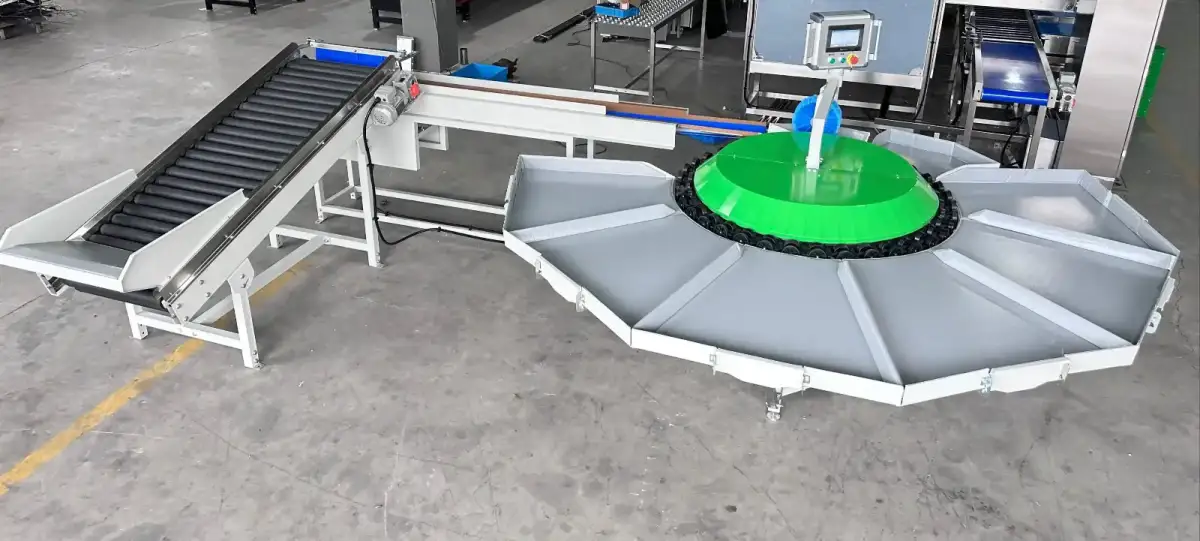
The rotary sorter works on a simple principle: a rotating disc carries pears to individual weighing cups, each cushioned with soft padding to protect the fruit. The machine's circular layout means it takes up only a fraction of the floor space that a straight-line system would require.
Feature | What It Means for Your Pears |
|---|---|
15,000 pcs/h | Enough throughput for small to medium packing lines |
6+1 weight grades | Sort pears into six weight grades, plus one outlet for culls |
30–500g range | Covers most pear varieties—from small Asian pears to large European ones |
±2g accuracy | Consistent grading—every pear goes to the right grade, every time |
Compact footprint | Fits where straight-line systems can‘t—no need to rebuild your facility |
Best suited for: Small to medium packers, limited floor space, budget-conscious buyers.
Option B: Linear Weight Sorter — High Capacity, Multi-Lane
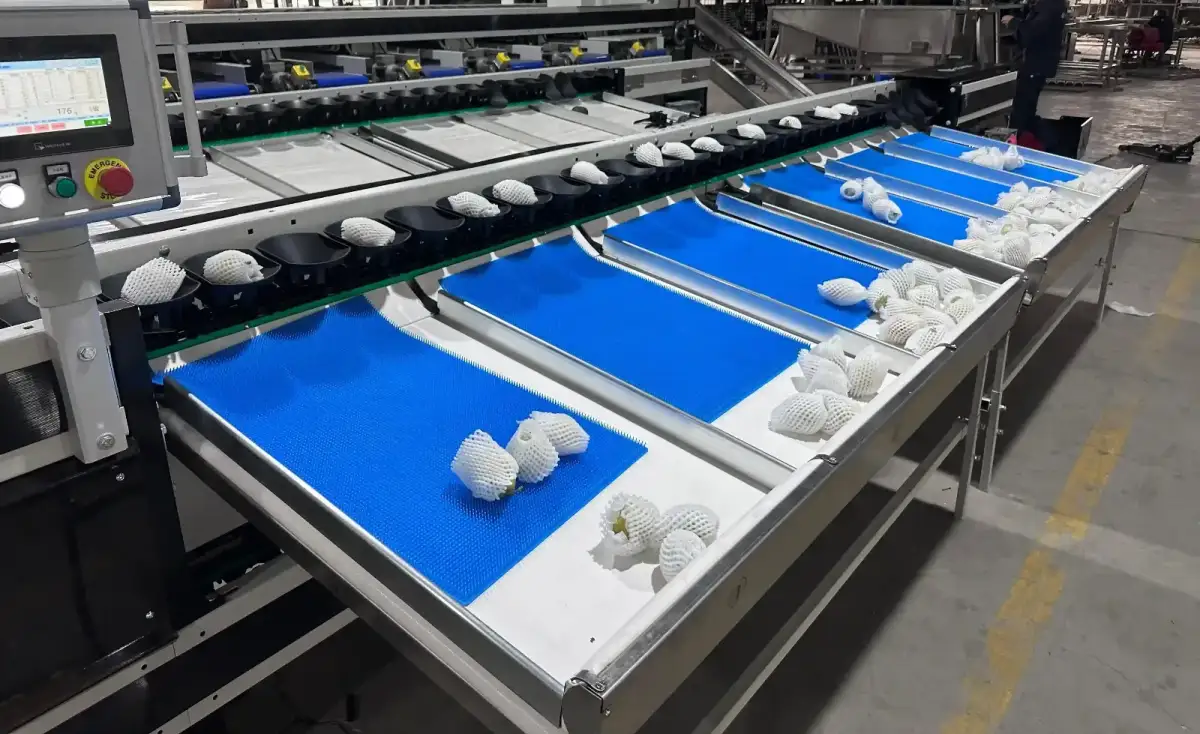
Instead of a rotating disc, the linear sorter uses a straight conveyor belt that delivers pears to a series of weighing cups. With multiple lanes running simultaneously, it processes higher volumes and offers more weight grades—making it the go-to choice for large-scale export operations.
Feature | What It Means for Your Pears |
|---|---|
25,000 pcs/h per lane | 1–4 lanes available—scale to match your harvest volume |
7–12 weight grades | Fine grading for export specifications—serve multiple markets from one harvest |
20–500g range | Wide range for all pear varieties |
±2g accuracy | Meets the tightest market requirements—no rejected shipments |
Modular lanes | Start with one lane, add more as your business grows |
Best suited for: Large pear packers, export orders requiring fine grading (7–12 weight grades), integration with automatic packing systems.
Gentle Enough for Delicate Pears
Pears have thin, easily damaged skin. A single bruise can turn a premium pear into a discount product.
Both Fstsort weight sorters are designed with gentleness as the first priority:
Protection Feature | What It Prevents |
|---|---|
Soft weighing cups | Rolling and friction during weighing—pears sit still, no surface damage |
Low-drop discharge | Hard landings after sorting—minimal fall height, no impact damage |
Sponge-buffered packing tables | Bruising at the final stage—soft landing every time |
±2g accuracy | Mis-grading and overfilling—every pear goes to the right grade |
Shape Doesn't Matter. Weight Does.
Pears come in all shapes. But buyers don't pay by shape—they pay by weight. A pear that's 180 grams is a 180-gram pear, whether it's round or pear-shaped.
Roller graders measure diameter—which is misleading for irregular shapes. Weight sorters measure what actually matters. And they do it gently, without bruising, without guesswork.
Explore the full specifications on our automatic weight sorting machine page →