
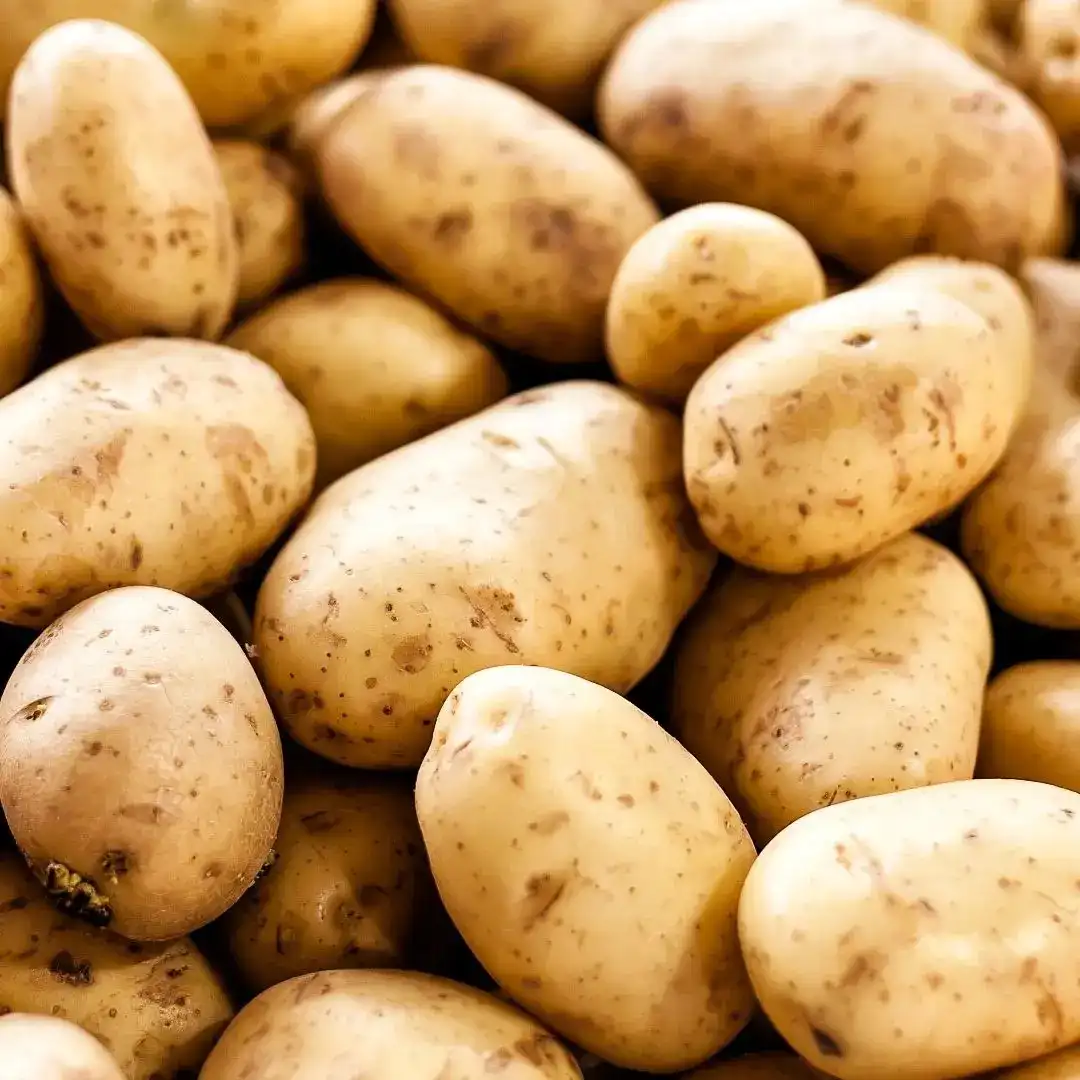
China produces more potatoes than any other country — over 90 million tons annually. Russia, India, Ukraine, and the United States follow close behind. With billions of potatoes moving from field to market every year, the question isn't whether to grade — it's how to grade at scale.
The Global Potato Industry: By the Numbers
Potatoes are the world's fourth-largest food crop, after rice, wheat, and corn. The numbers are staggering:
China leads global production, harvesting over 90 million tons of potatoes annually. Russia, India, Ukraine, and the United States rank among the top producers, with millions of tons more entering the global supply chain each year.
This massive volume creates an equally massive challenge: how do you sort millions of potatoes by size, quickly and accurately, without damaging the crop?
Manual sorting can't keep up with volumes of this scale. Small-scale graders can't handle the throughput. For commercial potato packers, the answer is high-capacity automated grading.
The Challenge: Size Matters
Potatoes come in all shapes and sizes. A single field can produce potatoes ranging from small creamers to large bakers. Different markets demand different sizes — retail supermarkets want uniform packs, food processors need specific dimensions for french fries or chips, and export buyers have their own specifications.
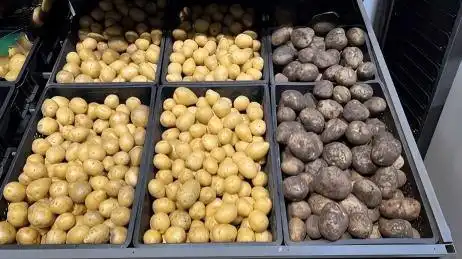
Without proper grading, packers face three problems:
Problem | Why It Matters |
|---|---|
Mixed sizes | Supermarkets reject inconsistent packs — uniform sizing is non-negotiable |
Bruising | Rough handling during sorting damages potatoes, reducing shelf life and market value |
Bottlenecks | Slow grading holds up the entire packing line — delays mean missed market windows |
The solution? A grading machine that handles high volumes with precision — sorting potatoes accurately, gently, and fast.
High-Capacity Grading: 5–8 Tons Per Hour
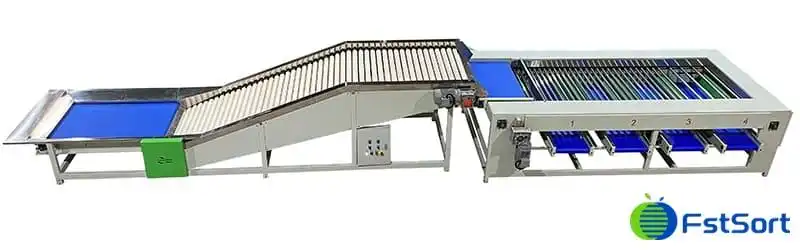
Fstsort's potato roller grader is designed for commercial operations that need to process large volumes without compromising quality.
The machine uses a series of forward-moving rollers with gradually widening gaps. Potatoes travel along the rollers — smaller ones fall through the narrower gaps first, medium ones through the next, and the largest continue to the end. Each size exits through a separate outlet.
Key capabilities:
· 5–8 tons per hour — Handles commercial-scale production with ease
· 4, 5, or 6 adjustable grades — Customize sizes to match your market requirements
· 25–120 mm size range — Adapts to everything from small creamers to large bakers
· Gentle handling — Smooth roller surfaces and low-drop transitions minimize bruising, keeping potatoes in premium condition
· Variable speed control — Adjustable operation to match your packing pace and potato variety
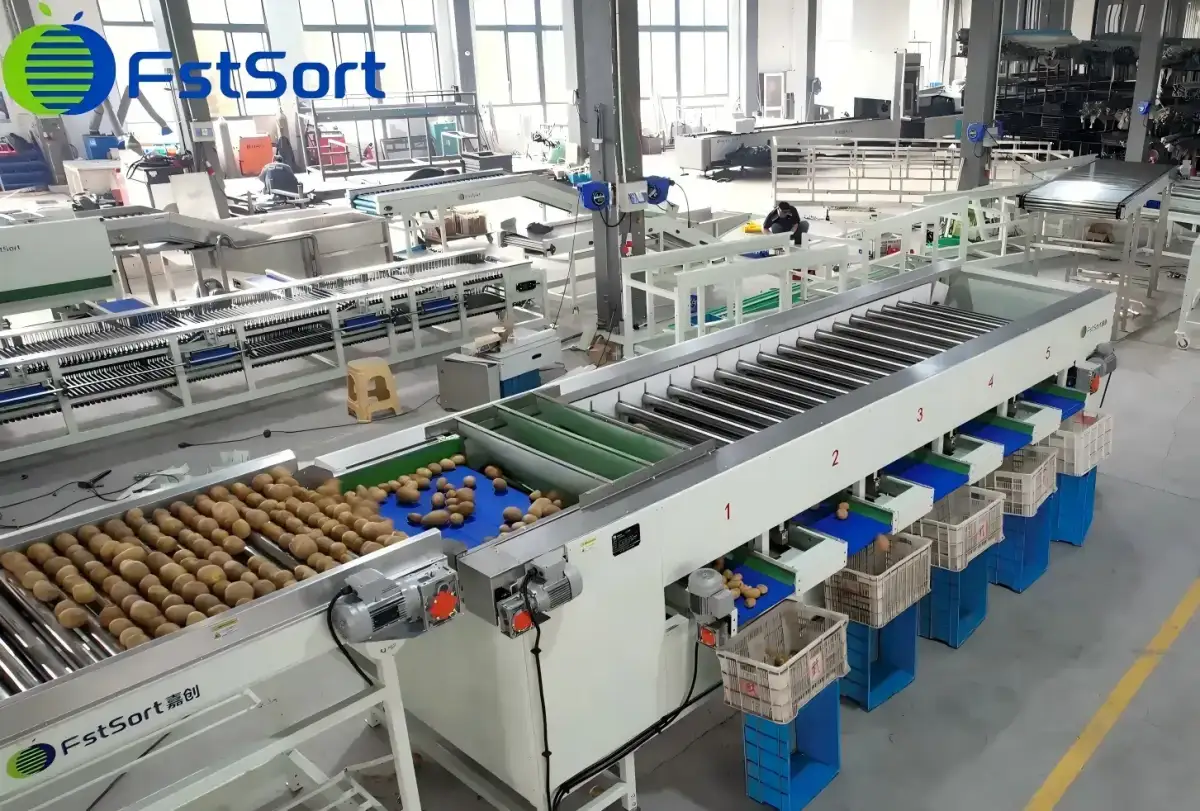
The result: accurately graded potatoes, ready for retail, food service, or export — at a scale that keeps your line moving.
Built for Real-World Packing Houses
Potatoes are tough on equipment. Dirt, debris, and constant use punish every part of the line. Fstsort's potato grader is built with durability and flexibility as priorities:
· Stainless steel on all fruit-contact surfaces — Hygienic, easy to clean, and corrosion-resistant
· Durable frame construction — Plastic-sprayed carbon steel frame (full stainless steel optional) stands up to demanding commercial environments
· Flexible layout — Available in Linear, L-shape, or U-shape configurations to fit your facility
· Easy integration — Can be combined with brush cleaning, manual inspection tables, and automatic filling & weighing systems for a complete line
Fstsort has already delivered customized potato grading solutions to customers in Qatar.
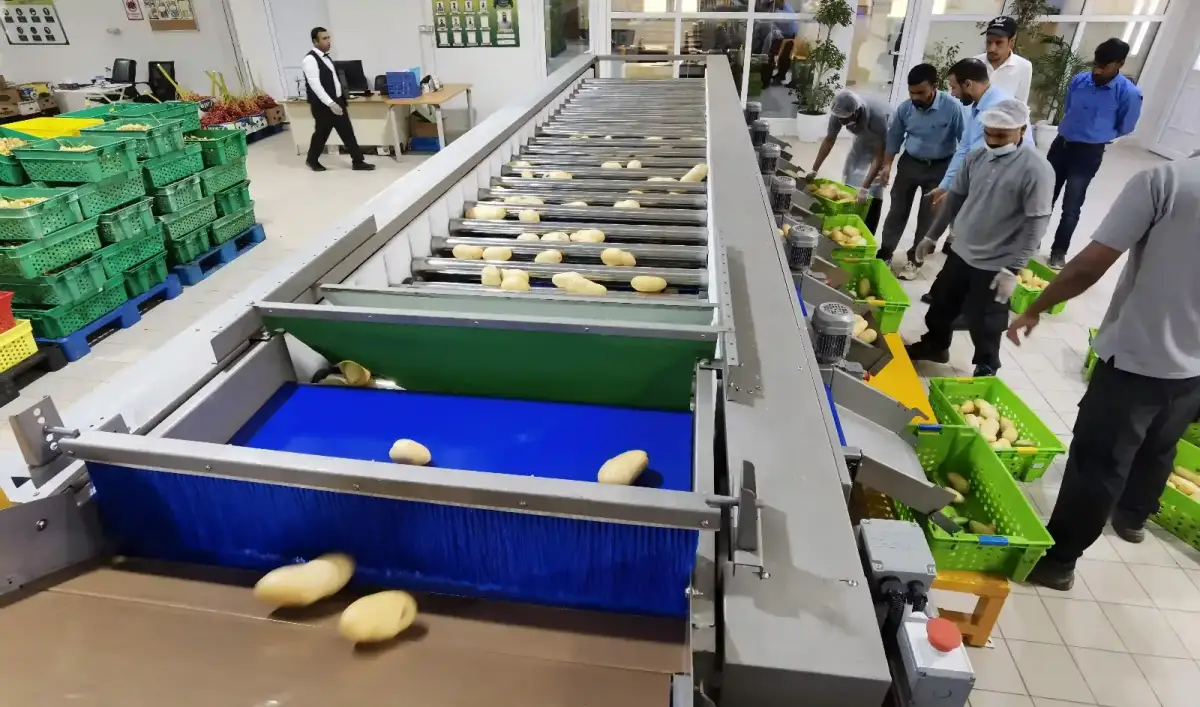
Ready to see how a high-capacity potato grader can transform your line? Explore the full specifications on our potato cleaning and grading machine page →
Grade at Scale, Grade with Confidence
Millions of tons of potatoes move from field to market every year. The packers who succeed are the ones who can sort accurately, gently, and fast — without bottlenecks, without bruising, without compromise.
The technology exists. The question is whether your line can keep up with the volume.