In a recent 20-day installation service trip, Jason, the leader of Fstsort’s technical team, accompanied a group of technicians to Europe to oversee product deliveries and provide on-site support for customers. The journey not only ensured seamless product integration but also offered valuable insights into the differences between European and Chinese farming practices, as well as the future of agricultural technology.
European Farming: A Model of Systemization and Mechanization
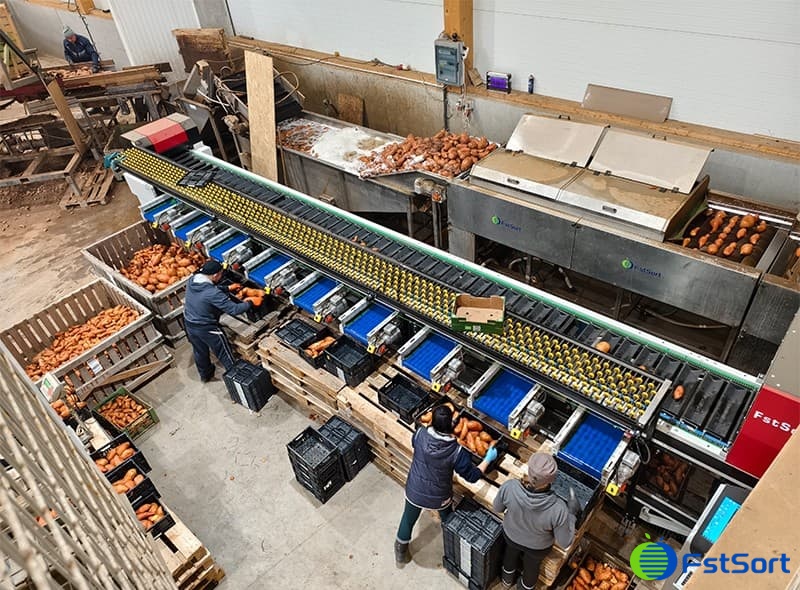
During the visit, the team observed that European farming models differ significantly from those in most parts of China. Europe’s agricultural sector emphasizes systematic processes and the extensive use of large-scale machinery. This approach is influenced by a combination of factors, including work patterns, geographical environment, per capita GDP, and industrial development levels.
For instance, Germany’s predominantly flat terrain provides ideal conditions for large machinery to operate efficiently. The vast, open fields allow for the seamless deployment of advanced equipment, enabling high productivity and precision. In contrast, China’s diverse geography poses unique challenges. While regions like the Central Plains and Xinjiang benefit from flat landscapes suitable for large-scale mechanized farming, mountainous areas such as Yunnan, Guizhou, Sichuan, and Shaanxi rely heavily on small machinery or even manual labor. A striking example is the terraced fields of Guilin, where the terrain limits the use of large equipment, necessitating traditional methods for planting and harvesting crops.
Insights from the Front Lines: Quality Control and Efficiency
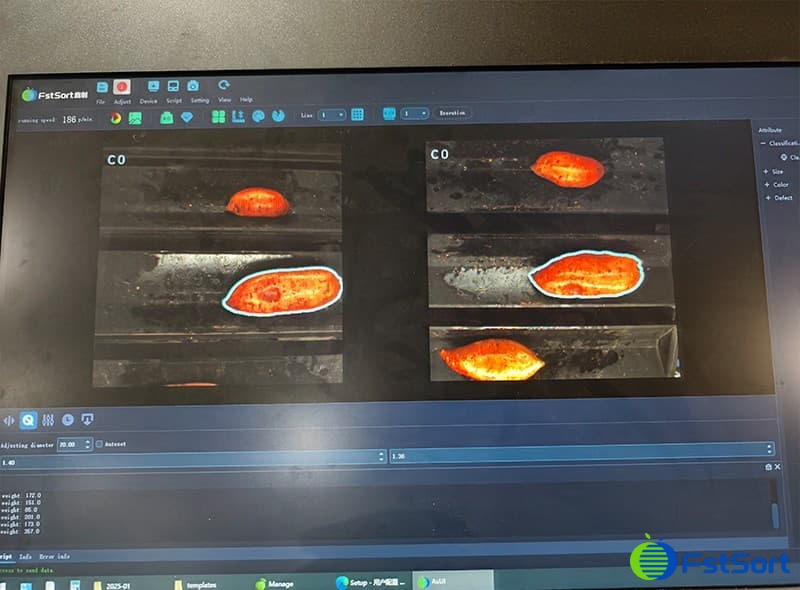
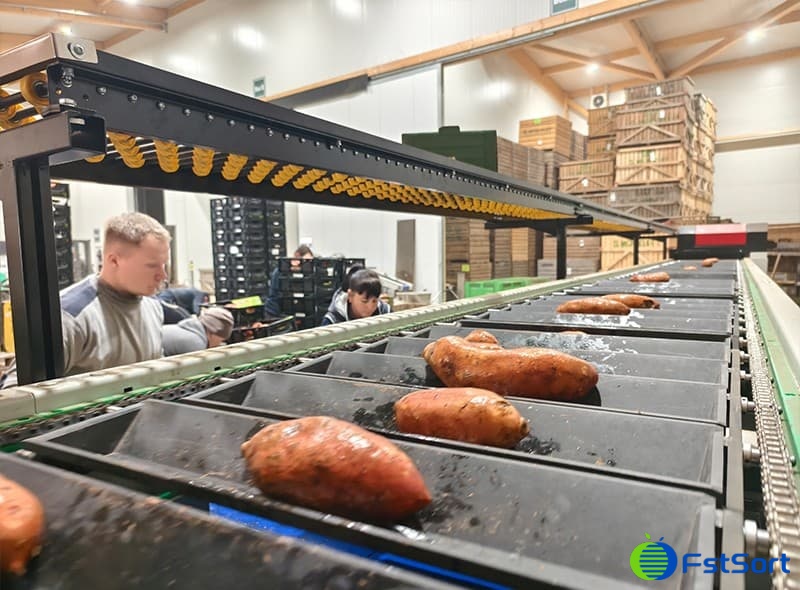
The trip also provided an opportunity to reflect on Fstsort’s core business and the role of technology in modern agriculture. One key takeaway was the importance of quality control in driving efficiency. While human workers may have varying judgment standards, machines can consistently execute predefined criteria with precision. For example, an intelligent sweet potato sorting machine can instantly determine the quality of each potato, eliminating human error and hesitation.
Moreover, the standardization of production lines through intelligent equipment significantly enhances efficiency. By assigning specific tasks to machines, workers can focus on specialized roles, leading to faster and more streamlined operations.
The Economic Case for Mechanization
From a long-term cost perspective, the advantages of machinery over manual labor are clear. Machines require minimal maintenance, such as routine lubrication, whereas human workers necessitate comprehensive support, including food, housing, transportation, and conflict resolution. Additionally, the declining interest among younger generations in manual labor has accelerated the adoption of agricultural machinery, pushing the industry toward greater automation.
Fstsort’s Vision: AI and the Future of Agriculture
Looking ahead, Fstsort is committed to integrating artificial intelligence (AI) into its fruit and vegetable sorting equipment. This initiative aims to address the challenges faced by agricultural companies, such as labor shortages, inconsistent quality control, and the need for greater efficiency. By leveraging AI, Fstsort hopes to revolutionize the industry, offering smarter, more reliable solutions that cater to the evolving needs of farmers worldwide.
In conclusion, the European trip not only reinforced the importance of adapting agricultural practices to local conditions but also highlighted the transformative potential of technology in addressing global farming challenges. As Fstsort continues to innovate, its focus on AI-driven solutions promises to pave the way for a more efficient and sustainable future in agriculture.
For more information about Fstsort’s products and innovations, visit https://fruitprocess.com .