
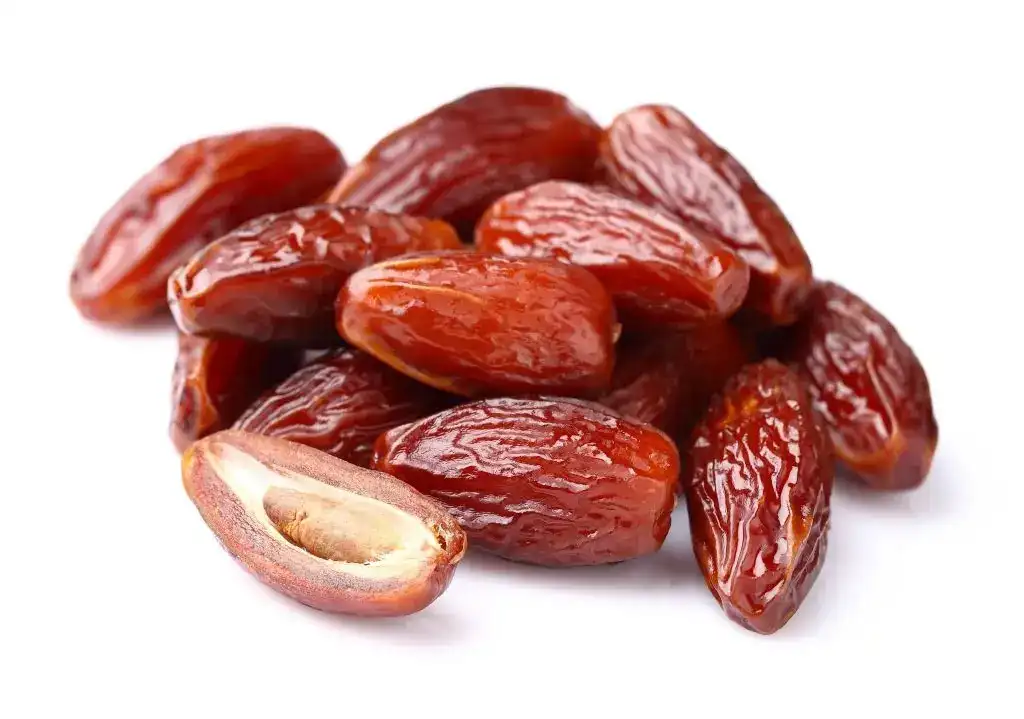
Iraq is the birthplace of the date palm. From there, it spread across the Middle East and North Africa—to Algeria, Oman, Saudi Arabia, Tunisia, and beyond. Today, dates are a major agricultural commodity, bringing considerable income to growers in these regions. But with harvest comes a pressing question: how do you process tons of dates quickly without compromising their delicate quality?
The Fresh Date Challenge: Speed Matters
Dates are harvested once a year. When they come in, they come in all at once—tons of fruit that must be processed before they spoil.
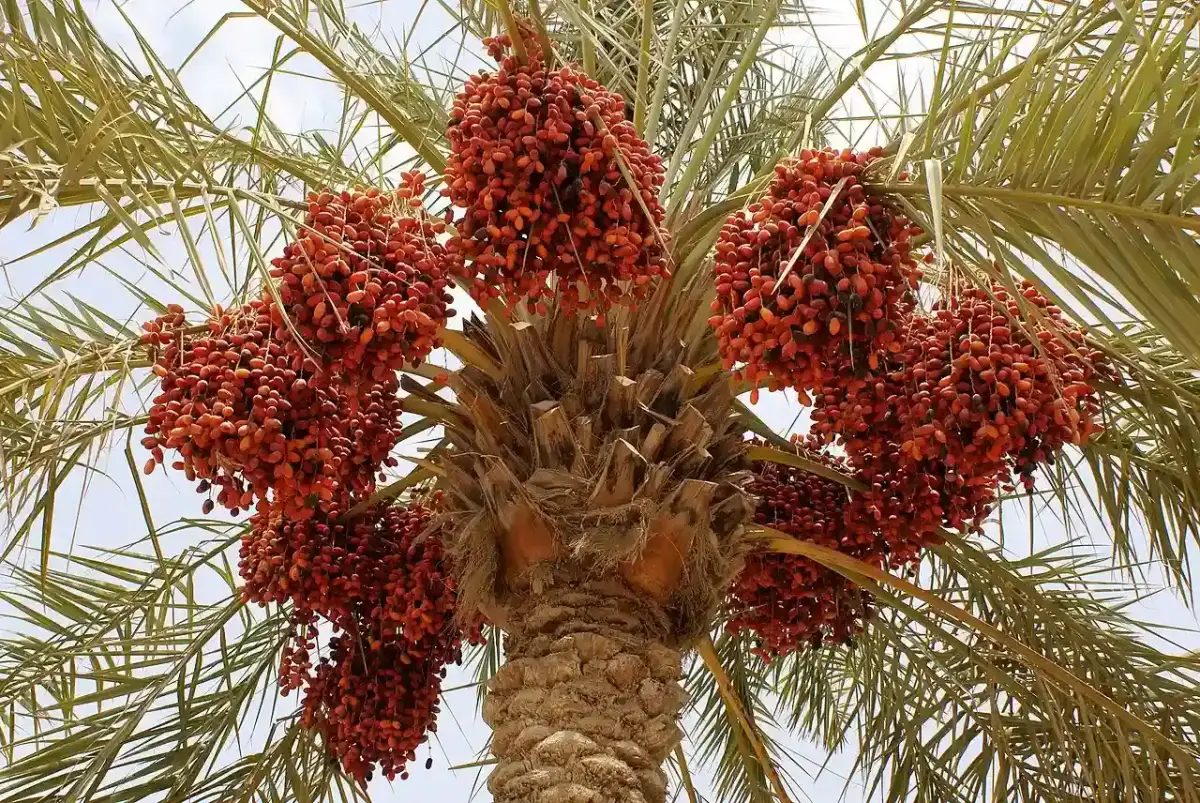
Fresh dates have a short shelf life. Their delicate skin and high moisture content make them vulnerable to spoilage if not handled quickly. For growers and processors, this creates a simple equation: the faster you can clean, dry, and grade your dates, the more of your harvest reaches the market in premium condition.
But speed alone isn't enough. Rough handling during cleaning or grading damages the fruit's delicate skin, reducing its visual appeal and market value. The challenge is to process quickly—and gently.
From Harvest to Pack: One Continuous Flow
A complete date processing line handles the entire post-harvest journey in one continuous flow:
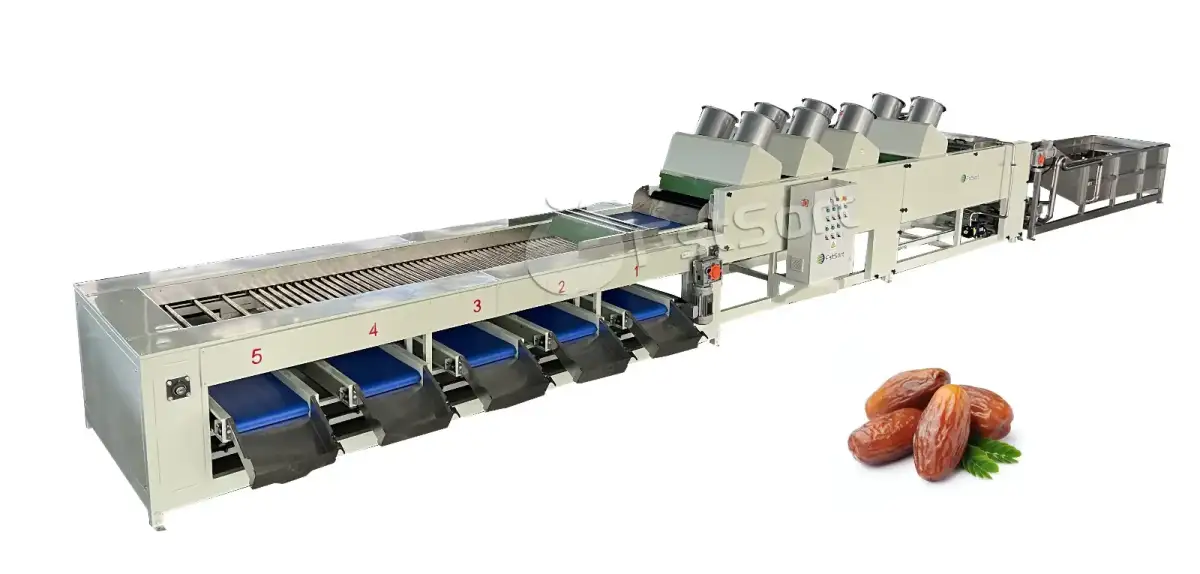
1. Washing — A water tank with brushes and water spray removes dirt, debris, and field residue. Soft brushes clean without damaging the delicate skin.
2. Drying — Air dryers remove surface moisture, preparing dates for accurate grading and extending shelf life.
3. Grading — A roller grader sorts dates by diameter with 3–6 adjustable sizes—consistent grades for market-quality packs.
4. Packing — Graded dates move to packing stations, ready for local retail or export.
Each stage flows directly into the next. No waiting. No extra handling. No lost time.
What this delivers for your operation:
Feature | What It Means for Your Dates |
|---|---|
3 tons per hour | Enough throughput to keep up with commercial harvest volumes |
3–6 adjustable grades | Fine-tune sizing to match different market requirements—from local retail to premium export |
304 stainless steel | Hygienic, durable, and corrosion-resistant—meets international food safety standards |
Gentle handling | Soft brushes and low-drop design protect delicate date skin—no bruising, no damage |
One continuous flow | No waiting between stages—faster processing, less handling, better quality |
Flexible Solutions for Different Date Conditions
Not all dates are the same. Some are dry. Some are semi-dry. Some are fresh and sticky. Each type requires a different approach.
Fstsort offers three dedicated solutions to match your specific date condition:
Solution | Best For | Key Capability |
|---|---|---|
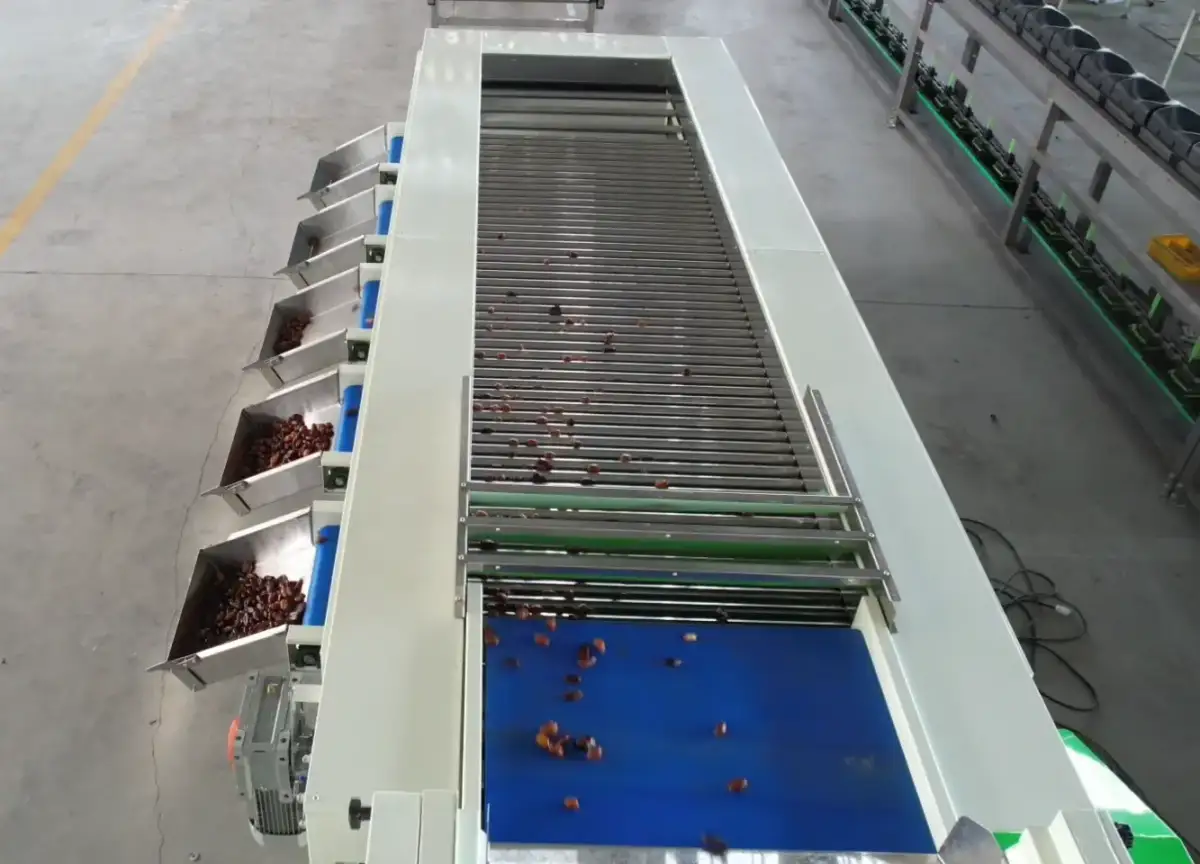
Dates Grader | Size sorting of clean, dry dates | 2–3 t/h, 3–6 adjustable grades, mobile design |
Polishing Grader | Semi-dry dates with surface dust | Soft brush rollers—dry polishing only, no water added |
Washing-Drying-Grading Line | Fresh or sticky dates needing deep cleaning | Water tank + brushes + spray + air dryers + grading in one flow |
Whatever your date condition, there‘s a solution designed for it.
Learn more on our dates grading machine page →
Built for Date-Producing Regions
Fstsort has been working alongside date processors across the Middle East and beyond—not just selling equipment, but understanding the specific challenges of each variety and each market. A Medjool grower in Saudi Arabia has different needs than a Sukkari processor in Oman. A fresh date operation in Libya requires a different approach than a semi-dry packer in India.
That's why every Fstsort line is designed around one principle: the system adapts to your dates, not the other way around. Whether it's a small farm processing 500 kg per day or a large packing house handling 3 tons per hour, the configuration is built to match your specific variety, throughput, and facility layout.
The result? Date processors across these regions are moving from harvest to pack faster, with less waste, and with more consistent quality than ever before.