
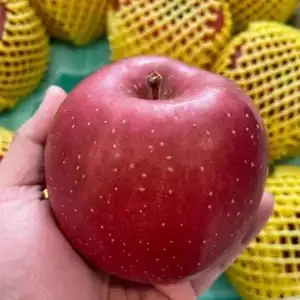
Japanese Sun Fuji apples have entered the Chinese market for the first time, retailing at around RMB 60 per apple. Premium apple pricing is built on near-perfect appearance and "candy heart" quality—but apples bruise easily, and a single drop or hard contact during sorting can erase that premium by the time the consumer opens the box. This article examines the Sun Fuji premium and explains how Fstsort’s apple sorting machines apply a “zero-bruise” philosophy to protect high-end apple value.
Sun Fuji Enters China: A RMB 60 Apple Sells “Perfection”
Japanese fruit has long been associated with premium quality and premium pricing. Recently, Japanese "Sun Fuji apples" entered the Chinese market for the first time. The first batch has been shipped to China and is now on sale in select high-end supermarkets and WeChat sellers, priced at around RMB 60 per apple.
Sun Fuji is also a well-known premium variety in Japan. The fruit has a full red, large, glossy appearance. It is cultivated using a bagless technique—each apple is fully exposed to sunlight as it grows to maturity, hence the name "Sun Fuji."
Sun Fuji is juicy, crisp, and refreshing, with a balanced sweet-tart flavor and rich aroma. When cut open, a deep yellow, translucent "candy heart" (watercore) is visible around the core.
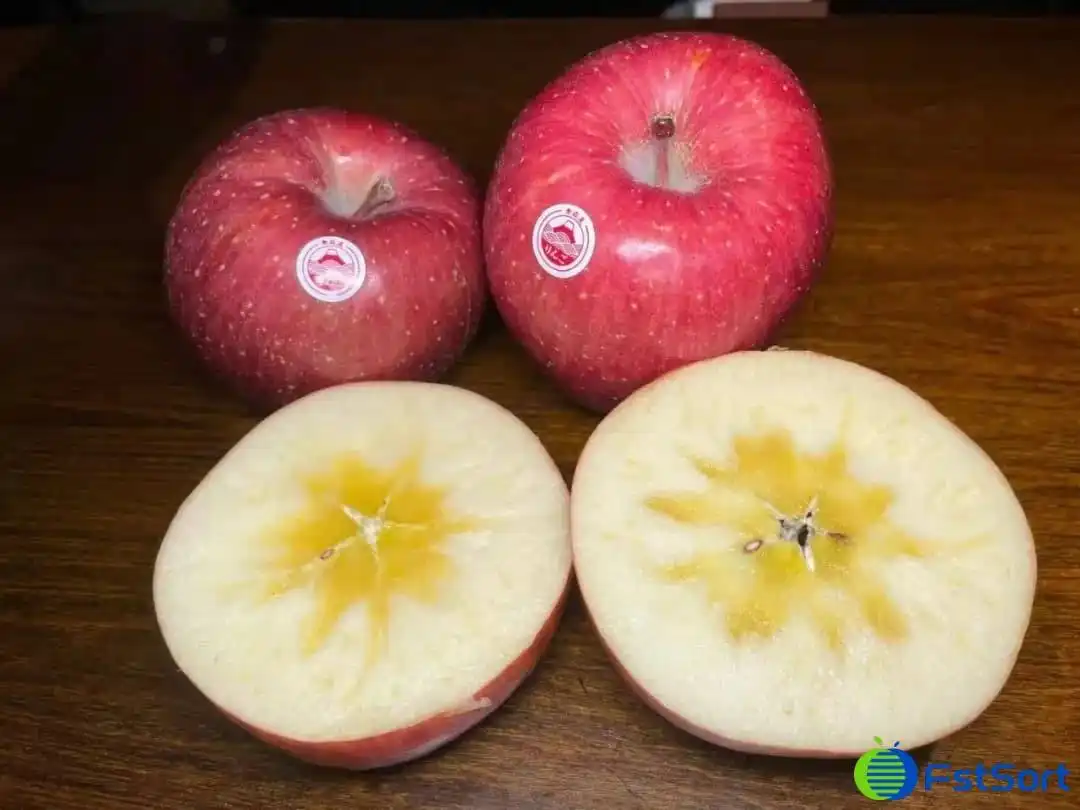
The RMB 60 price tag is not just about sweetness—it reflects a combined premium of appearance, eating quality, and scarcity. And all of this depends on one thing: the apple arriving from orchard to shelf with perfect appearance and intact flesh.
The Invisible Enemy of Premium Apples: Bruising
Apples are among the most bruise-prone fruits. Thin skin and crisp flesh mean that a single drop, squeeze, or hard contact can leave a bruise inside the flesh—while the apple may look perfectly fine from the outside.
Bruising is a well-documented source of loss in the apple industry. Studies show that over 30% of apples are injured during picking, transportation, and storage; packing-line grading damage has been shown to reduce marketable fruit by 38%–49%; and in some cultivars, bruising can downgrade up to 50% of the total crop.
More critically, bruising is often invisible at the sorting stage. Traditional sorting can separate size, but every contact and drop accumulates hidden damage. For a variety like Sun Fuji, whose premium is built on “perfect appearance,” a single bruised apple in a gift box can call the entire box’s value into question.
Fstsort Apple Sorting Machines: Making “Zero Bruise” the Quality Baseline for Premium Apples
The design logic of Fstsort’s apple sorting machines is not “sort apples faster”—it is to physically eliminate the conditions that cause bruising, if a machine handles apples gently, it can handle any fruit gently.
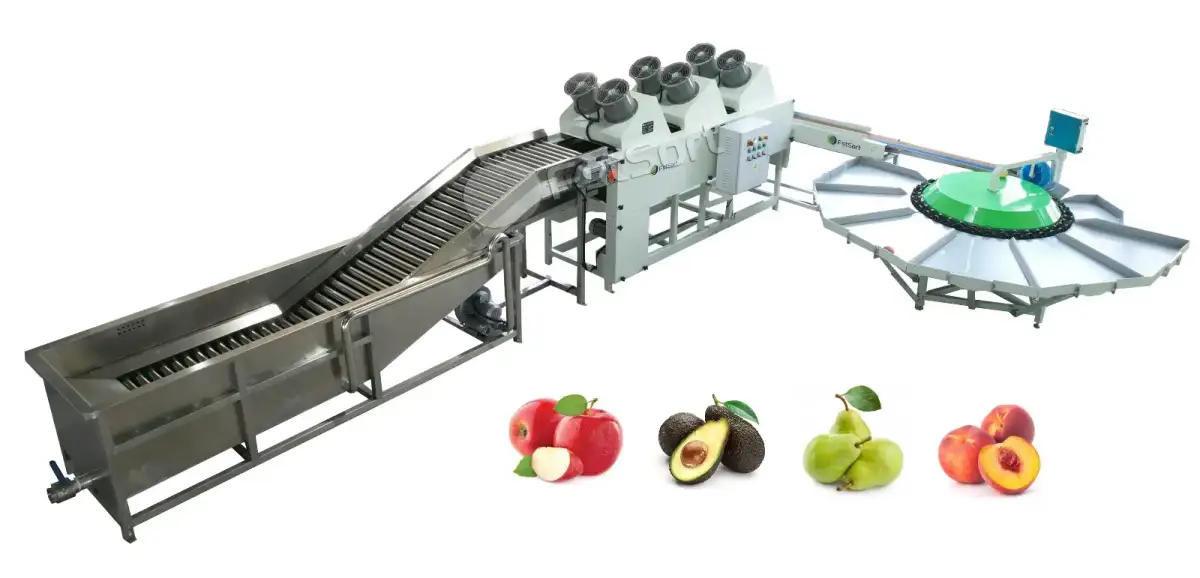
Three design responses address the key stages where bruising occurs:
1. Water flume feeding: buoyancy instead of dry dumping
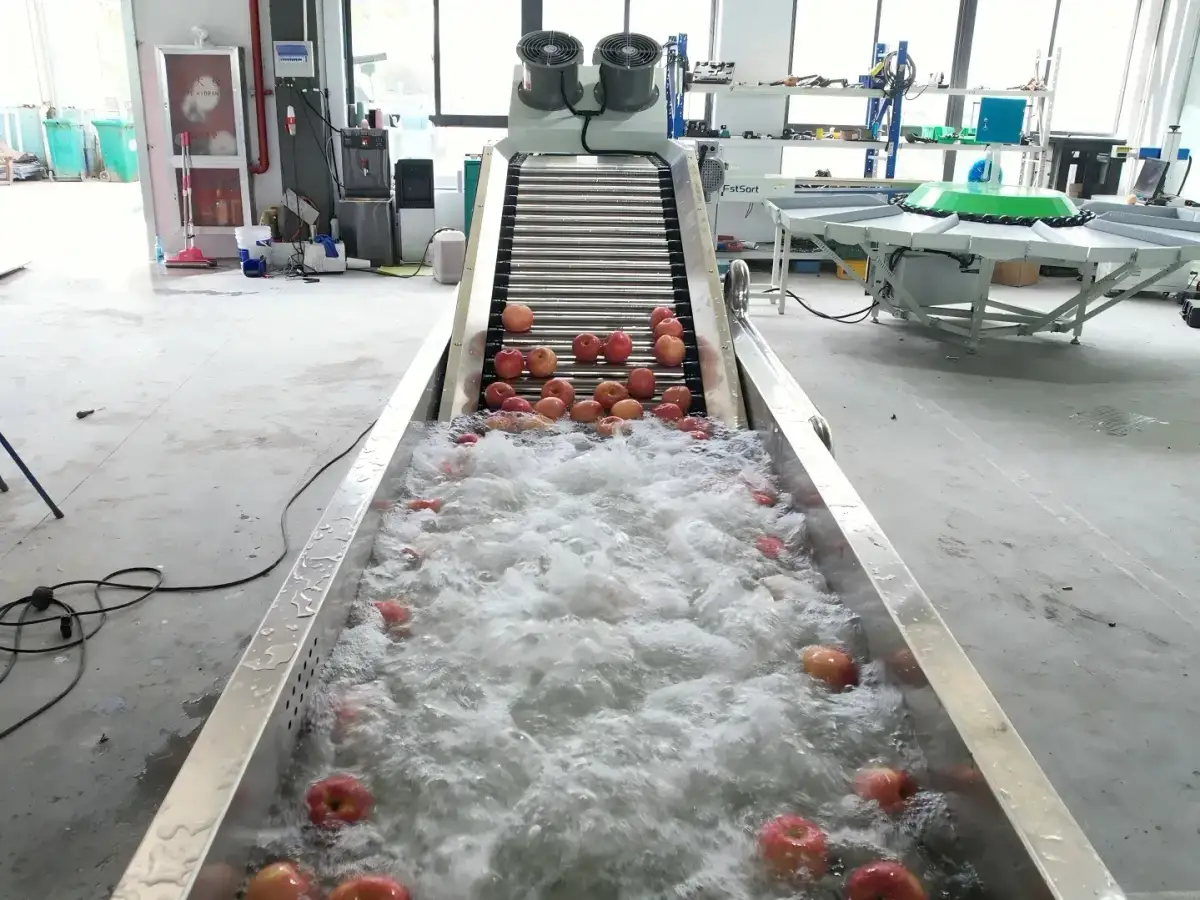
In conventional lines, apples are dumped from bins onto conveyors—dry dumping itself can cause bruising. Fstsort uses water flume feeding—apples float into the system, with water acting as a natural cushion, eliminating bruising from dry dumping at the very start.
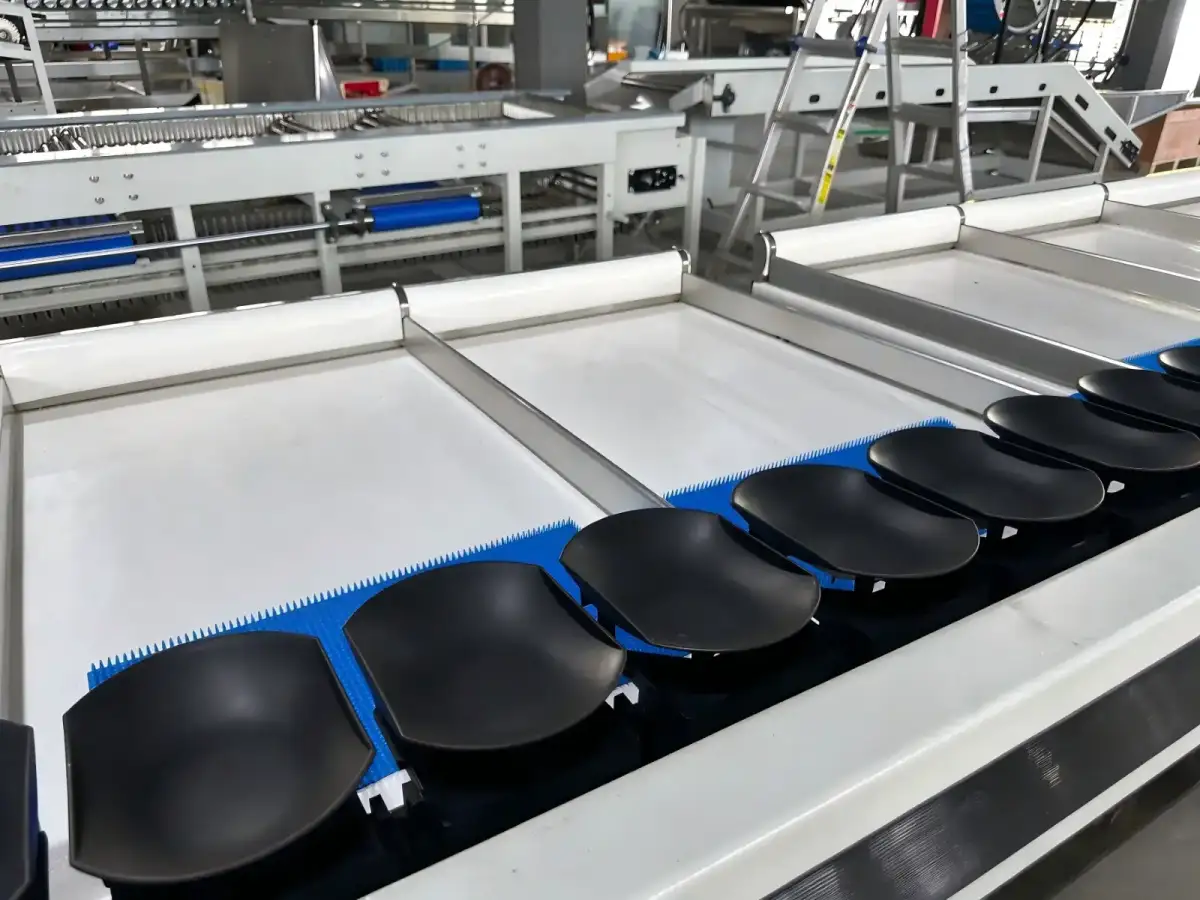
2. Soft cups + low-drop discharge: no rolling during weighing, no hard fall at the exit
Weighing and discharge are the two most common bruising points in a sorter. Fstsort uses soft weighing cups—apples sit cradled and stationary during weighing, with no rolling or friction. At the discharge, a low-drop design lets apples leave the machine in a motion closer to “being set down” than “being dropped”.
3. Optical sorting: no touching, yet bruises are detected
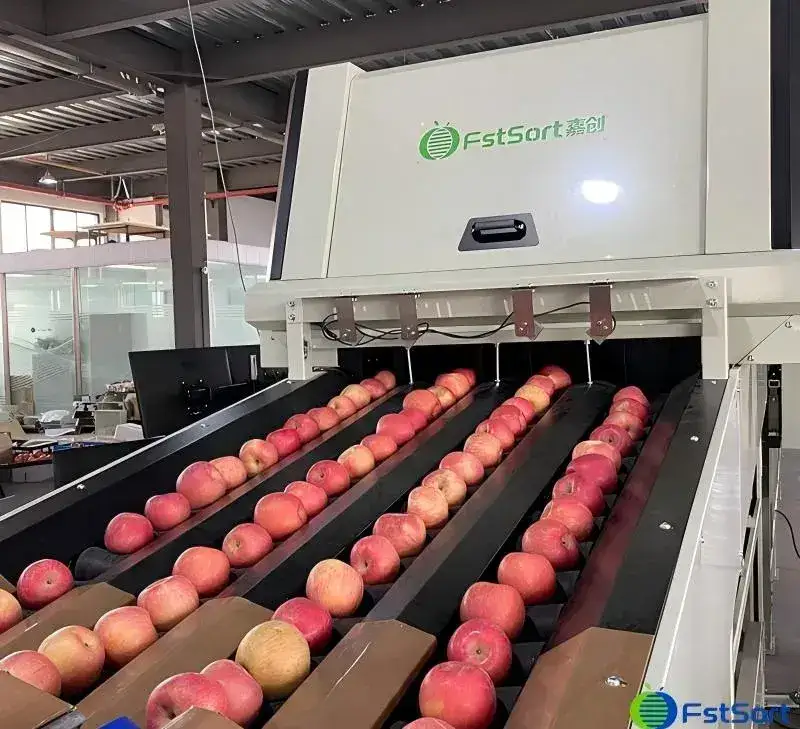
For premium varieties like Sun Fuji, external “perfection” directly drives the premium. Fstsort’s optical sorter uses high-speed cameras to grade by color, size, and external defects—including bruises, scars, sunburn, and insect damage—with no physical contact. This is the gentlest sorting method for delicate apples. The optical sorter can also be programmed by red color percentage to meet premium market requirements for precise “redness” grading.
The core logic: the goal is not just to “finish sorting,” but to “finish sorting with every apple exactly as it entered the machine.”
Key Sorting Capabilities Overview
Sorting method | Core capability | What it means for premium apples |
|---|---|---|
Electronic weight sorting | ±2g accuracy, 7–12 grades, soft cups, low-drop | Precise sizing without creating bruises during weighing or discharge |
Optical sorting | Color, size, external defects (including bruises), zero physical contact | Protects “perfect appearance” and grades by red percentage |
From Sorting Machines to Complete Apple Handling Solutions
Sorting is just one step in apple post-harvest handling. Fstsort offers complete apple processing solutions covering infeed, washing/polishing, sorting, and packing—water flume feeding, soft-touch brushes, weight or optical sorting, and low-drop boxing all follow the same design principle: protect the skin, protect the flesh, protect the premium.
China’s premium apple import market is growing rapidly. In 2025, China’s apple imports reached 116,000 tonnes, up 19.7% year-on-year; import value reached $270 million, up about 24%.The entry of Sun Fuji signals expanding demand for apples with “high appearance standards + high eating standards.” For importers and premium apple processors, bruise control at the sorting stage directly determines whether the premium can hold on the shelf.
Want your apple sorting to move from “sorting accurately” to “sorting accurately without bruising”? Learn more about Fstsort’s apple sorting machines→