
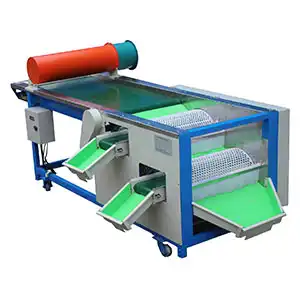
The evolution of blueberry grading machines from carbon steel to ultra-low drop belt sorters. FstSort offers cost-effective solutions (thousands to tens of thousands of USD) for small to medium farms – an alternative to million-dollar optical lines. Serving clients in Chile, Peru, South Africa, Australia, and Europe. Get quote.
The Global Blueberry Market
Both Chile and Peru are the world‘s major exporters of blueberries. In addition, blueberries are also widely grown in Australia, China, South Africa, Mexico, the United States, and Ukraine. They are widely loved by consumers because of their rich nutritional value.
As a leader in the fruit and vegetable sorting and packaging industry in China, Zhengzhou First Industry Co., Ltd (FstSort) has extensive experience in post-harvest processing. According to the needs of consumers worldwide, we continuously provide users with valuable solutions.
💡 The challenge for most blueberry growers: manual sorting is slow and inconsistent, while million-dollar optical sorting lines are out of reach. FstSort fills this gap with practical, affordable mechanical solutions.
The Core Challenge: Protecting the "Bloom"
Before we look at the equipment evolution, it‘s important to understand what matters most in blueberry grading.
In the premium blueberry market, the natural waxy “bloom” is the most critical indicator of freshness. Any equipment that rubs off this coating reduces the market value of the fruit.
FstSort‘s design philosophy:
✅ Food-grade soft materials – drums and belts are specially textured
✅ Ultra-low drop heights – minimizes impact at every transition
✅ Anti-rollback elevators – gentle feeding, no bruising
Our graders are engineered to keep the bloom intact – blueberries come out looking like they just came off the bush.
The Evolution of FstSort Blueberry Grading Machines
The blueberry grading machine is one of the most popular equipment in the blueberry packing industry. Below, we can see how the design has changed based on the real needs of users from different parts of the world.
First Generation

Features: Stainless steel contact points; carbon steel outer frame.
Why it was developed: To provide an affordable entry point into mechanical grading for small farms. This generation proved that machines could replace manual sorting without breaking the bank.
Second Generation

Features: Fully 304 stainless steel machine; PVC conveyor belt; longer sorting belt so that more workers can join the sorting work.
Why it was developed: Customers needed higher hygiene standards (full stainless steel) and more manual inspection capacity. The longer belt allows 2-3 workers to sort side by side.
Third Generation
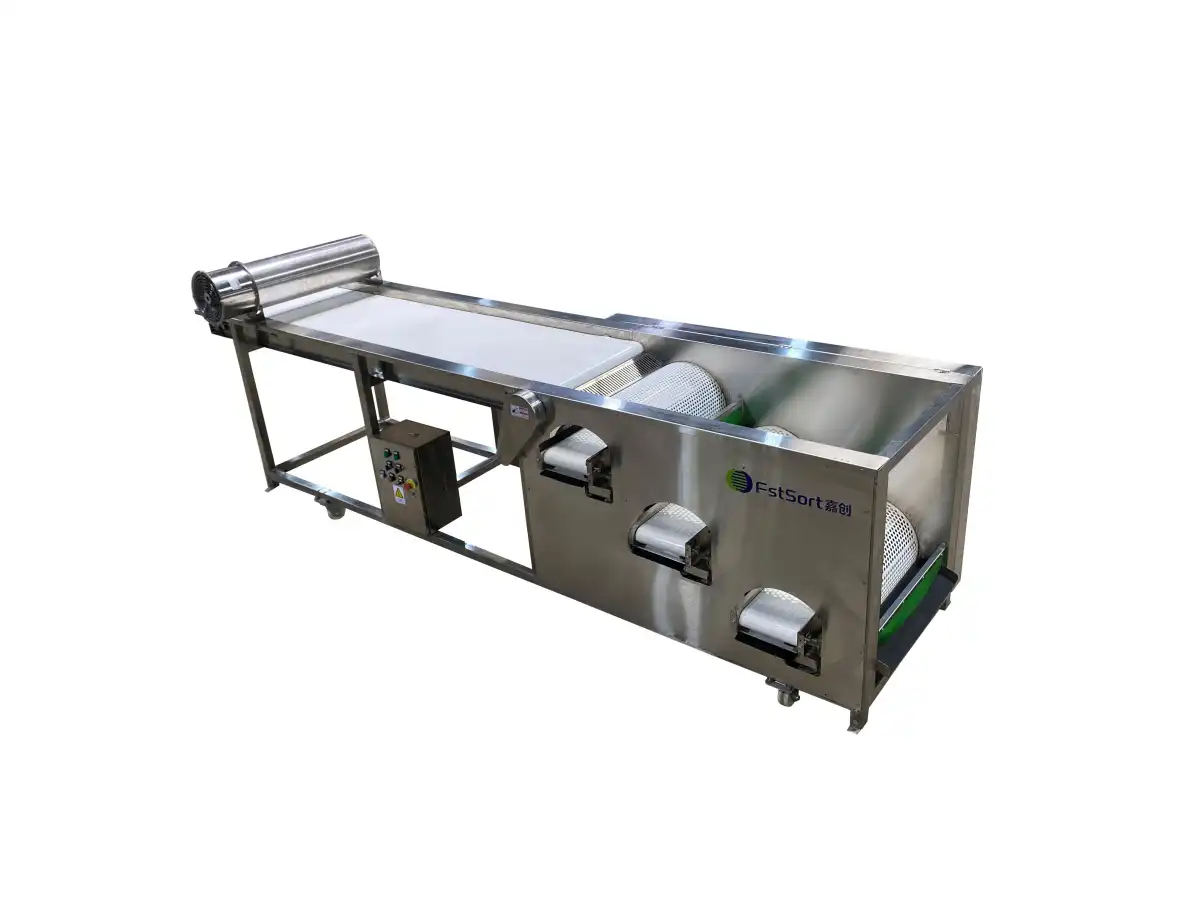
Features: Fully guarded machine; PU material conveyor belt.
Why it was developed: To meet strict European safety standards. The PU belt is more durable and food-safe than PVC, and the full guarding protects operators while maintaining visibility of the fruit.
Fourth Generation

Features: Added a reject conveyor belt for defective fruit.
Why it was developed: To meet customers‘ needs for standardized production and centralized processing of discarded fruit. The reject belt automatically collects culls, eliminating the need for workers to handle waste manually.
Fifth Generation

Features: Ultra-low drop design; double the capacity of traditional drum blueberry graders.
Why it was developed: Maximum bloom protection + significantly higher efficiency. This generation has a smaller drop height, which is better for protecting blueberry bloom. Moreover, its capacity is twice that of a traditional drum blueberry grader, greatly improving sorting efficiency.
View our complete blueberry processing solution→
Why Global Packers Are Choosing FstSort
Our systems are currently serving professional clients in South Africa, Zimbabwe, Colombia, Chile, Austria, the UK, and Portugal – many of whom have become repeat customers.
Advantage | What It Means for You |
|---|---|
Extreme cost advantage | Spend thousands to tens of thousands of USD, not millions |
Bloom protection | Premium market pricing for your fruit |
Customizable sizing | Interchangeable drums/belts for different varieties (Duke, Draper, wild) |
Durable & hygienic | 304 stainless steel + food-grade materials |
Proven reliability | Repeat customers across 4 continents |