
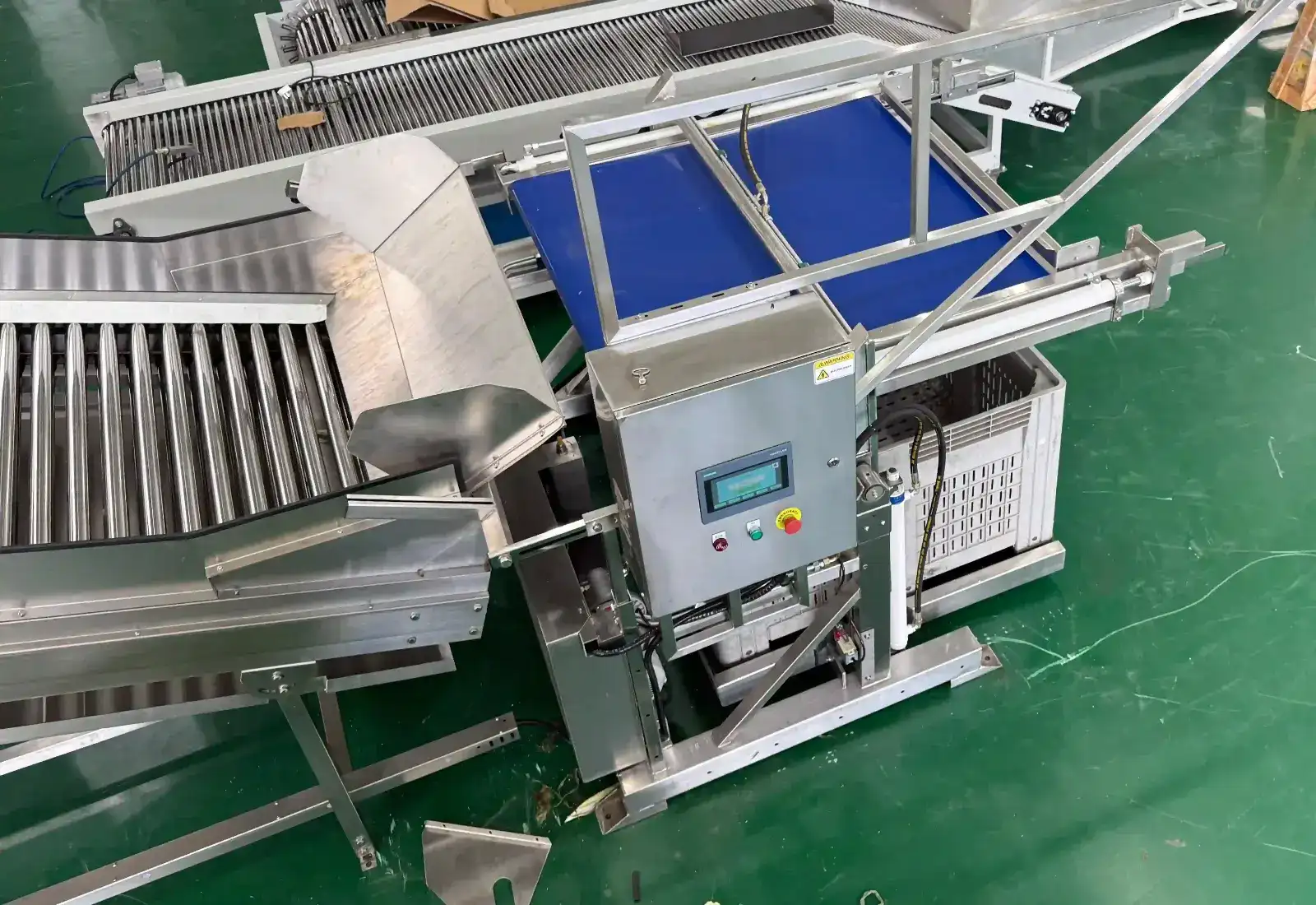
Chinese apples suffer 25–30% mechanical damage, and bin tipping—the first step into the processing line—is a high-risk point for bruising. European growers invest in it not just to "save workers," but because manual tipping creates invisible damage before sorting begins. This article examines the damage economics of bin tipping and how a versatile bin tipper turns "being careful" into "designing control."
Bin Tipping: The First Damage Checkpoint in Produce Processing
Much of the investment in a produce processing plant goes into the sorting line. But there is an overlooked fact: damage often happens before produce ever reaches the sorter.
Take apples: mechanical damage rates in Chinese apples run as high as 25–30%, and in Yan'an Fuji apples, mechanical injury accounts for 50.85% of storage losses. Apples are highly sensitive to impact, and thin-skinned produce such as cucumbers and tomatoes is equally vulnerable to drops and compression at the tipping stage.
Bin tipping is precisely the moment when produce leaves the bin and is first exposed to drop height and mechanical contact. In manual tipping, a full bin is lifted, tilted, and emptied—drop, tumbling, and produce-to-produce compression happen simultaneously. Bruising at this stage is almost invisible; it may only surface on the sorting line, or worse, get packed and appear on the retail shelf.
This is exactly why European growers and large processors invest separately in the bin tipping stage: it is not a "handling tool," but the first quality control point in the entire processing line.
The European Math: The Higher Labor Costs Go, the Less the First Checkpoint Can Rely on People
In China, labor costs are relatively low, and many factory owners would rather hire more workers than consider highly automated equipment. In Europe, the cost structure is completely different, with higher labor costs, and the industry is shifting from labor-intensive to capital-intensive.
When labor costs rise past a certain point, "hiring a few more people to tip carefully" stops being sustainable. The problem with manual tipping is not just cost—it is that the force, angle, and speed of every tip are never exactly the same. The same worker performs differently in the morning and the afternoon; different workers have different habits. Bruising is probabilistic, and manual operation cannot reliably push that probability to its lowest.
A Versatile Bin Tipper Solves "Controllability at the First Stage"
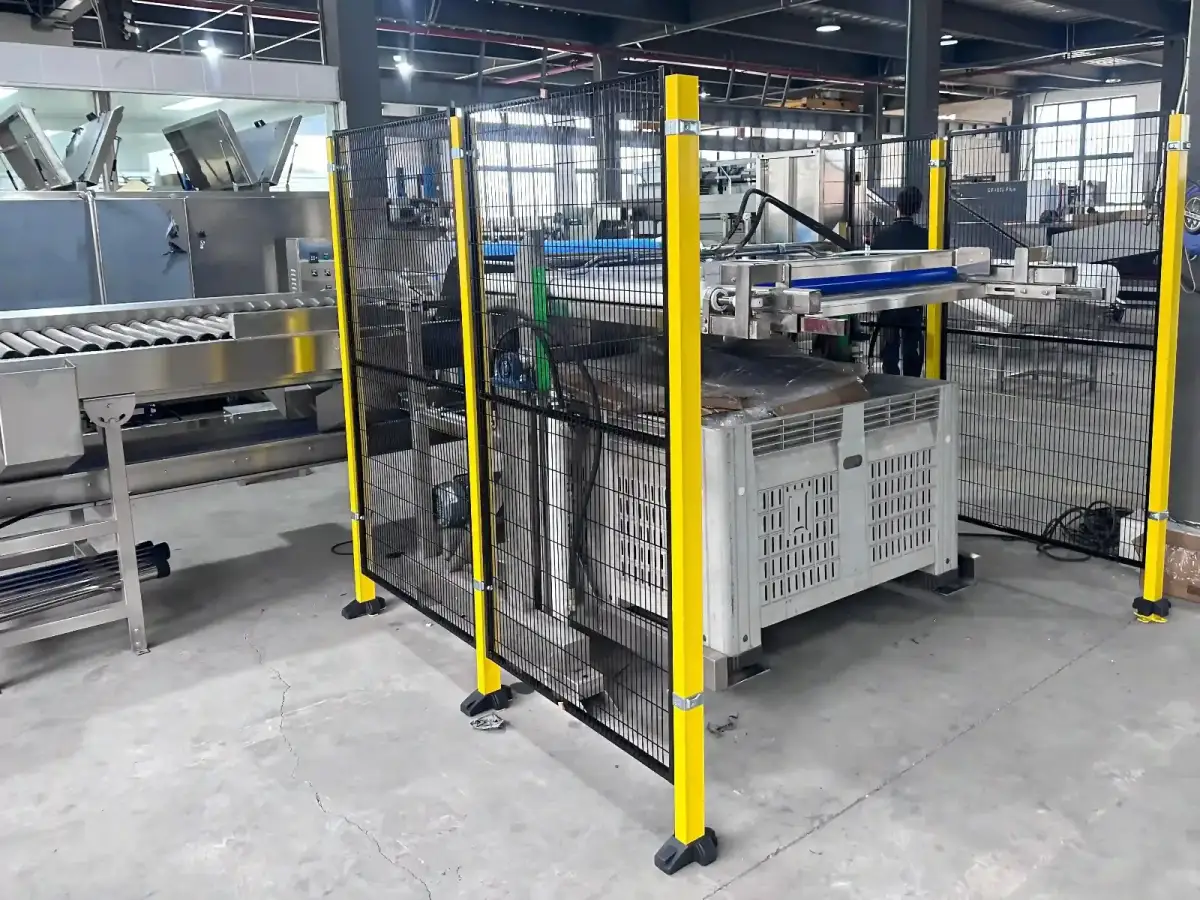
Fstsort's bin tipper is designed not to "tip faster," but to transfer produce from bin to processing line with the lowest possible impact. The equipment is not limited to a single crop—apples, cucumbers, tomatoes, citrus, and other bin-handled produce can all go through the same controlled tipping and conveying logic at the front end.
1. Controlled tipping: produce is not "poured out"—it is "released"
The bin tipper uses a controlled tilting motion to discharge produce steadily. The fruit's path is designed to avoid the simultaneous surge, mutual compression, and high-drop rolling that occur in manual tipping. Drop heights are held within the design range, and produce-to-produce collision opportunities are substantially reduced.
2. Water flotation conveying: letting water, not gravity, move the produce
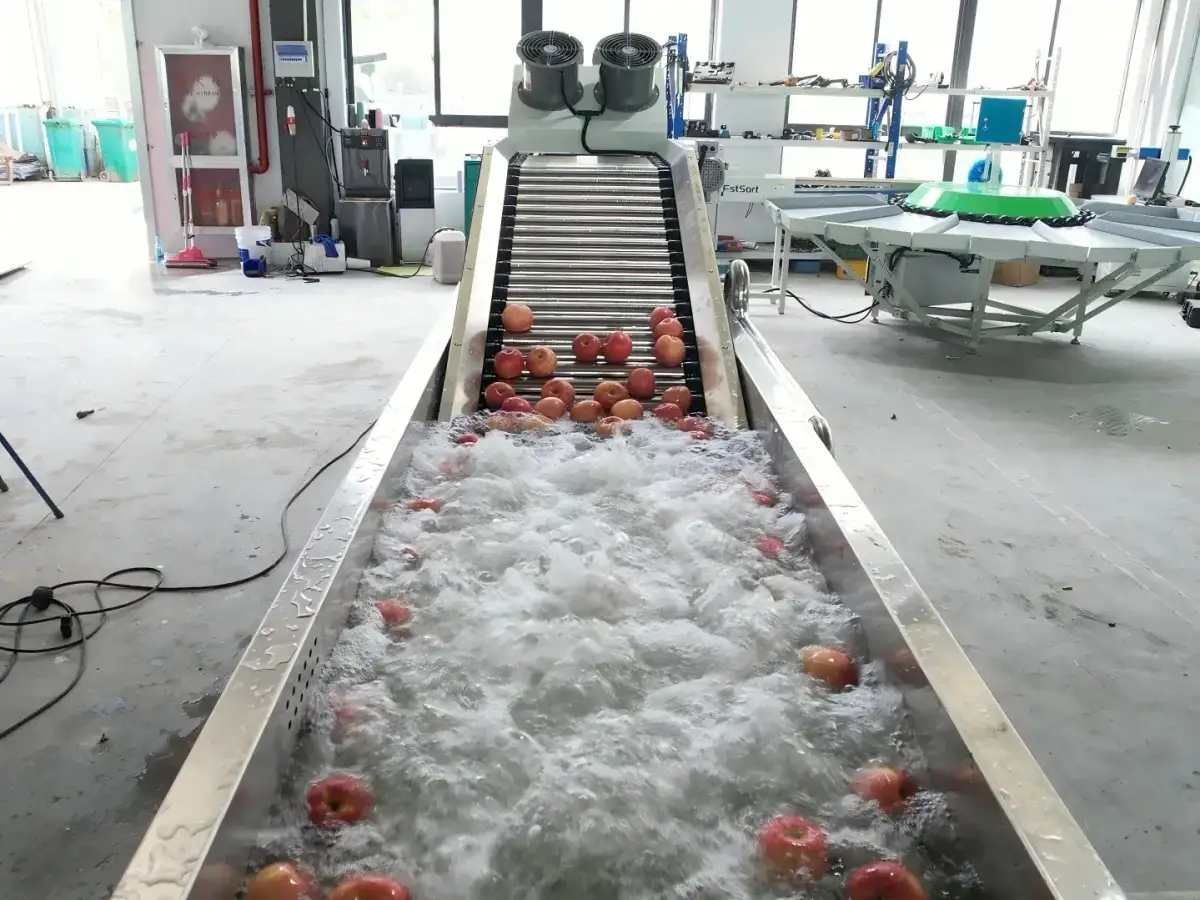
For impact-sensitive categories such as apples and cucumbers, the conveying method after tipping matters just as much. Fstsort's solution uses water flotation to move produce from the tipping area to the next process—produce floats forward in water, with no high-drop collision, and water itself acts as a natural cushion. The point is that from leaving the bin to entering the next process, the fruit never goes through a free fall.
3. Automated empty-bin collection: the step after tipping should not return to manual
After tipping, empty bins are conveyed together and stacked by forklift in a designated area. This means both the front end (infeed) and back end (empty bin handling) of the tipping stage are brought into one controlled flow—workers do not need to continue handling and stacking empty bins after tipping. This reduces the number of times produce is touched by hand and eliminates secondary interference from empty-bin handling.
From Bin Tipper to Continuous Processing Line
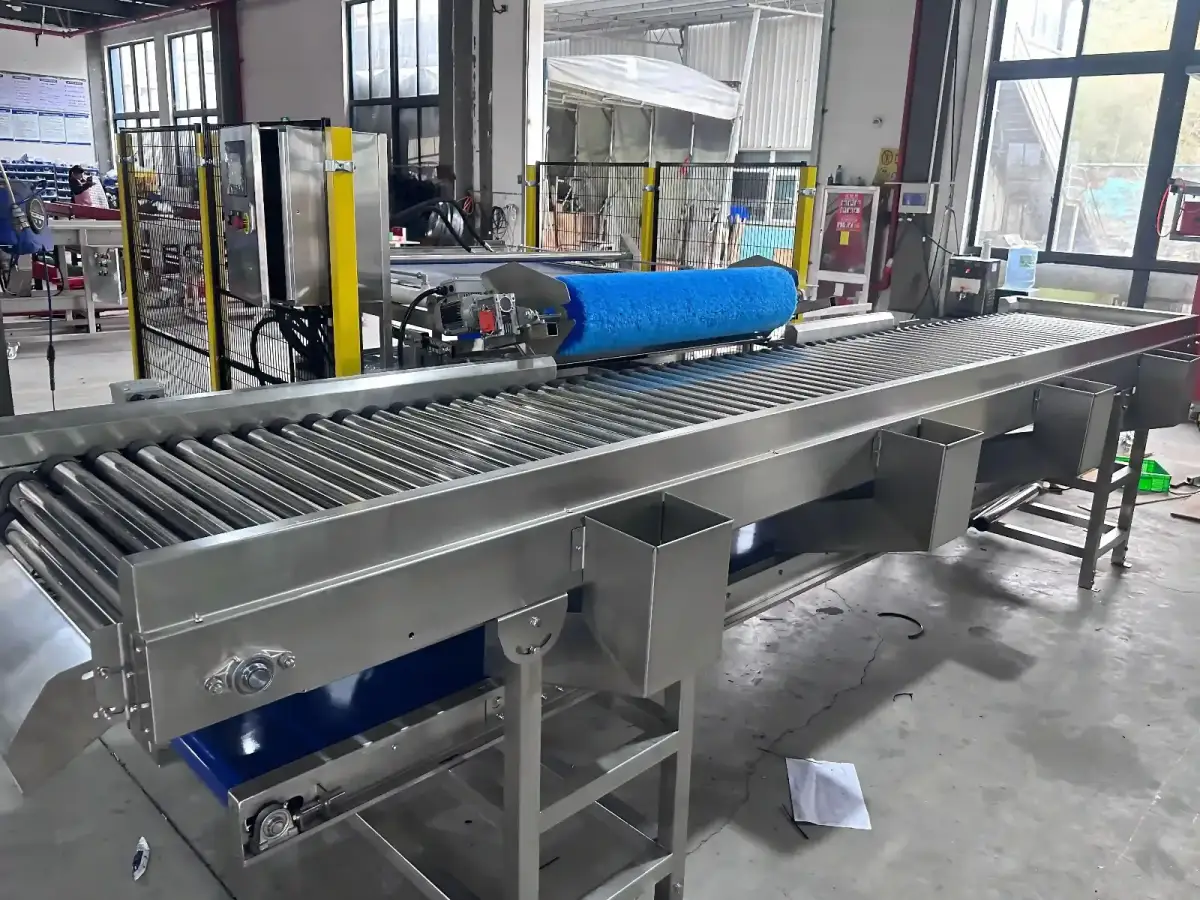
Bin tipping is not an isolated step. Fstsort's tipping solutions can connect with washing, inspection, grading, and packing modules to form a continuous flow from bin infeed to finished packaging. The water flotation section can feed directly into washing and air classification—produce completes its first cleaning and conveying in water, reducing manual transfer and secondary drops after tipping. The same tipping and conveying logic can be adjusted to different produce characteristics, supporting multi-category lines or seasonal changeovers.
When mechanical damage rates in apples and other produce remain at 25–30% and labor costs continue to rise, the ability to control damage at the first checkpoint—not saving a few workers, but stopping damage before it happens—is becoming the starting point that produce processors care about for both quality management and cost management.
Want your processing line to control damage from the very first step while reducing reliance on manual bin tipping? Learn more about Fstsort's versatile bin tipping and continuous processing solutions→