
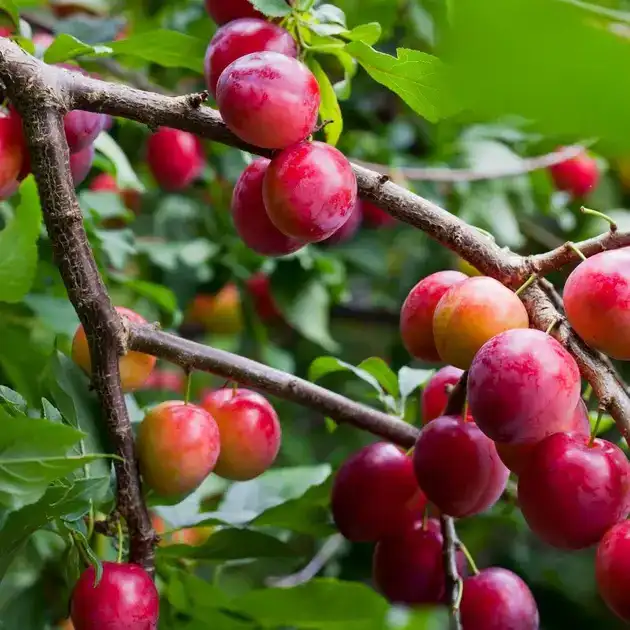
Plums can suffer up to 28% physical damage and 24% bruising, with post-harvest losses at 25–40%. The real question isn't "can it sort into grades"—it's "are the plums still intact?" This article examines how rotary electronic sorting uses individual weighing and low-drop design to turn sorting from a damage source into a damage-control point.
Plum Sorting: Before Grading, Don't Damage the Fruit
Plums are widely grown across Europe—Italy, Germany, Macedonia, and other regions all have substantial acreage. In recent years, many customers have approached Fstsort about plum grading lines. On the surface, their request is "sort plums by size into grades." But the real problem is more practical: plums are too easily damaged during sorting.
Plum skin is thin and the flesh is soft—highly sensitive to impact and compression. Industry data shows physical damage during transport and sorting can reach 28%, bruising after transport can reach 24%, and post-harvest losses run at 25–40%, with a significant share of fruit unsaleable or discounted due to impact and compression damage. More critically, bruising is nearly invisible at the sorting stage—the fruit looks intact outside while the flesh has already discolored and softened, only revealing itself on the shelf or in the consumer's hands.
This means the core challenge in plum sorting is not "sorting accurately"—it is sorting accurately without creating new damage. A sorter that makes fruit tumble and drop repeatedly in pursuit of speed and grade count becomes a source of bruising itself.
From Customer Testing to Rotary Electronic Sorting: Individual Weighing Instead of "Rolling to Sort"
When customers ask for plum grading, Fstsort's approach is to verify first, then recommend. The team purchased a batch of plums from the market, ranging from 40g to 150g, and ran them through the machine. The result: the machine accurately sorted the batch into 5+1 grades by weight, covering the full range from smaller to larger fruit, while remaining compact enough to fit without a large facility footprint.
Behind this result is a rotary design logic that matches the physical characteristics of plums.
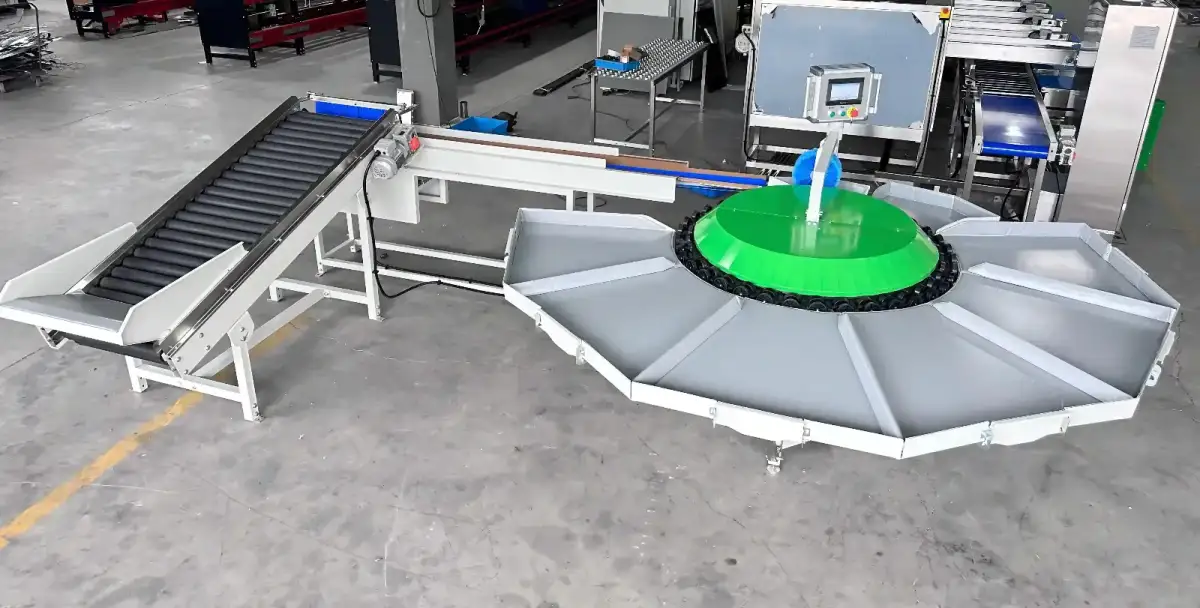
1. Individual weighing: each plum is weighed on its own—no rolling, no gap-dropping
Conventional roller or drum graders rely on fruit rolling through the machine and dropping through gaps to grade—fast, but every roll and drop is a collision opportunity. Rotary electronic sorting uses individual weighing: each plum enters a weighing cup on the rotating disc, is measured alone with ±2g accuracy, and is then directed by the control system to the corresponding grade outlet. The grading standard is set by weight data, not by the fruit's rolling path—reducing, by principle, the collisions created by "tumbling in order to grade."
2. Low drop + soft landing: what's underneath when the fruit falls
Electronic sorting still involves an outlet drop—the moment a plum leaves the weighing cup and enters the outlet remains a high-risk point for bruising. The rotary model addresses this with low-drop design and soft padding at the elevator, connecting plates, and packing tables, so the last step of the fruit's journey is a soft landing rather than a hard impact. For a category with such a low bruising threshold, this detail directly determines the "hidden damage rate" after sorting.
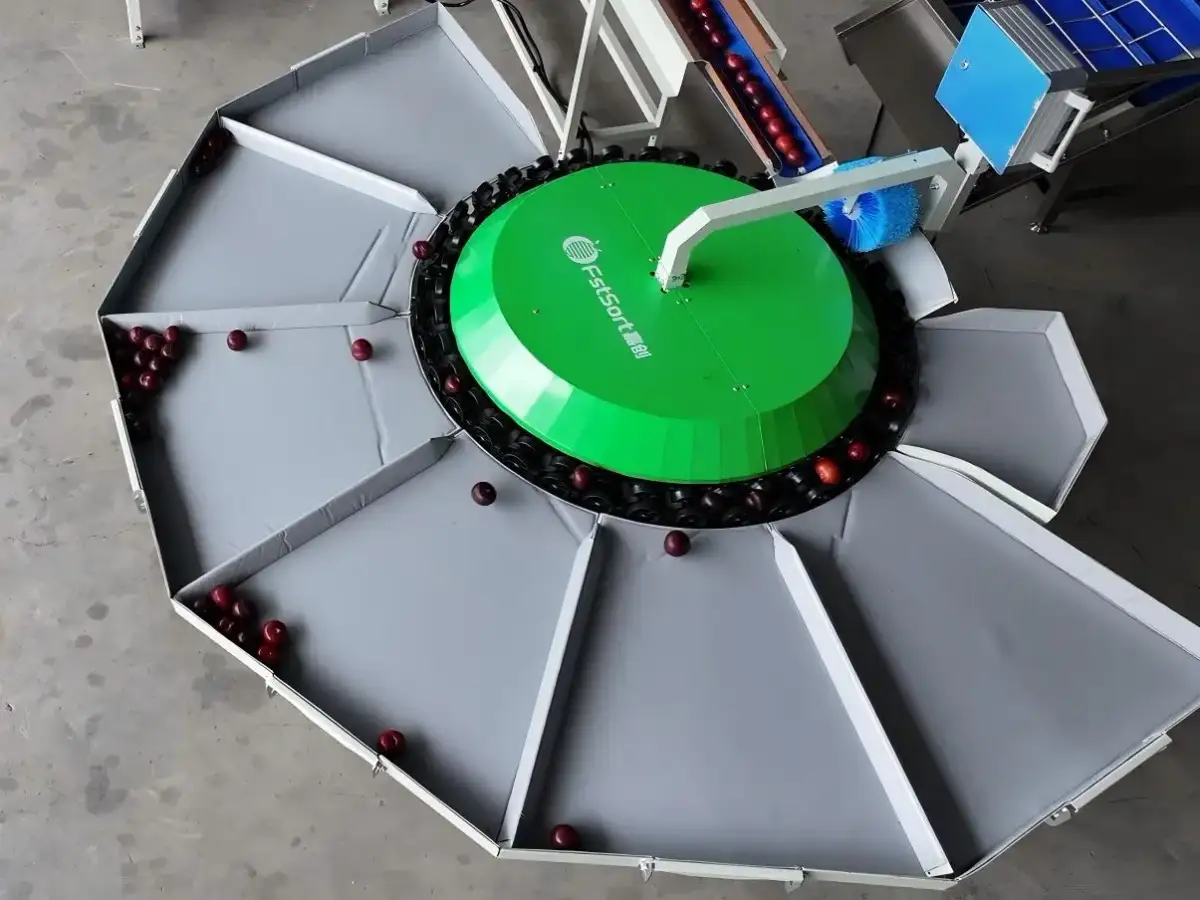
3. Compact footprint: a plum grading line that fits into a smaller facility
The rotary electronic sorter's carousel structure is compact, suited to small and medium plum packing operations without requiring facility expansion just to accommodate a grader. For European plum growers and packers with moderate volumes and limited floor space, this matters more than "higher capacity"—first a line that works, then capacity expansion.
From Sorter to Plum Post-Harvest Quality Control
From Sorter to Plum Post-Harvest Quality Control
Sorting is just one step in plum post-harvest handling. The rotary electronic sorter can connect with washing, drying, and packing modules to form a continuous flow from infeed to finished product, reducing manual handling and secondary contact before and after sorting. A plum's commercial value largely depends on "how many fruit are still intact on arrival"—the damage-control capability of the sorting stage directly determines that ratio.
Want your plum sorting to grade accurately without creating bruising? Learn more about Fstsort's rotary electronic sorter→