
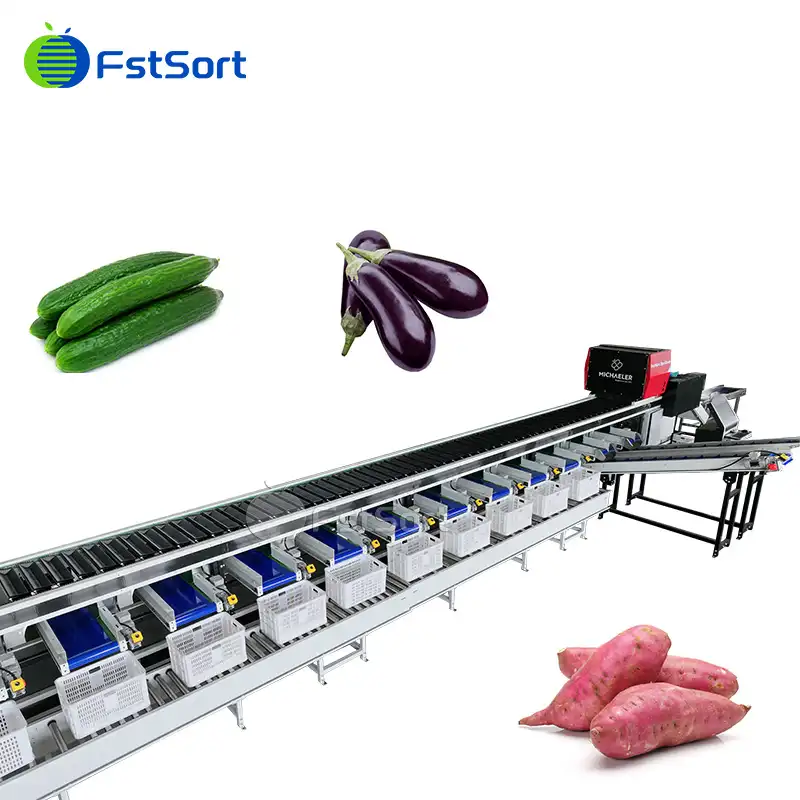
Sweet potatoes are among the most challenging crops to grade. Their rough skin, irregular shapes, and subtle color variations can hide defects that human eyes miss — and that's exactly where AI-powered optical sorting changes the game.
The Sweet Potato Challenge: Why Human Eyes Aren't Enough
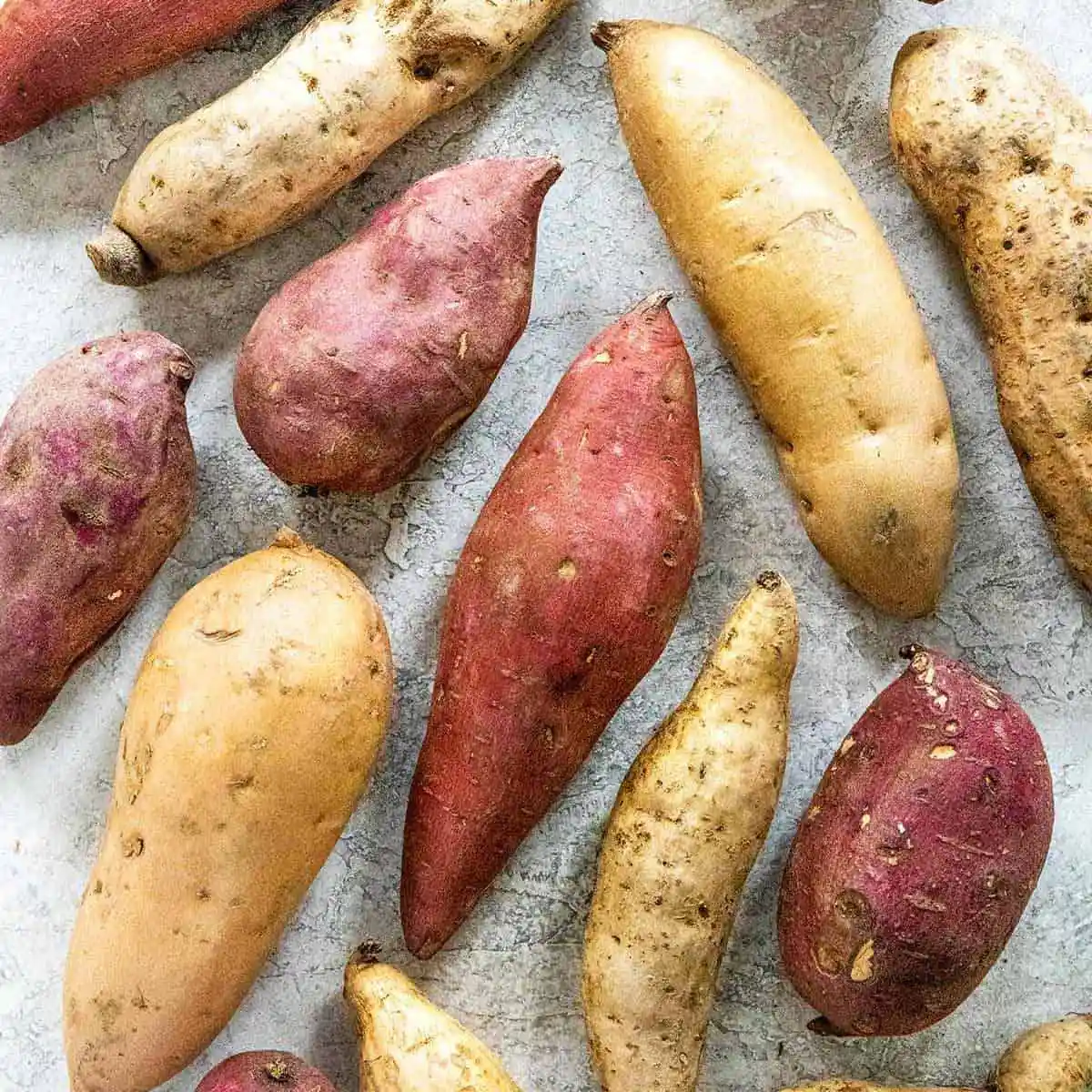
Sweet potatoes are not like apples or potatoes. Their skin is rough and uneven. Their shapes vary widely — from long and thin to short and bulbous. And their color variations can mask surface defects that would be obvious on smoother-skinned produce.
For sweet potato growers and packers, this creates a persistent problem: how do you spot rot, cracks, or mechanical damage when the skin itself is irregular?
Manual inspection is slow, inconsistent, and increasingly expensive. Traditional mechanical graders can sort by size — but they can't detect the defects that turn a premium export sweet potato into a local discount.
The Solution: AI That Sees What Humans Miss
This is where Fstsort's AI optical sorter changes everything.
Unlike traditional graders that rely on physical sizing, the AI optical sorter uses a deep learning system that trains itself to recognize what you consider a good sweet potato versus a bad one.
Here's how it learns:
During setup, the system is fed thousands of images of sweet potatoes — some perfect, some with various defects. The AI studies them until it understands the difference between a blemish that's acceptable and one that isn't. It doesn't follow fixed rules. It learns your standards.
The result: a system that applies the same judgment to every single sweet potato, without fatigue, without distraction, without exceptions.

What the AI Catches — and What That Saves You
Defect the AI Spots | Why It Matters to Your Business |
|---|---|
Cuts, scrapes, impact marks | Mechanical damage makes sweet potatoes look rough and unappealing — retailers reject them or demand steep discounts |
Rot, sour rot, black rot | Rot spreads during storage and transit — one bad sweet potato can contaminate an entire shipment |
Cracks, rust spots, misshapen fruit | Supermarkets and export buyers pay premium prices only for produce that looks perfect and uniform |
Stones, stems, leaves, mud | Foreign objects trigger complaints, damage claims, and lost customer trust |
Uneven color, patchy ripening | Inconsistent appearance signals poor quality to buyers — even when the inside is fine |
Any defect you define | The system learns whatever quality rules your specific market demands |
Two cameras per channel scan over 85% of each sweet potato's surface — including the sides and underside that human inspectors often miss.
The Human vs. Machine Reality
For packers still relying on manual inspection, the contrast is stark.
A single AI sorter handles 3 to 18 tons per hour, depending on the number of channels. That's the work of an entire team of manual sorters — but without the fatigue, without the missed defects, without the subjective calls.
And it doesn't take an engineer to run it. A single worker with basic computer skills can manage the system, monitor output, and adjust settings as needed.
What that adds up to:
Result | What It Means for You |
|---|---|
Fewer workers | One machine replaces dozens of manual sorters |
Higher throughput | Runs continuously — no breaks, no end-of-day slowdown |
More first-grade product | Less waste from missed defects; more sweet potatoes reach premium markets |
Fewer rejected shipments | Consistent quality means fewer customer complaints and returns |
Real-World Impact
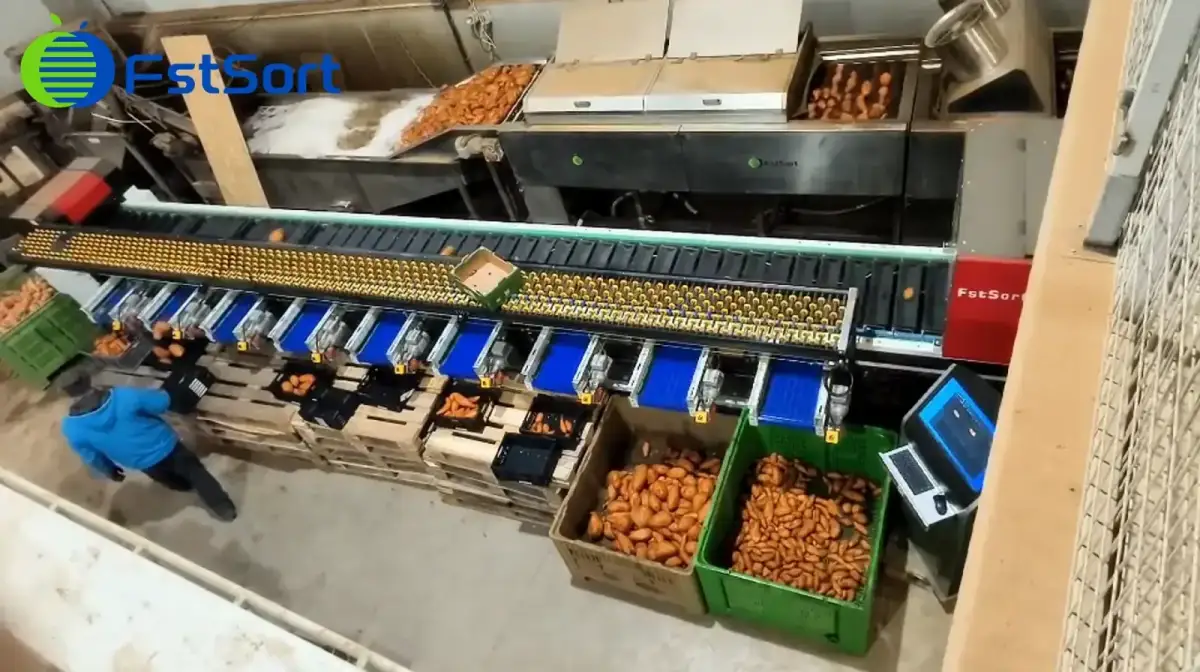
Austrian sweet potato packers have already installed Fstsort's optical sorting technology. The results have been consistent: more accurate defect removal, better overall pack quality, and the ability to meet the tight specifications of European retail buyers.
For packers who supply supermarkets and export markets, where appearance drives pricing as much as size does, the AI sorter has moved from "nice to have" to "essential".
The Investment Reality
Where the Savings Come From | Typical Impact |
|---|---|
Labor | Replaces dozens of sorters; one worker runs multiple conveyors |
Waste | Catches defects that would otherwise be packed and shipped, then rejected |
Quality consistency | Eliminates the variability of human judgment |
Brand protection | Removes contaminated or spoiled product before it reaches your customer |
The short version: the sorter doesn't just pay for itself — it becomes a profit center.
Built to Work Alongside Your Line
The AI sorter is designed to drop into existing packing lines. Put it right after washing, or use it as a final quality check before packing. Either way, it integrates without major reconfiguration.
Training is minimal. The touchscreen interface makes operation straightforward for anyone comfortable with basic computers. Remote support is available for troubleshooting and adjustments.
When maintenance is needed, it's quick: fruit cups swap out in minutes, calibration takes about two minutes, and the LED lights are built to last 50,000+ hours.
Want to see how AI optical sorting can transform your sweet potato operation? Explore the full specifications on our sweet potato washing, drying & sorting line page →
Human Eyes Have Limits. AI Doesn't.
Your sweet potatoes deserve the right price. That price depends on quality. And quality depends on catching defects before they leave your facility.
Manual sorting can’t catch them all. AI can.