
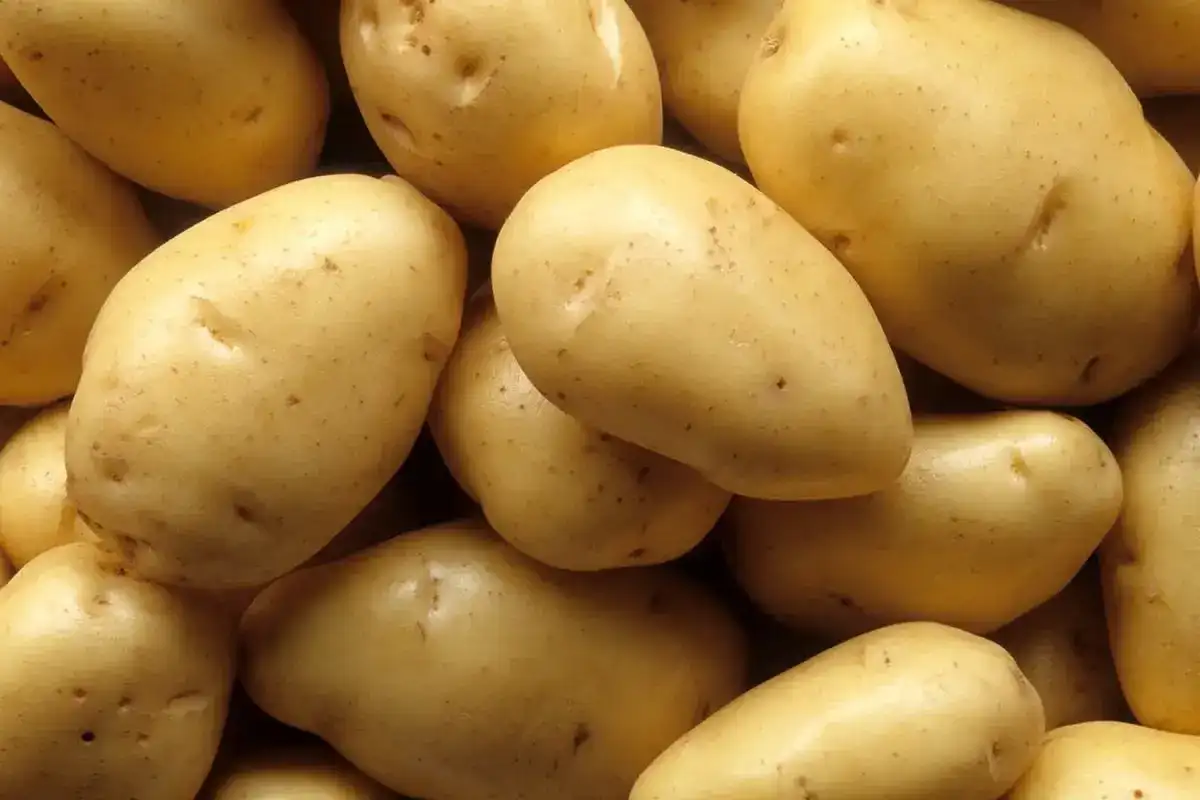
Single-lane sorting is a bottleneck. Four lanes? That's a breakthrough. Here's how a multi-lane weight sorting line helps potato packers process 10 tons per hour — and why it matters for your bottom line.
The Potato Packer's Dilemma: Volume vs. Speed
Potatoes are among the highest-volume vegetables in the world. During peak harvest season, packing houses are flooded with tons of potatoes every day. The faster you can sort and pack, the fresher the product reaches the market — and the higher the price it commands.
But here's the problem: single-lane sorting lines can't keep up.
When the volume exceeds the capacity of a single lane, bottlenecks form. Potatoes pile up. Workers scramble. Shipments get delayed. And the opportunity cost adds up fast.
For potato packers, the question isn't whether to automate — it's how to automate at scale.
The Four-Lane Breakthrough: 10 Tons Per Hour
A single-lane weight sorter processes about 1 ton of potatoes per hour. That's fine for small operations. But for commercial packers handling high volumes, it's a bottleneck.
The solution: four lanes running simultaneously.
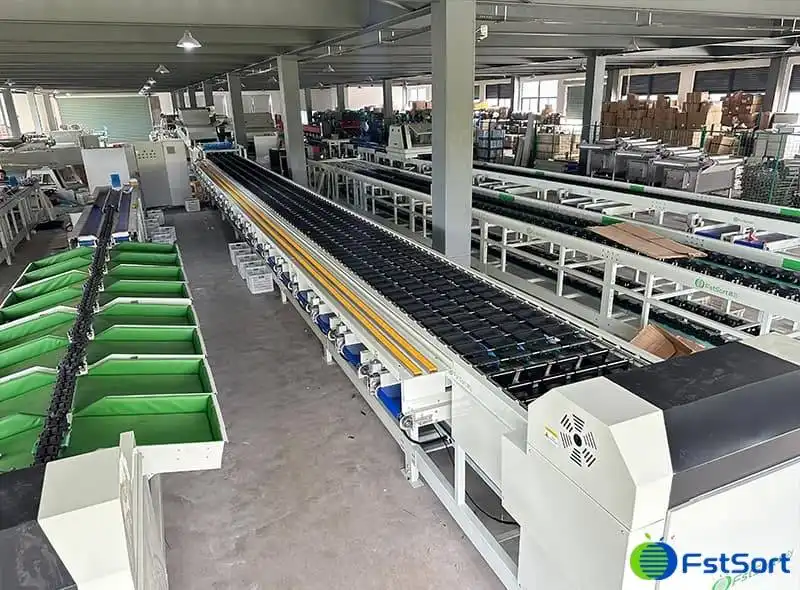
Fstsort's four-channel weight sorting line delivers:
Configuration | Capacity | Best For |
|---|---|---|
Single-lane | ~1 t/h | Small farms, entry-level |
Two-lane | ~2 t/h | Growing operations |
Four-lane | Up to 10 t/h | Commercial packers, high-volume export |
Four lanes running simultaneously mean four times the throughput of a single-lane system. For packers processing hundreds of tons per season, this translates directly into:
· Faster processing — Get product out the door faster, capturing peak market prices
· Lower labor costs — One machine does the work of multiple manual sorting teams
· Consistent quality — Machine grading is more accurate than manual sorting, every time
From Field to Pack: A Complete Flow
The Fstsort potato sorting line follows a streamlined workflow:
1. Even feeding — A roller-type elevator feeds potatoes evenly into the system, preventing jams and ensuring consistent flow
2. Spreading & singulation — Potatoes are spread and singulated so each tuber is individually presented to the weighing system
3. Precision weighing — Each potato is weighed with ±2g accuracy by the electronic weight sorter
4. Multi-lane sorting — 1–4 lanes sort simultaneously, handling up to 1,000 kg per hour per lane
5. Precise packaging — The system includes a quantitative filling function that packs potatoes to a predetermined weight — eliminating the need for manual weighing
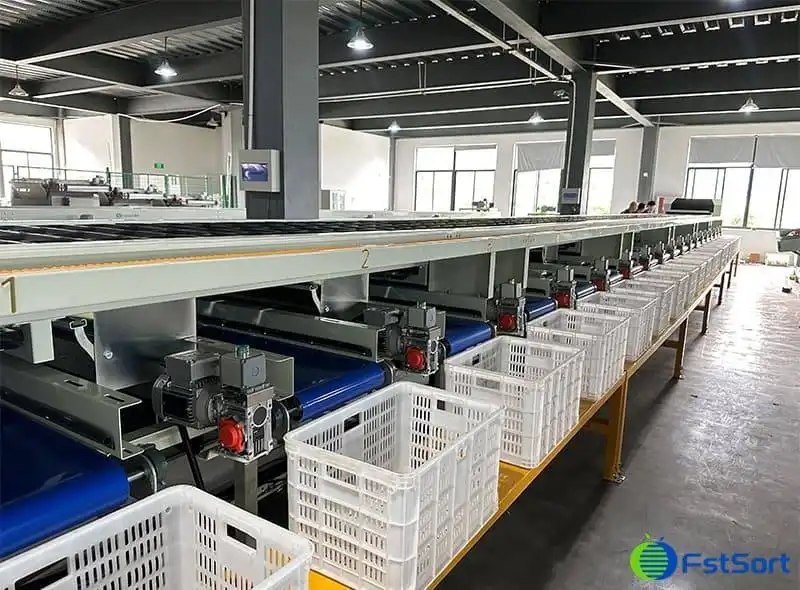
The result: sorted, weighed, and packed potatoes — all in one continuous flow.
Built for the Real World
Potatoes are tough on equipment. Dirt, debris, and constant use punish every part of the line. The Fstsort potato sorting line is designed with durability and flexibility as priorities:
· 1–4 lanes configurable — Start with one lane and add more as your business grows. The system scales with you.
· 9–20 sorting exits — Fine grading for different market requirements
· 20–500 g weighing range — Handles small to large potatoes
· Food-grade materials — Safe and hygienic throughout
The system is suitable for a wide range of crops — potatoes, onions, apples, oranges, mangoes, dragon fruit, peaches, pears, and persimmons — making it a versatile investment for packers who handle multiple crops.
Ready to see how a four-channel sorter can maximize your potato sorting efficiency? Explore the full specifications on our potato grading machine page →
The Smart Choice for High-Volume Packers
Single-lane sorting worked yesterday. But today's potato packers need more. Four-lane sorting delivers the capacity, precision, and flexibility that high-volume operations demand — all with the gentle handling that protects potato quality.
The technology exists. The question is whether your line is ready for the next harvest.