
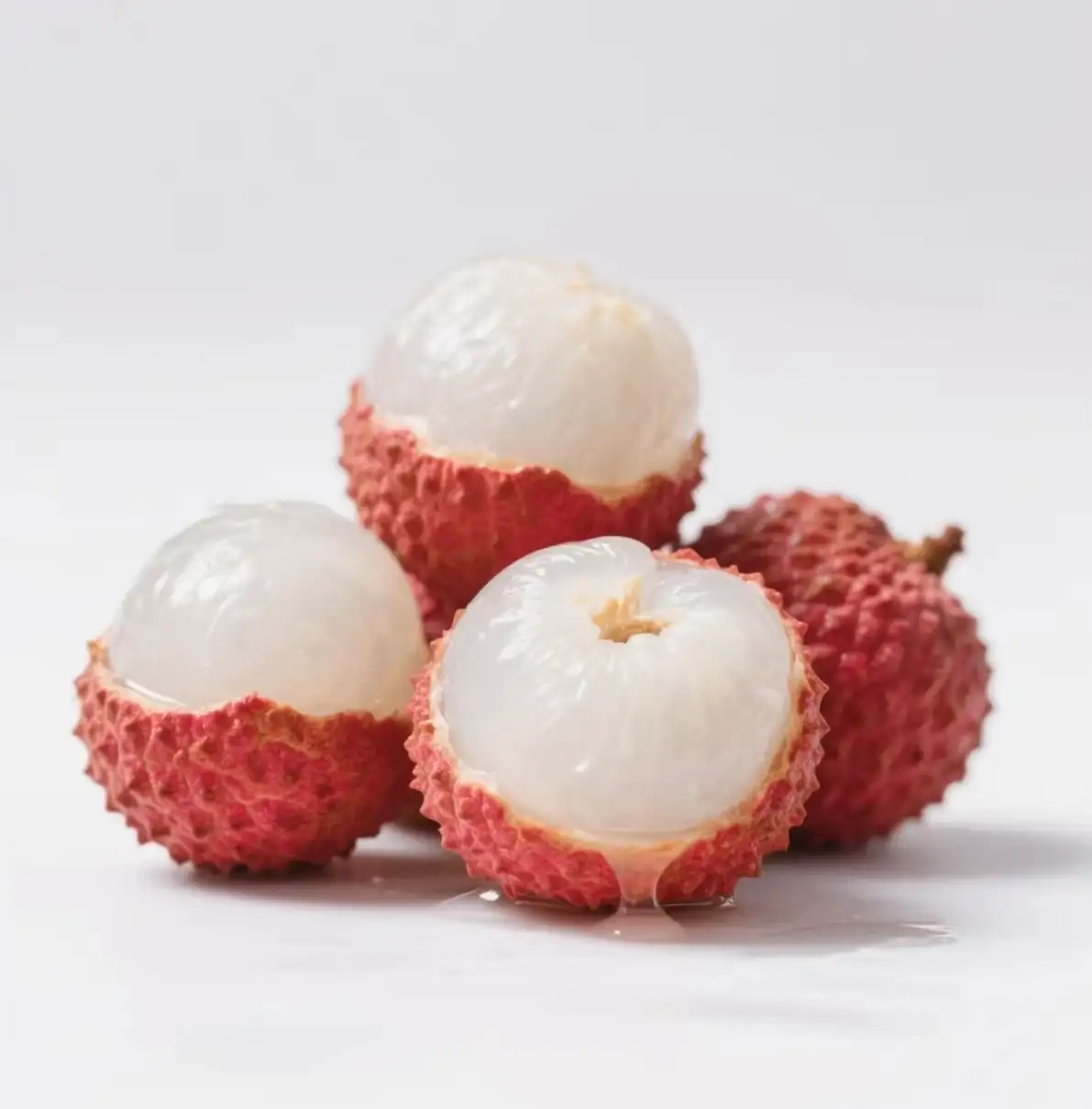
This year, “GUIHUAXIANG”Lychee went on the market at the end of March. These lychees are mainly planted in Hainan province China, which is also the main producing area of lychee in China. The harvest season has not yet begun in other production areas across China and the market supply is less than 10%. In this way, lychee can be sold at a high price at the end of March.
Lychee is harvested in the early morning or evening to avoid high temperatures, and on sunny days to prevent rain damage. Workers use scissors to cut the fruit stalk, leaving about 0.5–1 cm of the stem to protect the peel.
Within 1–2 hours after harvest, the lychee is pre‑cooled by soaking in ice water (0–5℃) for 10–15 minutes, or stored temporarily in a cold room (4–5℃) for no more than 12 hours.
After cooling, the fruit can be packed directly for cold‑chain transport. For standardized products, lychee can be sorted by diameter before cooling and packing.
FstSort supplied a complete lychee processing line to a Chinese customer, featuring our roller grading technology. This solution addresses the critical need for efficient size sorting while preserving fruit quality.
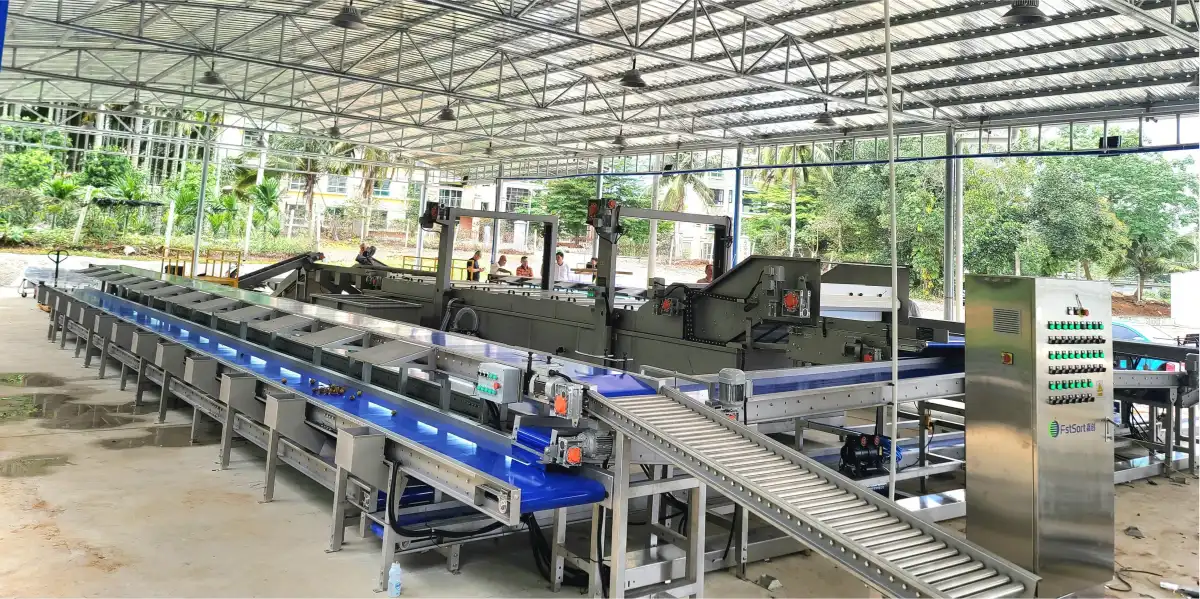
Complete Processing Line Configuration
The processing line incorporates a simple but efficient design: pre-cooling soak tanks and a long packing table, which together form an integrated workflow.
1.Pre-Cooling Soak Tanks - Immediately after harvest, harvested lychee clusters are loaded into a pre-cooling soak tank for approximately 5 minutes. During this stage, cold circulating water quickly removes field heat from the fruit's core, reducing post-harvest deterioration. As noted in industry practices, lychees are typically soaked in chilled water (0–5°C) for 10 to 15 minutes within 1–2 hours after picking to rapidly lower the fruit's temperature and inhibit enzymatic activity that leads to browning and quality loss. This step is critical for extending shelf life during subsequent processing and cold chain logistics.
2.Long Packing Table - After pre-cooling, lychees are conveyed to a long packing station. Workers on each tier remove leaves, stems, and defective fruit, sort by external quality, and weigh the product into specified packaging units.
3.Finashed Product Area - Once packed and weighed, finished lychees are transferred to the designated finished product area, ready for cold chain dispatch to wholesale markets, retail chains, or export channels.
Equipment Specifications
The lychee grading machine is a fixed-roller type, specifically designed for handling lychees. The rollers gently guide the fruit forward while gradually increasing spacing, allowing lychees to fall according to their diameter. This design ensures high grading accuracy while minimizing mechanical damage to the fruit's delicate peel. The machine has a processing capacity of approximately 5–6 tons per hour, making it suitable for small to medium-sized packing operations.
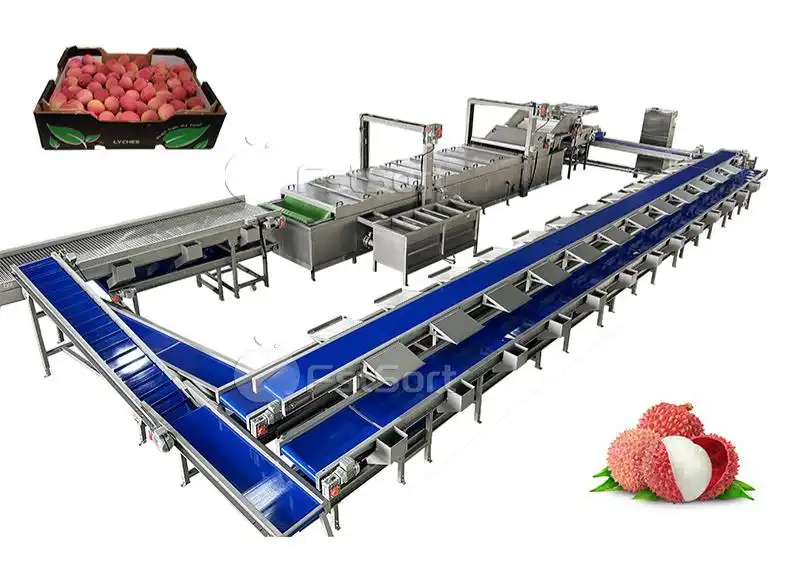
Proven Success Across Global Markets
How lychee are harvest and processed in China
1.Australia - We provided two solutions for Australian customers: one with a custom roller grader (5 grade exits, 15–75 mm), roller elevator, inspection table, and bin collection; and another complete line featuring a 3-tier destemming table, elevator, manual sorting table, roller grader, and automatic box filling and weighing system.
2.Thailand - The solution includes an elevator and a size grading machine, with a processing capacity of 3 tons per hour.
Why Upgrade to Automated Grading?
Increase throughput – Process tons of fruit per hour with consistent accuracy.
Reduce labor costs – One machine replaces multiple hand sorters.
Improve pack uniformity – Meet supermarket and export grade standards every time.
Minimize fruit damage – Gentle roller design preserves shelf life and appearance.
Enhance food safety – Easy‑clean stainless steel reduces contamination risks.
Do you want to see how foreign countries process lychees?Check out our lychee processing line product page→