The Economic Impact of Precision Sorting Technology in Agriculture
In today’s competitive global market, post-harvest management is as critical as the harvest itself. Statistics show that post-harvest losses can reach up to 40% in inefficient supply chains. Automated sorting and grading systems are no longer a luxury—they are a necessity for maximizing profitability.
3Key Ways Sorting Machines Increases Your Selling Price
To command a premium price, consistency is king. Here is how FstSort sorting technology adds direct value to your produce:
1)Precise Quality Grading (Brix, Color, and Size):
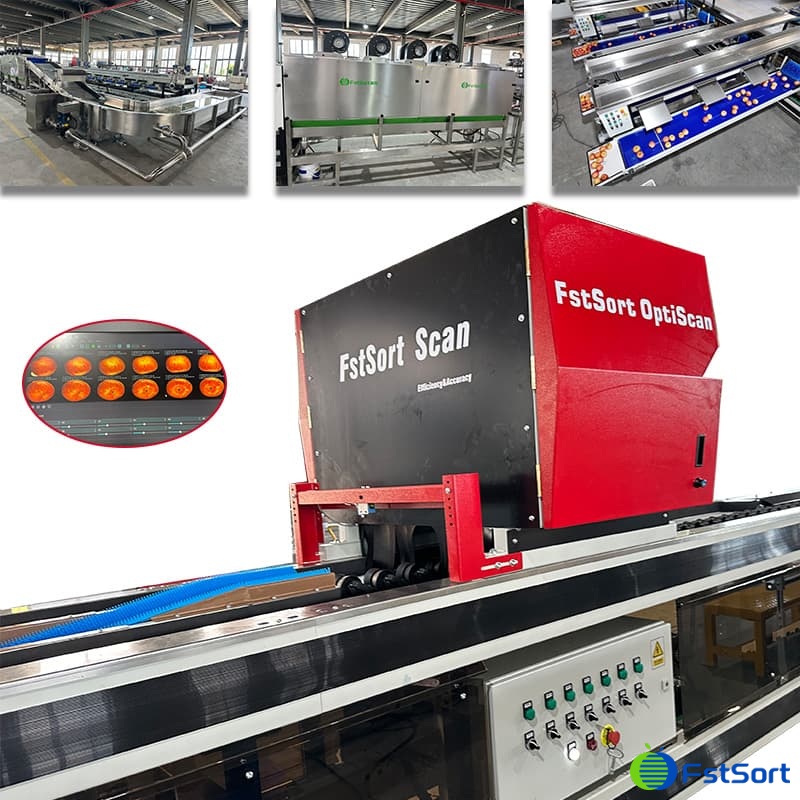
By using FstSort optical sorting technology, you can categorize fruits based on internal sugar content (Brix) and external aesthetics. This allows you to target high-end supermarkets and export markets that pay a premium for uniform, high-quality products.
2)Brand Building and Trust:
Consistency builds brand loyalty. When a wholesaler knows every crate from FstSort machinery meets a specific standard, they are willing to pay more for reduced risk.
3)Meeting International Export Standards:
Global markets like the EU and North America have strict phytosanitary and aesthetic standards. Automated grading ensures 100% compliance, opening doors to lucrative international trade.
Drastically Reducing Losses: The Science of FstSort Optical Sorter
FstSort Optical sorting machine isn't just about looks; it’s about survival of the batch.
Early Defect Detection: Our sensors can identify "latent defects" (internal bruising or rot) that are invisible to the human eye. Removing one infected fruit prevents the "domino effect" that can ruin an entire container during transit.
Optimized Shelf Life: Sorting fruits by ripeness allows for better cold-chain management. Shipping batches with uniform maturity ensures they reach the shelf at peak freshness, reducing retail-level waste.
Technology Comparison: Manual vs. Automated Sorting
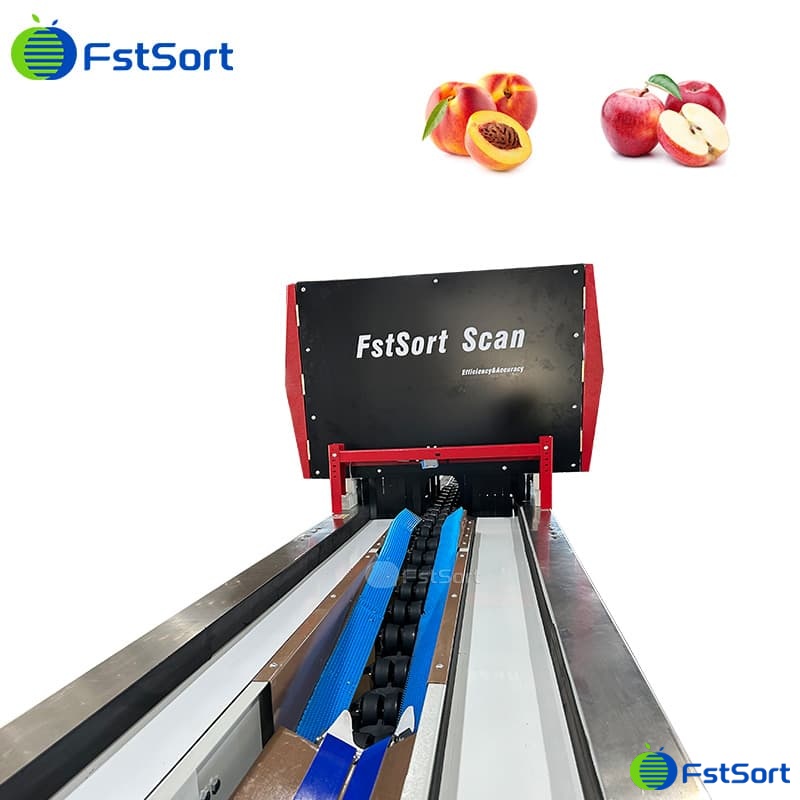
Feature | Manual Sorting | FstSort Automated Sorting |
Accuracy | Subjective (High Error) | Objective (99% Accuracy) |
Speed | Slow / Labor Intensive | High Speed (Multi-ton/hour) |
Internal Inspection | Impossible | NIR |
Long-term Cost | Increasing Labor Costs | High ROI & Low Maintenance |
Frequently Asked Questions
Q1: How does sorting improve food safety?
A: Automated sorters remove foreign objects (stones, glass, plastic) and contaminated produce, significantly reducing the risk of foodborne illnesses and costly product recalls.
Q2: Is automated sorting worth the investment for small processors?
A: Yes. By reducing labor costs and increasing the percentage of "Class A" produce, most businesses see a full Return on Investment (ROI) within 12 to 24 months.
Authored by the Technical Engineering Team at FstSort.