
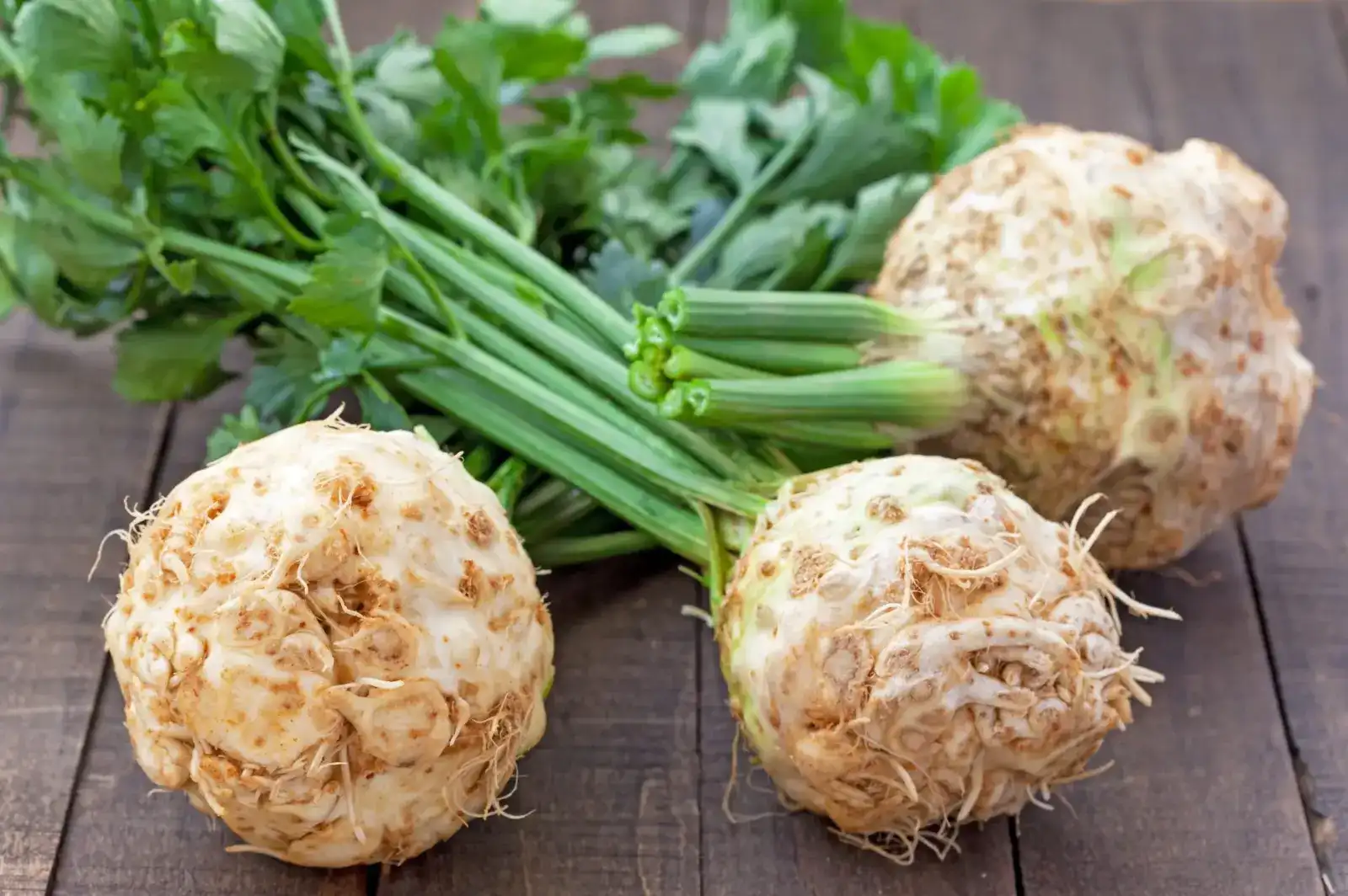
Celeriac's knobbly skin and dense root crevices make soil extremely hard to remove—but the skin is thin and delicate, and too much force easily causes damage. The drum washing method solves this tension: soft nylon brushes and high-pressure spray remove dirt while preserving the skin and flesh, using about 70% less water than manual washing.
Celeriac Washing: Why "Clean" and "Intact" Are a Contradiction
Celeriac (celery root) is a root vegetable with an uncooperative exterior. Its skin is knobbly and its root crevices are dense, so soil and debris lodge easily in the gaps—manual cleaning is time-consuming and rarely thorough.
But the cleaning challenge goes beyond dirt. Celeriac skin is thin and the flesh is tender, making it sensitive to mechanical action. Too little force leaves soil behind, affecting appearance and food safety; too much force scratches the skin and compresses the flesh, eroding commercial value. Between "clean enough" and "intact enough," there is a balance point that has to be controlled precisely.
Research confirms how sensitive celeriac is to post-harvest conditions: during prolonged storage, water loss in celeriac can reach 39.29%, among the higher loss rates in root vegetables. If the washing stage damages the skin, moisture loss and quality decline during subsequent storage and transport become more severe.
The Drum Washing Method: "Soft Brushes + Spray" Instead of "Hard Scrubbing + Soaking"
The drum washing method suits celeriac because it uses a layered physical approach to the "clean vs. intact" tension.
1. Soft nylon brushes: enough friction to remove soil, not enough to damage skin
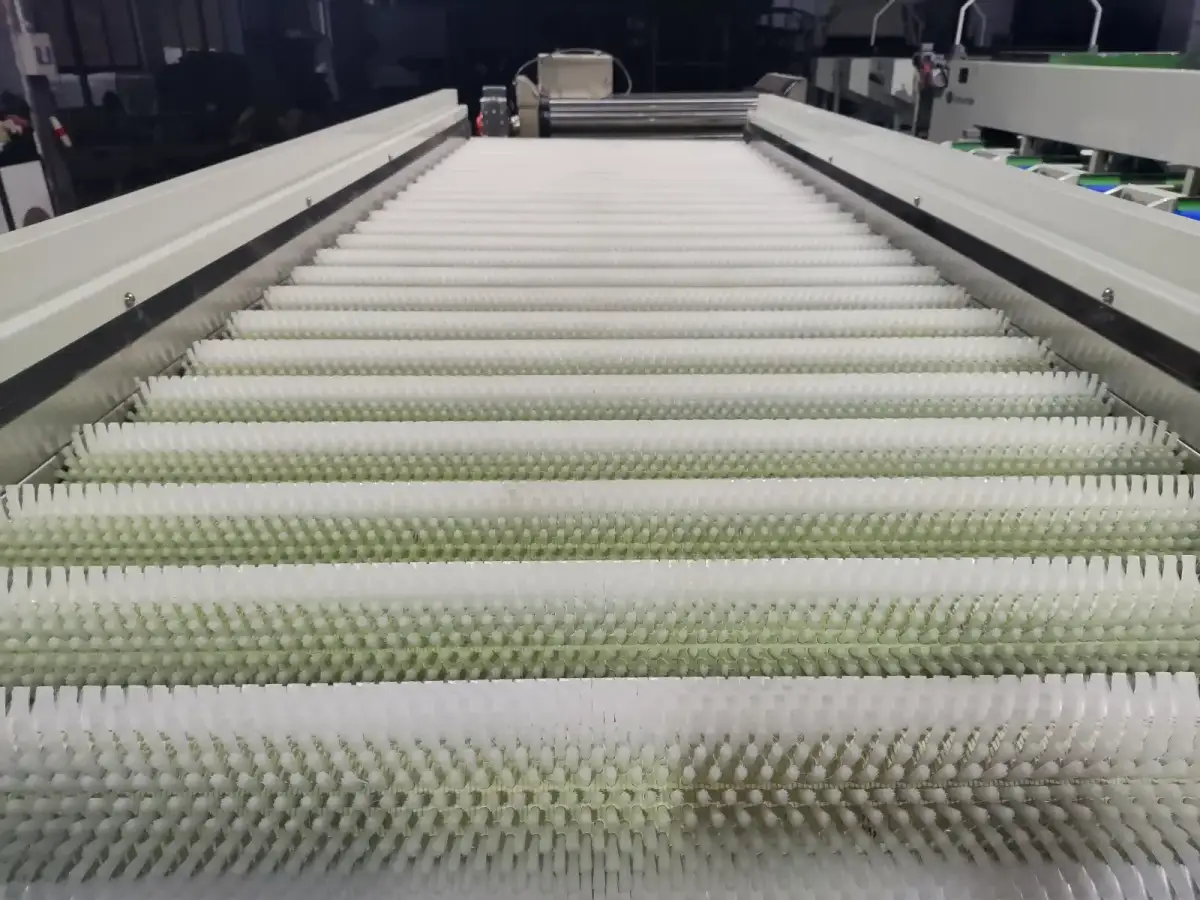
Celeriac tumbles between rotating nylon brushes inside the drum. The brushes are engineered to be "soft but firm"—enough friction to lift soil and thin surface layers from knobbly surfaces and crevices, but not so hard that they scratch the flesh the way rigid brush rollers or metal components would. The fruit tumbles and rolls rather than being pinched or compressed; mechanical action is concentrated on surface cleaning, not on squeezing the whole root.
2. High-pressure spray: water carries soil away as brushes work
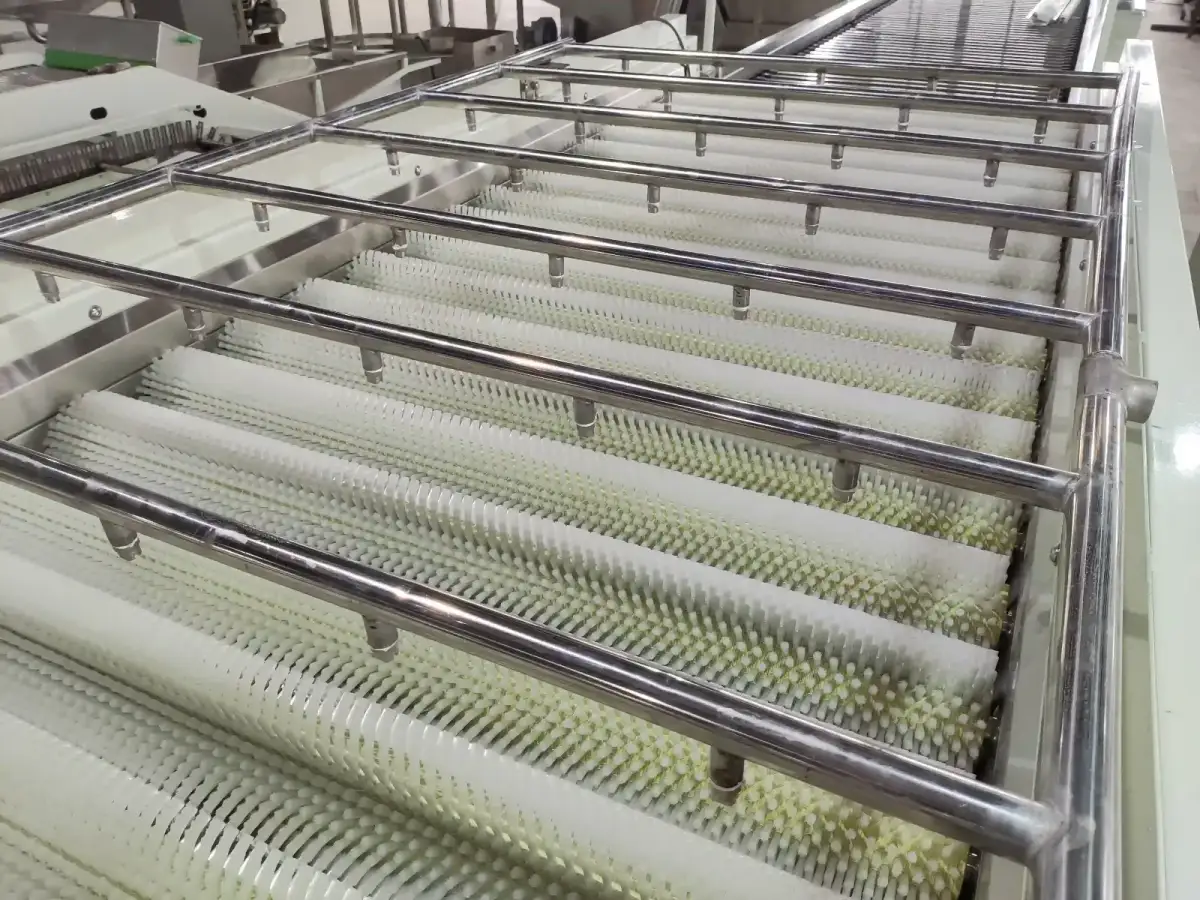
High-pressure water jets spray from above in sync with the brushing. The spray is not just "rinsing"—it carries loosened soil away from the surface at the moment the bristles lift it, preventing dirt from being rubbed back onto the root. Brush action and spray working together means cleaning efficiency does not depend on brute mechanical force alone, reducing the need to "brush harder to get cleaner."
3. 70% less water: sustainability is not an add-on
Compared with manual washing, the drum washing method uses about 70% less water. For root vegetable processing, water consumption is a significant long-term operating cost, and drum washing concentrates spray and circulates water within the drum to keep the volume needed for effective cleaning at a more reasonable level. Saving water is not a side note—it is what makes this cleaning path sustainable over years of operation.
From Washing to Grading: A Complete Celeriac Pre-Processing Chain
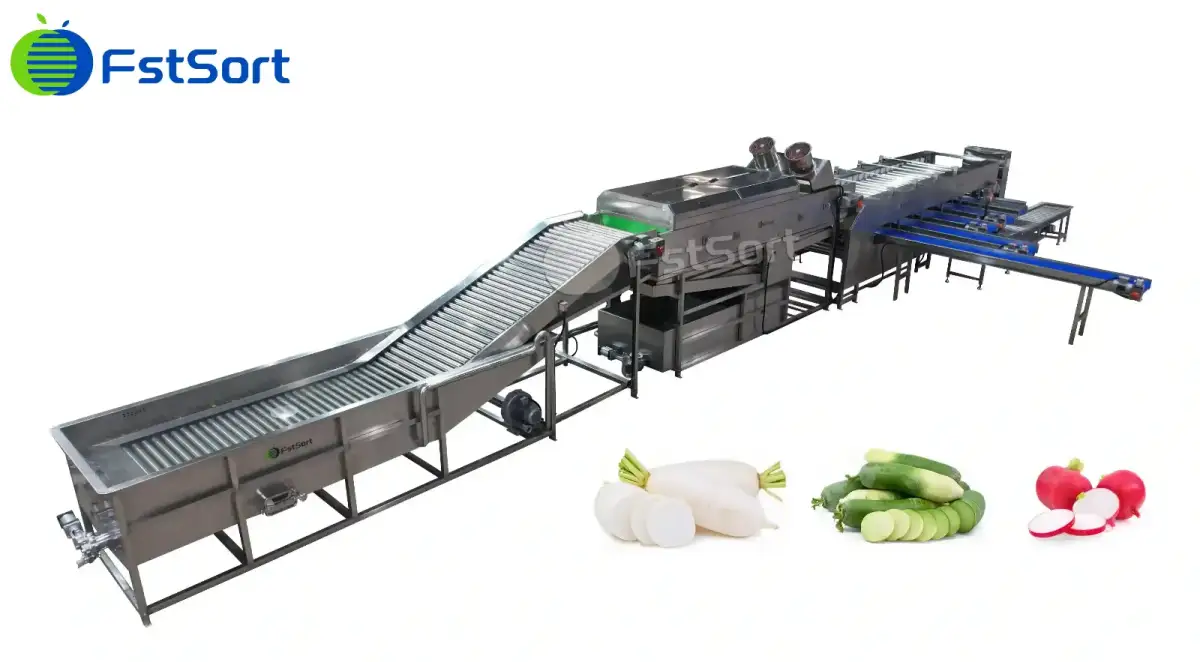
Washing is just one step in celeriac post-harvest handling. Fstsort's root vegetable processing solutions can connect the washing section (brush or spray) with drying, roller grading, and weighing/packing systems to form a continuous flow from infeed to finished cartons. Washed celeriac can move directly into drying and grading, sorted by diameter or width before packing, reducing manual transfer and secondary contact after washing.
For processors handling carrots, celeriac, radish, and other root vegetables, this pre-processing chain can be configured to category and capacity—washing method, drying configuration, and grading range are all adjustable, so the same line stays utilized across seasons and crops.
Celeriac washing is not about "how big the machine is"—it is about the equipment's ability to balance "cleaning thoroughly" with "not damaging the root." When skin integrity and moisture status directly affect storage life and shelf performance, the drum washing method offers not just "a way to wash," but a solution that keeps washing from becoming the starting point of quality loss.
Want your celeriac washing to get roots clean while preserving skin and moisture? Learn more about Fstsort's root vegetable washing and grading solutions→