
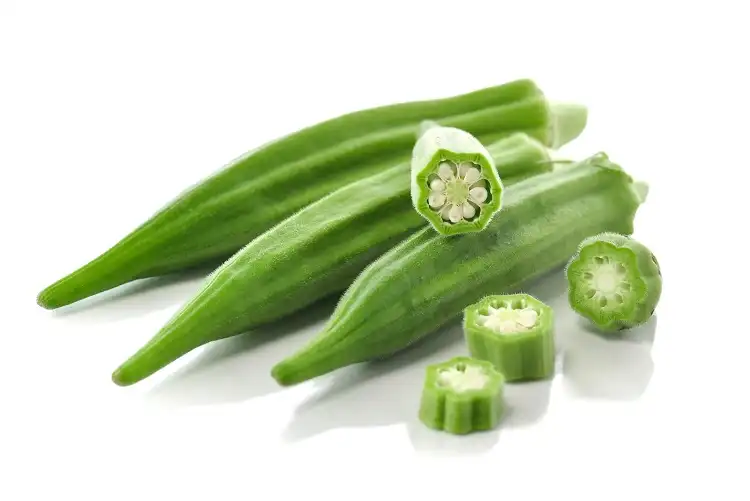
Honduras exports approximately 200 tons of okra per week and is the third largest okra exporter in the Americas. Okra has delicate skin—improper washing and drying during post-harvest processing can easily cause damage, directly affecting export grades. This article examines okra's physical characteristics and how Fstsort's okra washing and drying machine maximizes fruit integrity while ensuring effective cleaning.
Honduras Okra Exports Are Growing Rapidly
Honduras has become a leading vegetable exporter in Central America. In the okra category, Honduras stands out—it is currently the third largest okra exporter in the Americas, with 310 farms, 2,450 hectares of production area, and an annual output of 29,400 metric tons.
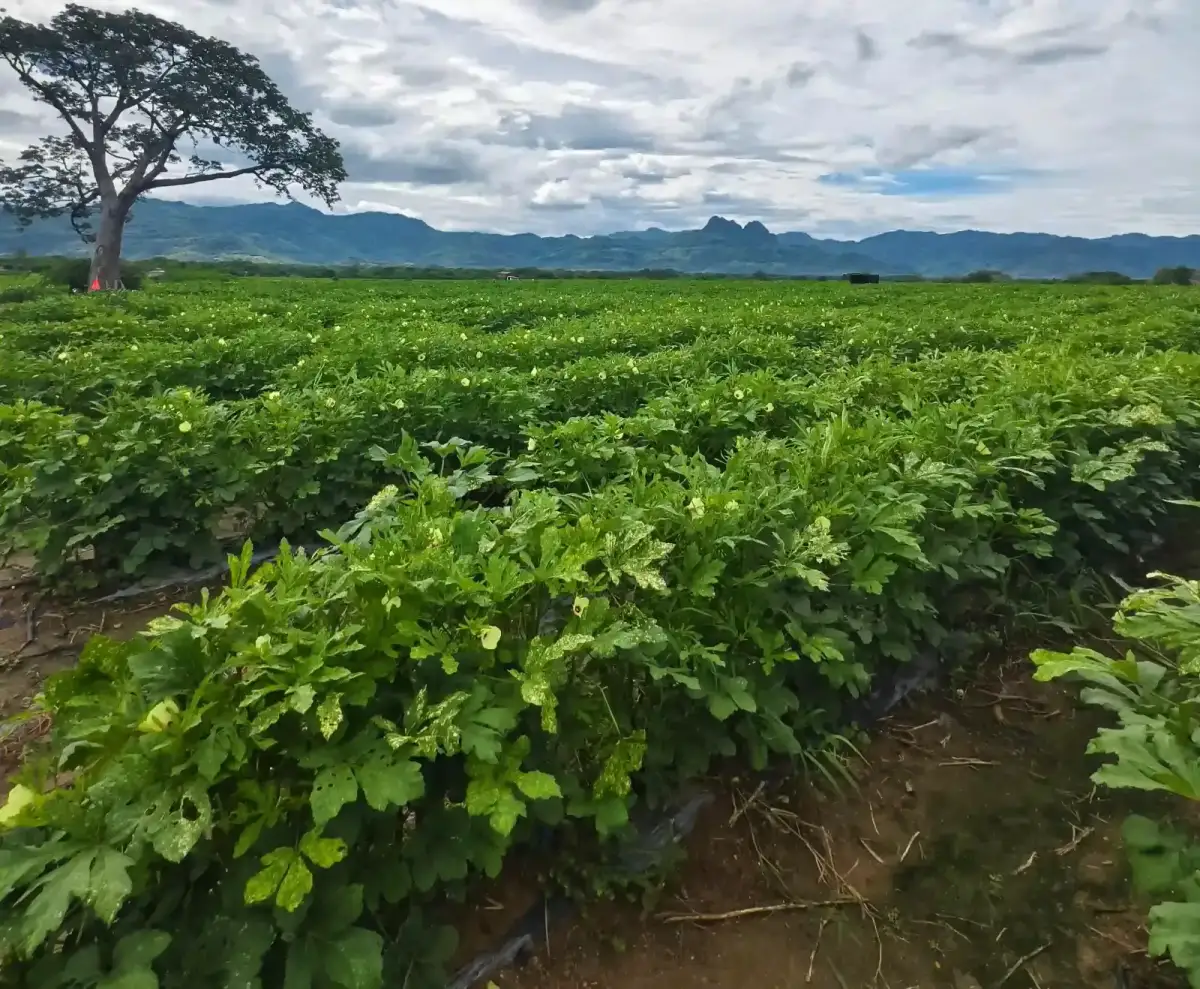
Export data confirms this trend: Honduras exports approximately 200 tons of okra per week, equivalent to 10 containers, primarily destined for Spain, Portugal, France, the UK, and Italy. In April 2025, Amerijet's inaugural flight to Honduras' Palmerola Airport transported 55 tons of okra to Miami, USA.
As demand from North American and European markets continues to grow, Honduras okra exports are still climbing.
The Dilemma of Okra Post-Harvest Processing
The rapid growth of okra exports presents a dilemma for post-harvest processing.
On one hand, okra must be thoroughly cleaned. Okra surfaces carry soil, field residues, and microorganisms—without proper cleaning, they cannot meet international food safety standards.
On the other hand, okra is extremely fragile. Okra has thin, delicate skin and is highly sensitive to mechanical damage. Improper post-harvest handling can cause skin breakage, moisture loss, shriveling, and discoloration—all of which lower export grades and reduce market value.
Thorough cleaning without damaging the fruit—this is the balancing act that okra processors face every day.
Traditional processing methods rely heavily on manual labor, which is not only inefficient and inconsistent in hygiene, but also increases damage rates through bumps and scrapes during manual handling and washing. With labor becoming increasingly scarce, this challenge is becoming more acute.
The Design Philosophy Behind Fstsort's Okra Washing and Drying Machine
It is precisely in this market environment that Fstsort's okra washing and drying machine was developed. The design philosophy behind this equipment can be understood from the two stages that okra processors care about most:
Washing Stage: Bubble Scrubbing Instead of Rigid Friction
Okra has fine hairs and ridges on its surface. Traditional washing methods use rigid brush rollers or high-pressure sprays—while effective at cleaning, they easily scratch the skin. Fstsort employs bubble washing technology—using the bursting force of dense bubbles and water flow to remove surface dirt, replacing physical friction. Fruit-to-fruit and fruit-to-equipment contact remains gentle, avoiding mechanical damage to the skin from the very start of the washing process.
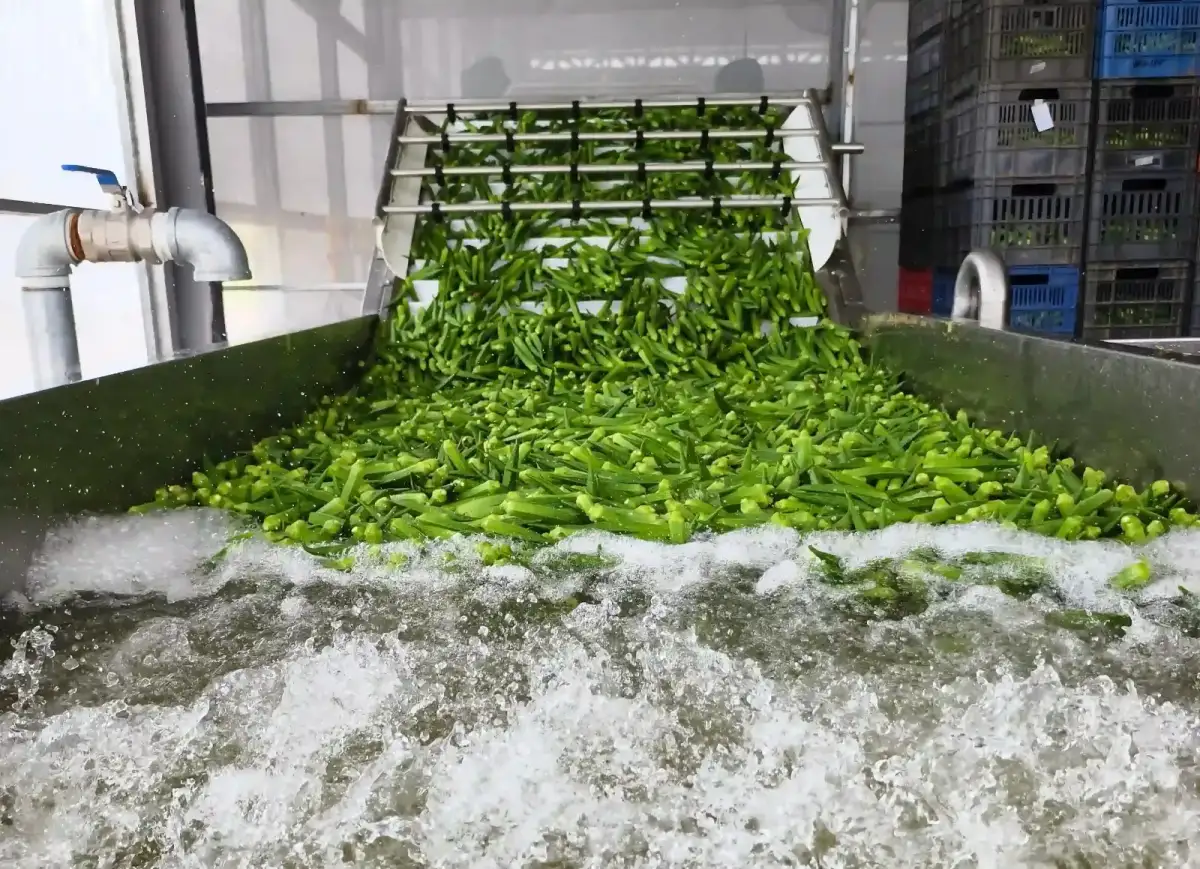
Drying Stage: Belt Conveying Instead of Brush Contact
After washing, residual moisture on okra surfaces must be removed promptly—otherwise it becomes a breeding ground for mold and slime. But traditional drying equipment uses brush rollers, which create secondary friction on the fruit surface while removing moisture. Fstsort replaces the original brushes in the drying section with blue belt-type conveyor belts—the belt surface is soft with a large contact area, ensuring drying effectiveness while avoiding repeated damage to the fruit skin.
One philosophy runs through both stages: clean where it needs to be clean, touch where it doesn't need to be touched.
From Washing and Drying to a Complete Processing Solution
Washing and drying are just the front-end stages of okra post-harvest processing. Fstsort offers complete okra processing solutions covering washing, disinfection, sorting, weighing, and packaging.
After washing, okra can enter a disinfection tank for sterilization, pass through a manual inspection table to remove defective fruit, and then go through a multi-outlet filling machine for packaging—the entire line forms a closed-loop operation, eliminating manual transfer between stations and reducing the risk of human-induced damage from the source.
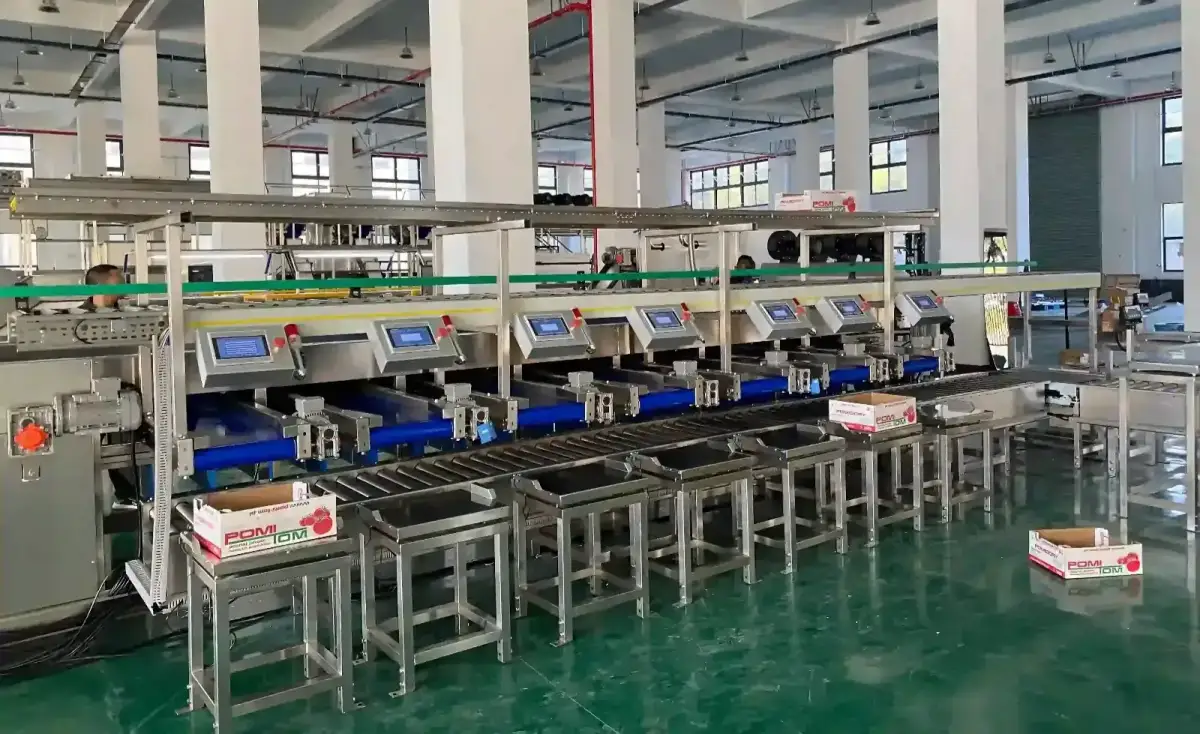
The story of Honduras okra exports continues to unfold. As global demand for high-quality okra keeps growing, the protective capability of the washing and drying stages is becoming a key factor in determining export grades and market competitiveness.
For more information on our integrated okra processing line, view our real project case in Honduras→