
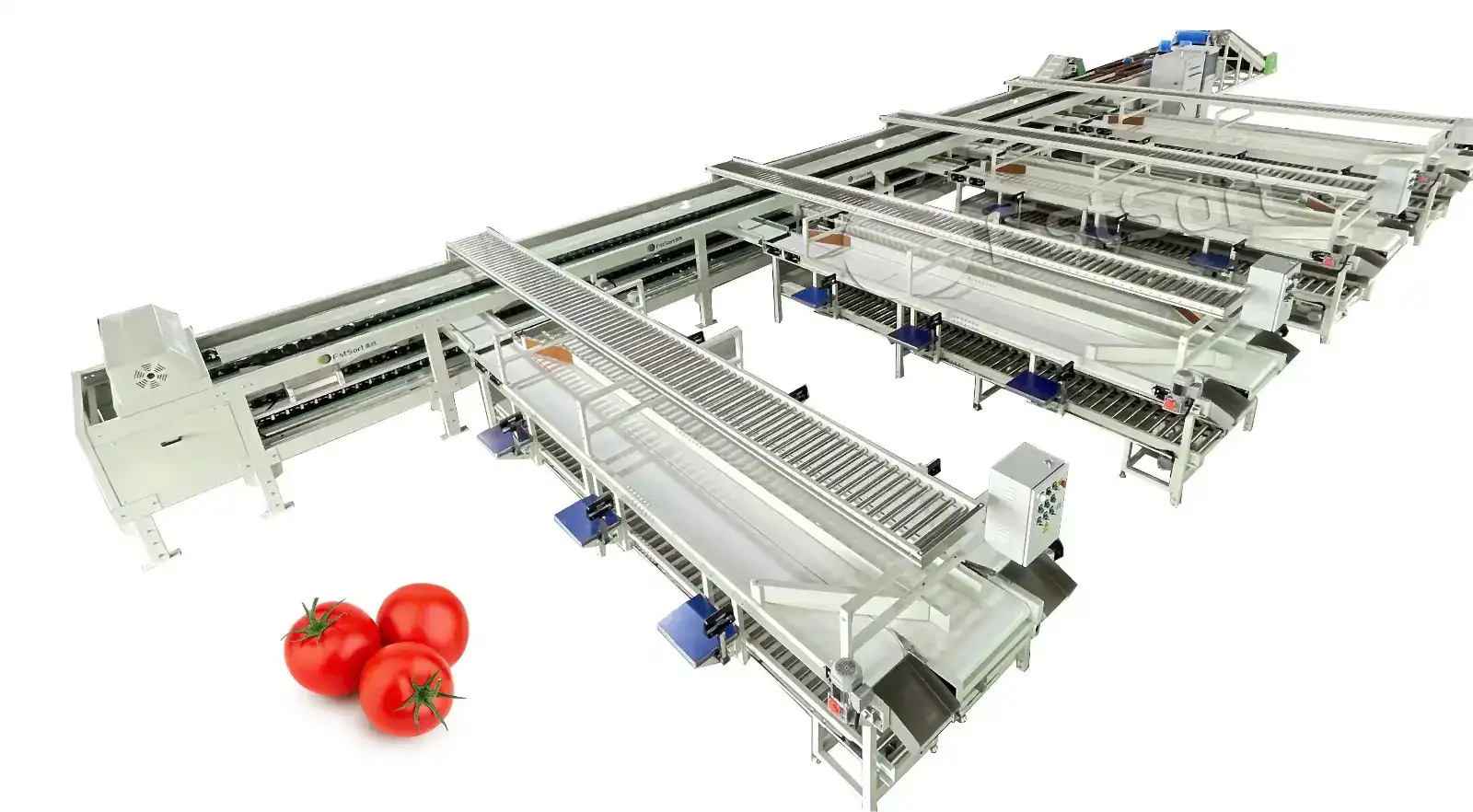
Tomatoes come in all shapes — cherry, Roma, round. Diameter graders work for some, but not all. Here's why weight-based sorting delivers the precision that tomato packers actually need — and how a dual-lane system doubles your throughput without doubling your footprint.
Tomatoes Are Not One-Size-Fits-All
Tomatoes are among the most diverse fruits in the produce aisle. Cherry tomatoes are small and round. Roma tomatoes are oval and elongated. Round tomatoes are, well, round — but often slightly flattened.

This variety is great for consumers. But for packers, it creates a problem: diameter grading doesn't work equally well for all of them.
A diameter grader measures how wide a fruit is. For perfectly round tomatoes, this works fine. But for oval Roma tomatoes or irregularly shaped rounds, diameter grading can be misleading — a Roma tomato that's long but narrow might fall into the wrong grade.
Weight is a better measure of market value. Buyers pay by weight, not by width. And weight grading delivers consistent results regardless of shape — every tomato is weighed individually, so every tomato goes to the right grade.
The 25,000 Pieces Per Hour Advantage
Fstsort's electronic tomato weight sorter is built for commercial packers who need precision at scale.
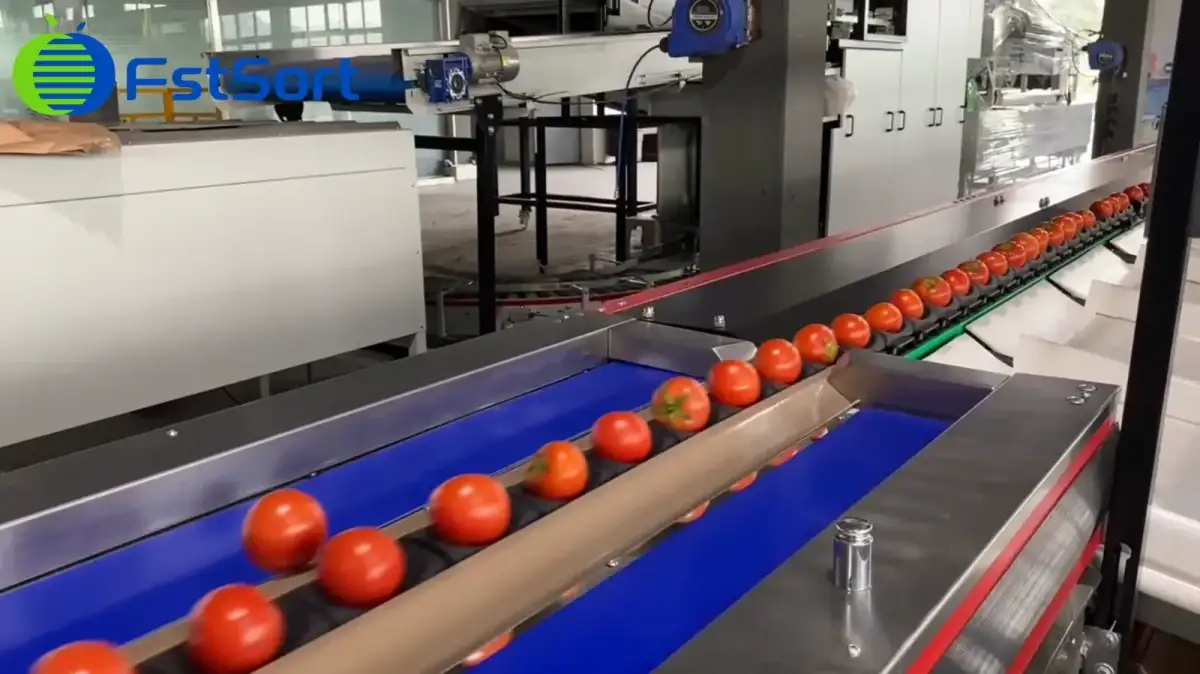
Each lane processes up to 25,000 tomatoes per hour with ±2g accuracy. That means every tomato is weighed individually, graded accurately, and directed to the right packing station — without guesswork, without fatigue.
For packers handling large volumes, this translates directly into:
· Higher throughput — More tomatoes packed per hour
· Consistent quality — Every box meets the same weight specification
· Fewer rejected shipments — Buyers get exactly what they ordered
· Lower labor costs — One machine does the work of multiple sorting crews
Two Lanes, Double the Output
The system features a 2-lane design — two independent weighing lines running simultaneously.
Configuration | Hourly Throughput | Best For |
|---|---|---|
Single lane | 25,000 pcs/h | Small to medium operations |
Dual lane | 50,000 pcs/h | Commercial packers, high-volume orders |
4 or 6 lanes | 100,000–150,000 pcs/h | Large-scale export operations |
More lanes mean more tomatoes sorted per hour — without sacrificing the ±2g accuracy that export markets demand.
Why dual-lane matters for your packing line:
· No bottlenecks — Two lanes keep fruit moving even when one lane is being adjusted
· Flexible operation — Run different varieties on different lanes simultaneously
· Scalable design — Start with two lanes, add more as your business grows
From Weighing to Packing: A Complete Flow
The electronic weight sorter integrates seamlessly with the rest of the packing line:
1. Infeed — Tomatoes are fed onto the conveyor system
2. Weighing — Each tomato is weighed individually with ±2g accuracy
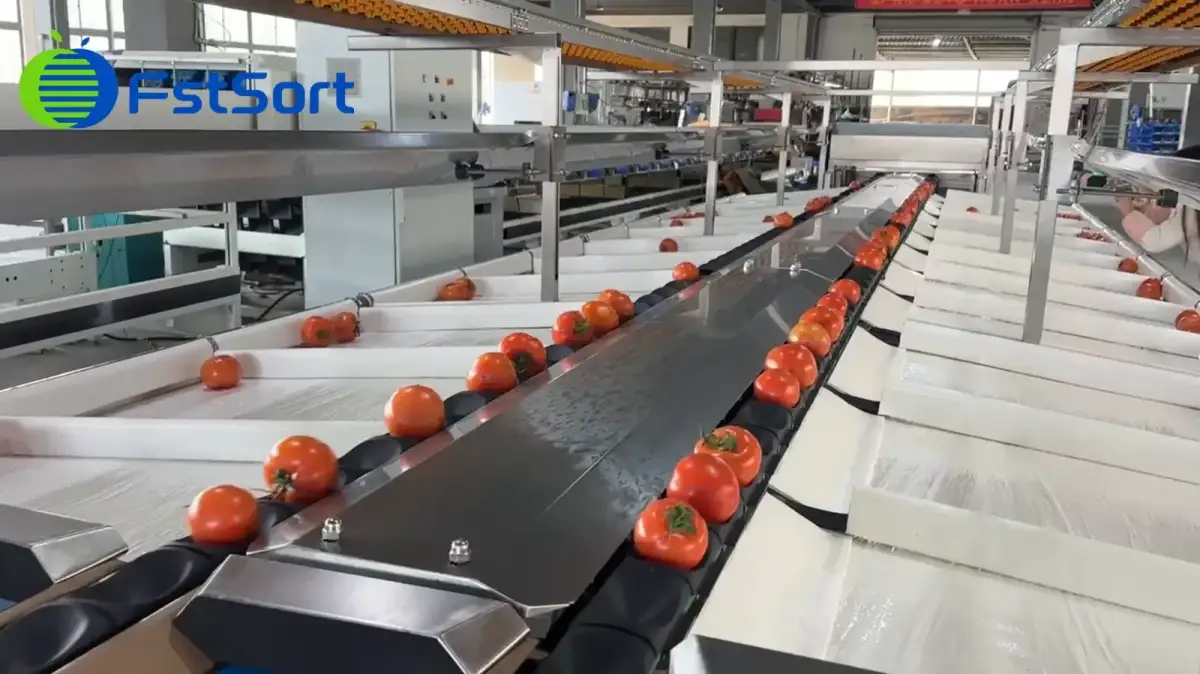
3. Grading — Based on weight, each tomato is directed to one of 6–12 grade exits
4. Packing — Each grade exit is equipped with a large packing table, allowing multiple workers to pack simultaneously without slowing down the sorting process
5. Conveying — A conveyor system beneath the packing tables transports packed boxes to the end for stacking
Sorting and packing in one continuous flow — no waiting, no bottlenecks, no lost time.
Built for Real Packing Houses
The Fstsort tomato weight sorter is designed with commercial realities in mind:
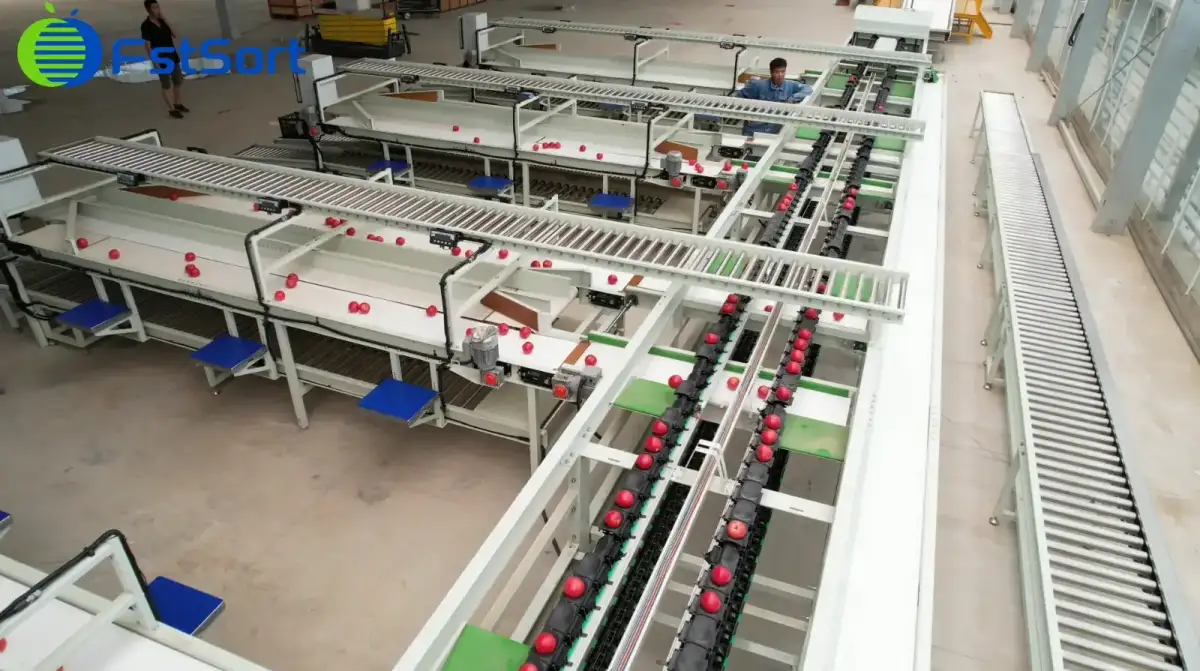
· Flexible lane configuration — 1, 2, 4, or 6 lanes to match your volume
· 6–12 grade exits — Fine grading for different market requirements
· 50–500g weighing range — Handles everything from cherry tomatoes to large beefsteaks
· Touch screen control — Save profiles for different tomato varieties; switch between crops in seconds
· Data recording — Track production volume and weight per grade in real time
· Customizable integration — Add washing, drying, or optical sorting modules as needed
Fstsort has supplied tomato weight sorting solutions to packers across multiple markets — helping them move from diameter grading to weight-based precision.
Want to see how a dual-lane weight sorter can transform your tomato line? Explore the full specifications on our tomato processing machines page →
Grade by Weight. Pack by Demand. Profit by Precision.
Tomatoes don't all roll the same way. But they all sell by weight. The right grader measures what buyers actually pay for — and delivers it at the scale your operation demands.
The technology exists. The question is whether you’re grading by diameter or by what matters.