
Blueberry processing is the critical transition from an agricultural product to a high-value commercial commodity. Using an automated blueberry production line ensures maximum efficiency and fruit quality. Whether for the fresh market or deep processing, understanding the standard SOP (Standard Operating Procedure) is essential for growers and exporters to maximize ROI.
Below are the key stages in professional fresh blueberry processing.
1. Precision Harvesting: Manual vs. Mechanical Picking
The quality of the final product begins in the field. Depending on variety, environment, and automation levels, blueberry plantations use either manual or mechanical picking.
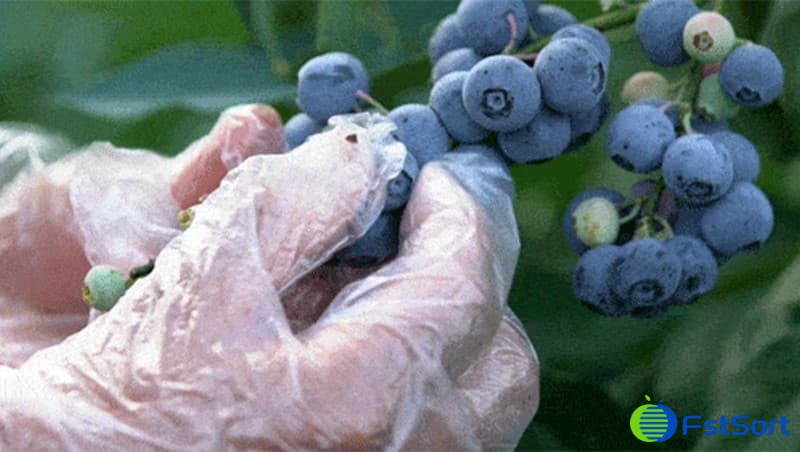
The "Soft Touch" Technique: For premium fresh fruit, workers are trained to use the thumb and index finger to gently roll the berry into the palm. This maintains the highest picking efficiency without damaging the fruit.
The Maturity Challenge: Blueberries in a cluster do not ripen simultaneously. Professional picking requires identifying deep blue-purple fruits while leaving green or dark red berries for later.
Environmental Risks & Rain Shelters: Rainfall during the harvest season can be catastrophic. Wet berries are prone to fruit flies and fungal decay. Furthermore, if the connection between the fruit and stem is too strong, improper picking can cause the skin to rupture. This is why many professional growers invest in rain shelters to ensure consistency.
Industry Fact: The average speed of manual blueberry picking is 15 to 20 kilograms per hour, but this drops significantly during high temperatures or rainy weather.
2. The "Golden Hour": Precooling and Dehumidification
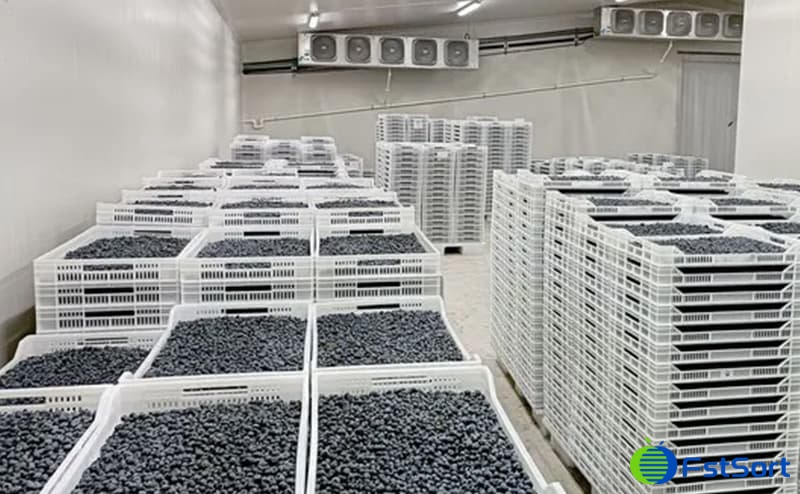
Precooling refers to the commercial treatment that quickly cools the temperature of harvested fruits to a level suitable for preservation.
Shelf-Life Extension: When picked, blueberries carry high "field heat." Without timely cooling, ripening and aging accelerate, leading to rot.
The 30-Minute Rule: In advanced markets like Poland, the industry standard is to begin precooling within 30 minutes of picking to lock in flavor and firmness.
Advanced Dehumidification: For berries harvested in high humidity, forced-air cooling in well-ventilated containers is essential. This forces surface water evaporation, preventing mold without compromising the berry's internal quality.
3. Inspection and Preliminary Selection
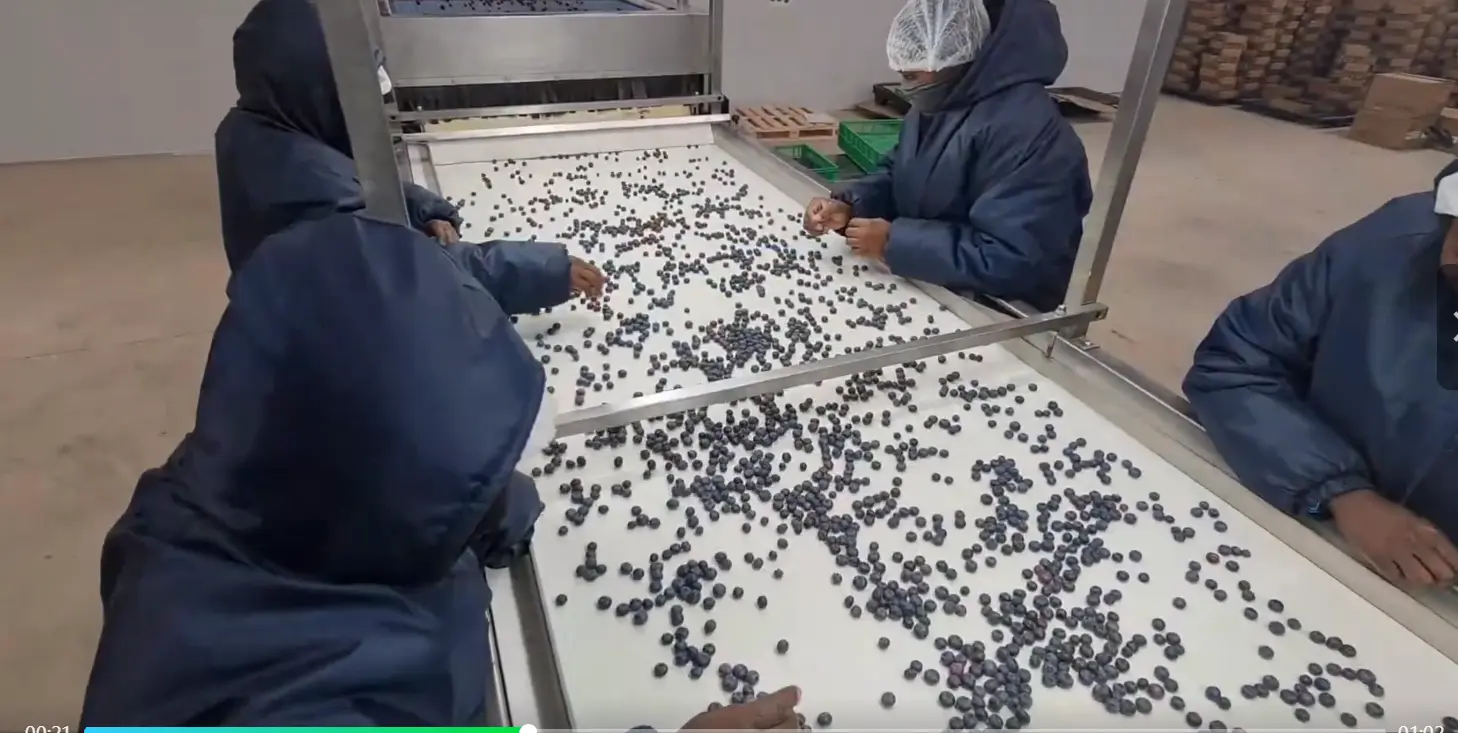
Before entering the grading area, raw fruit is poured onto an inspection conveyor belt. This process is a vital quality checkpoint:
Defect Removal: Workers identify and remove bruised, overripe, or diseased berries.
Cross-Contamination Control: Since blueberries are delicate berries, one defective fruit can easily spread decay to healthy ones after boxing. Rigorous selection at this stage is the key to extending shelf life in retail.
4. Professional Size Grading (The Core of Value)
Consistency is the hallmark of premium agricultural products. In the global market, larger blueberries typically command higher prices. Automated blueberry sorting machines use precise screening apertures to separate fruits into diameter categories.
Common Global Grading Standards:
Grade | Diameter Range | Market Position |
Small | Below 12mm | Catering/Processing |
Medium | 12mm – 15mm | Standard Retail |
Large | 15mm – 18mm | Premium Retail |
Special/Jumbo | Above 18mm (up to 22mm+) | Luxury Gift/Boutique |
Our Solution: Gentle, Non-Destructive Grading
To maintain the highest market value, the "Bloom" (natural fruit powder) must remain intact.
To handle such delicate fruit without losing the precious "bloom," your equipment must be specialized. At FstSort, we designed our Blueberry Grading Machine with a "zero-damage" philosophy:
Blueberry Drum Grader: Our Blueberry Drum Grader offers a capacity of 300-500kg/h, providing a cost-effective solution for precision sorting.
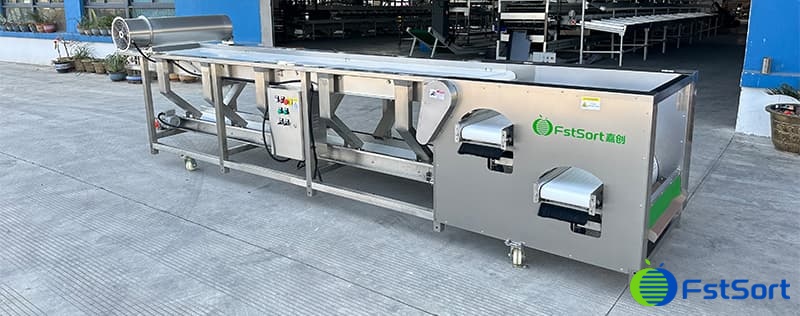
Blueberry Belt Grader: For large-scale packing houses, our belt-style sorting lines handle up to 1,000kg/h, maximizing output while minimizing bruises and bloom loss.
5. Weighing and Professional Packaging
The final step ensures the blueberries are retail-ready.
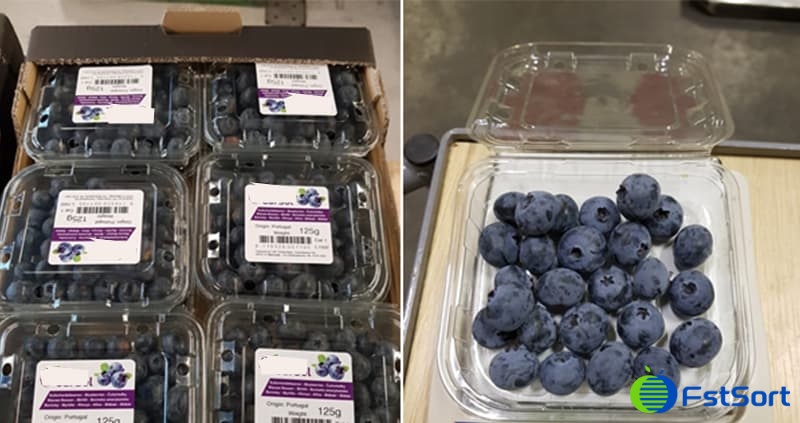
Fresh Packing: The standard for fresh exports is often 12 boxes per master carton, with each small box (punnet) containing 125g of fruit.
Automatic vs. Manual: Modern lines integrate automatic weighing and boxing to reduce human contact, further ensuring food safety and reducing labor costs.
Frozen Fruits: For deep processing, berries are typically packed in 10kg cartons and moved directly to quick-freezing warehouses.
Why Choose FstSort for Your Blueberry Processing?
As a manufacturer with a decade of experience, we control the entire production process—from laser cutting to final assembly. This allows us to offer customized blueberry sorting solutions that fit your specific capacity needs and budget.