
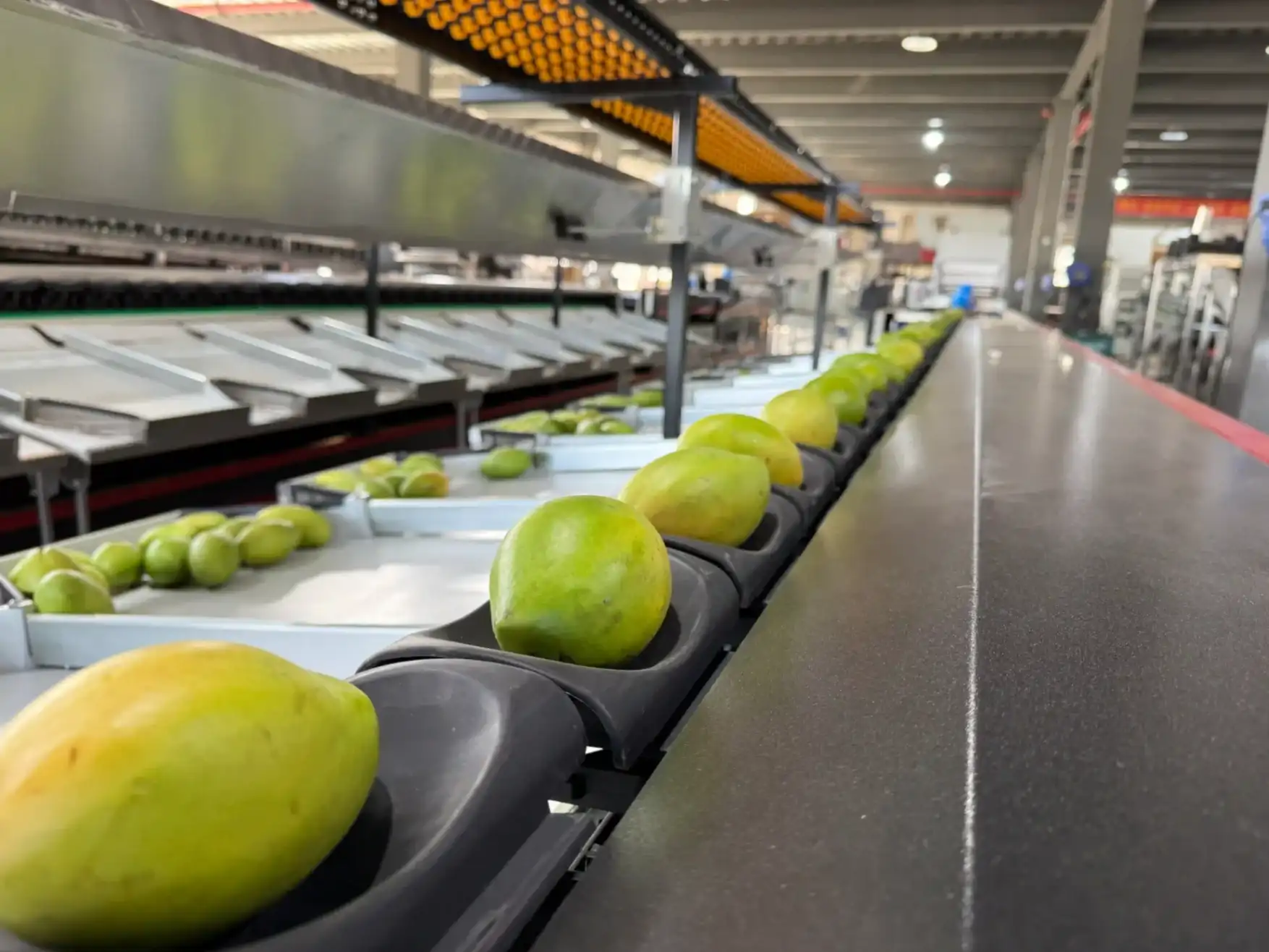
A complete guide to mango processing for export to the US, EU, and China. Key post-harvest steps covering sap removal, quarantine heat treatment, cooling, waxing, and sorting and packing based on USDA, GAC, and EU regulations and real packinghouse practices.
Why Mango Processing Is More Challenging Than Other Fruits
Mangoes have three inherent post-harvest problems that make processing more difficult than many other fruits:
· Sap contamination – The white latex from the stem end burns the peel and triggers anthracnose.
· Quarantine heat treatment – Most importing countries require strict time/temperature protocols to kill fruit flies.
· Surface sanitation & preservation – After heat treatment, improper cooling or missing waxing leads to moisture loss and rot.
Whether you export mangoes to the US, Europe, or China, post-harvest handling directly determines shelf life and quarantine compliance. Based on USDA APHIS regulations, China GAC announcements, EU phytosanitary requirements, and real-world packinghouse practices – including our own projects in West Africa – this guide breaks down the five critical stages of mango processing and shows how the right equipment prevents costly losses.
Step 1 – Reception & Pre-washing: Remove Field Heat and Sap
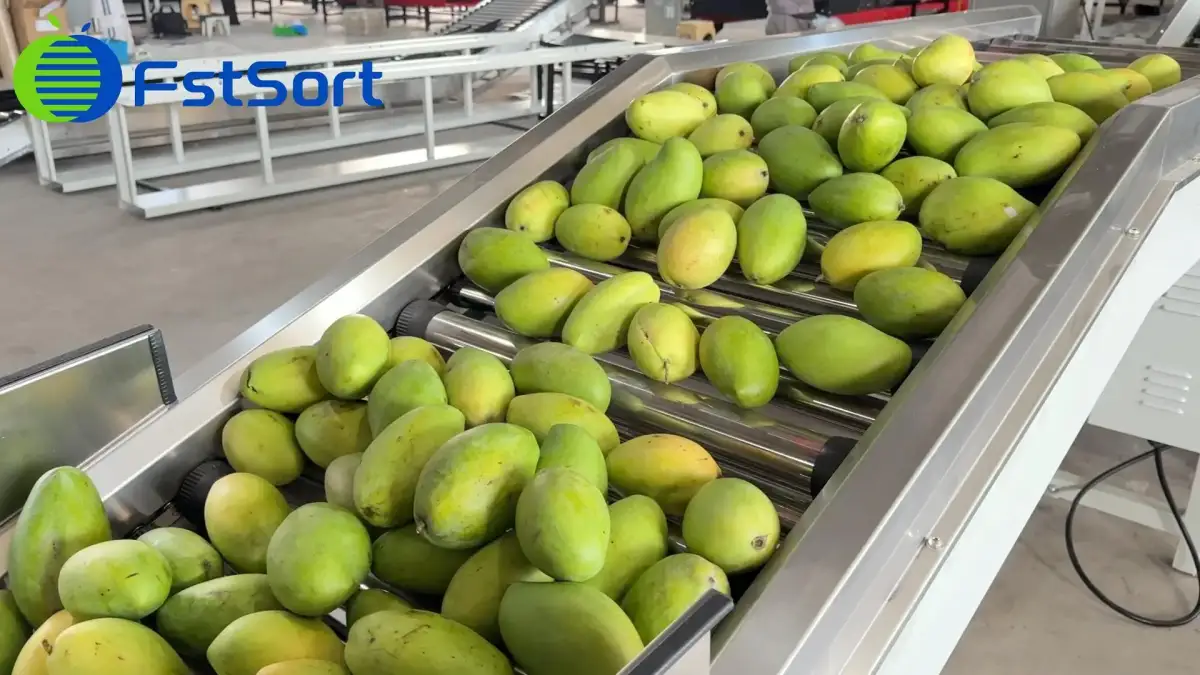
Objective: Clean dirt, residues, and stem-end sap.
Common issues:
· Dried sap on the peel becomes worse during hot water treatment, causing burn marks.
· Hard, aggressive brushes may damage mango skin; also, sap can stick to brushes and spread to clean fruits.
Professional line approach:
· Use an elevator to feed mangoes into a bubble washing tank – the tank length is fully customizable to fit your floor plan.
· For cleaning, two options are available depending on your variety and requirements:
Soft brush rollers with multiple spray bars – gentle on the peel, effective for general dirt.
Adjustable high-pressure spray nozzles – ideal for sap-prone varieties, avoiding any risk of sap spreading via brushes.
· Many customers choose a combination: soft brushes for light cleaning plus high-pressure nozzles for targeted sap removal.
Example from the field: For our Mali and Côte d‘Ivoire clients, we added a recirculating medicated bath under the brush washer to perform simultaneous cleaning and sanitation.
Sap removal methods – quick reference
Method | Key Parameters | Export Suitable | Peel Impact |
|---|---|---|---|
Inverted draining | 10–30 min | ✅ Recommended | Very low |
Warm water rinse | 45–50°C, 3–5 min | ✅ Recommended | Low |
Lime water soak | 0.5–1%, 2–5 min | ❌ Not allowed (whitening) | High |
Step 2 – Heat Treatment (Quarantine): Meeting Global Import Standards
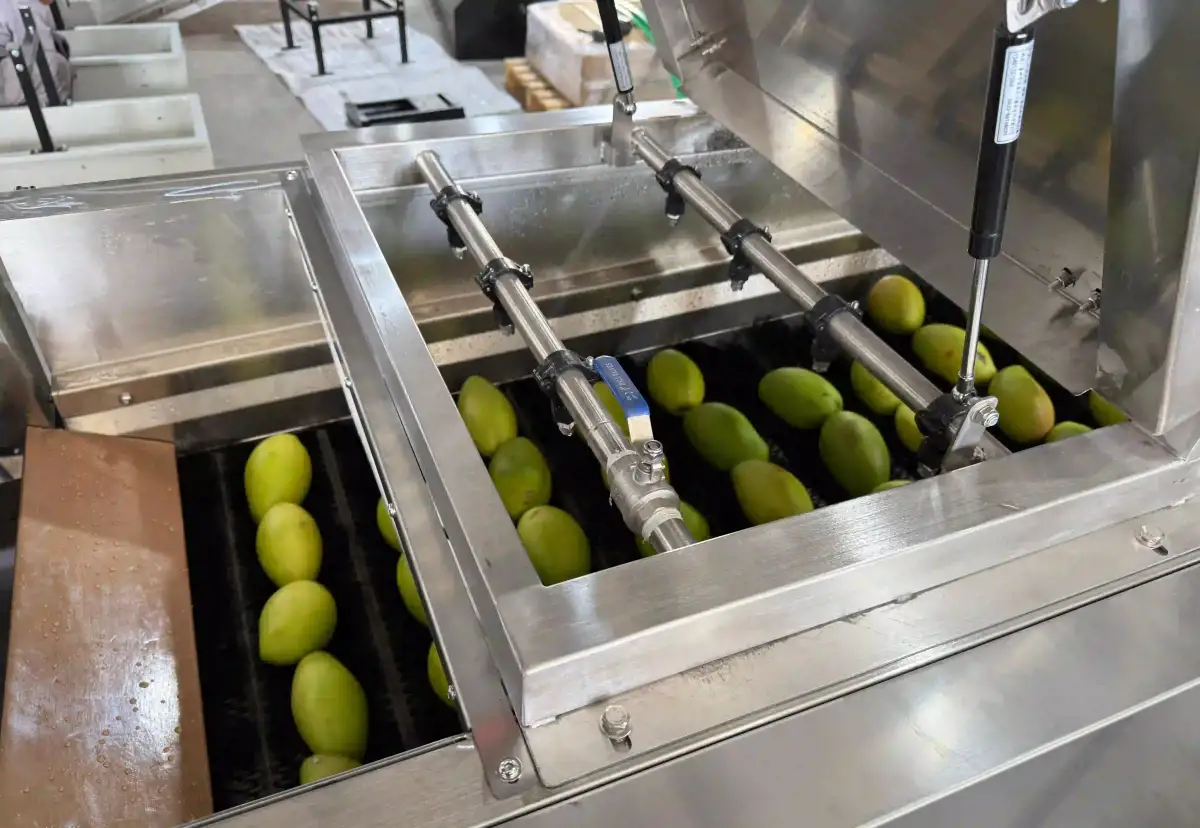
Why mandatory? The US, China, the EU, Japan, and many others require mangoes to be heat-treated to kill fruit fly eggs/larvae. Two main methods: hot water treatment or vapor heat treatment (VHT).
Key challenges:
· Requirements vary by target market, variety, and fruit weight.
· Under-treatment → quarantine rejection; over-treatment → peel scalding, over-ripe flesh.
Heat treatment standards for major export markets
Target Market | Treatment Method | Water / Medium Temp | Core Temp Required | Typical Treatment Time |
USA | Hot water dip | 46.1°C (115°F) | – | 75–110 min (by weight & variety) |
China | Hot water dip | 48°C | ≥46°C | 15 min after core reaches 46°C |
EU | Hot water / VHT | Côte d'Ivoire example: 48°C (Kent variety) | Côte d'Ivoire example: 46–47°C | 60–90 min after core reaches target |
Sources: USDA APHIS T102‑a, China GAC announcements, EU Regulation 2019/2072, and actual operating parameters from Côte d‘Ivoire / Mali clients.
Important notes:
· USDA requires pre-sorting by weight before treatment – mixed loads are not allowed. Round varieties (Kent, Tommy Atkins, etc.) require 75 min (≤500g) up to 110 min (701–900g).
· China GAC requires fruit to be fully submerged in 48°C water until the core reaches 46°C, then hold that core temperature for a minimum of 15 minutes.
· The EU does not prescribe a fixed temperature and time in its general regulation. Instead, it requires an “effective post-harvest treatment to ensure freedom from fruit flies.” The specific protocol is determined by bilateral agreement between the EU and the exporting country.
Example: Côte d‘Ivoire – the country exports large volumes of Kent mangoes to Europe. Industry practice shows that using 48°C hot water, raising the core temperature to 46–47°C, and then holding for 60–90 minutes reliably meets EU quarantine requirements while preserving fruit quality. We have supplied complete lines to Côte d’Ivoire and Mali that follow this exact protocol.
How professional equipment ensures compliance:
· Our hot water spray system (linked to a boiler) delivers 60–85°C continuous water curtains with precise temperature control – ideal for pre‑heat treatment surface sanitation.
· For full immersion heat treatment, we integrate with hot water tanks or VHT chambers. For example, our US client uses a 3‑line VHT system handling 12 tons per batch.
· Pre‑sort by weight is essential: our electronic weighing grader classifies fruit into different size channels, allowing you to treat different weight classes for the precise time required.
Step 3 – Cooling: Water vs. Air
After heat treatment, the core temperature must be lowered to about 13°C as quickly as possible to slow metabolism and avoid heat injury.
Comparison of cooling methods
Cooling Method | Advantages | Disadvantages |
|---|---|---|
Hydrocooling | Fast (30–45 min), high throughput | Requires chlorine (100–200 ppm), risk of bacterial uptake via stem scar; adds 10 min to heat treatment |
Air cooling | No cross‑contamination, no peel damage, no chlorine, no extra heating time | Slow (2–4 hours), needs larger space or forced‑air tunnel |
Mexican packinghouse experience:
Many exporters prefer 30 min ambient rest + forced‑air cooling to 13°C – often called the “golden combination.” It avoids the food safety risks of hydrocooling and gives better peel gloss. Hydrocooling is typically chosen only when throughput is extremely high and space is limited.
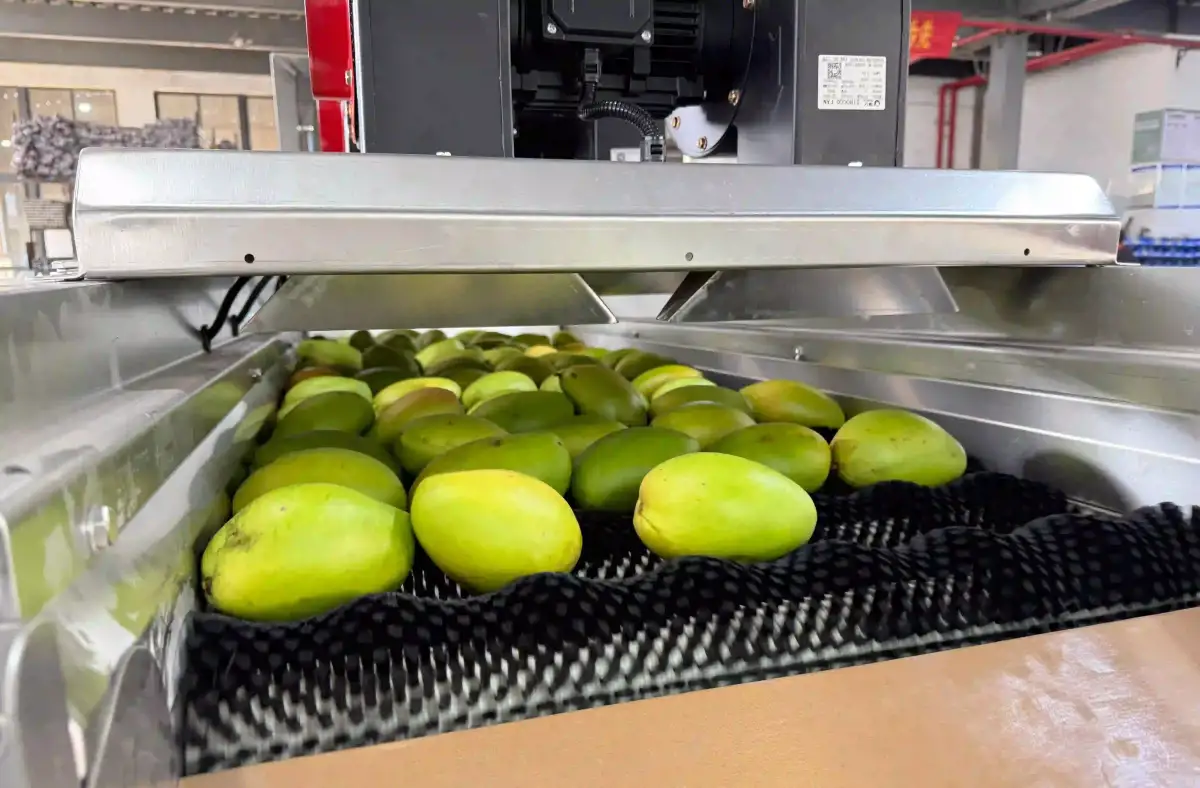
Our line can be equipped with a brush air dryer (multiple centrifugal fans + soft brushes) to remove surface moisture – whether you choose water or air cooling, your mangoes will be dry and ready for waxing.
Step 4 – Waxing & Drying: Extend Shelf Life, Improve Appearance
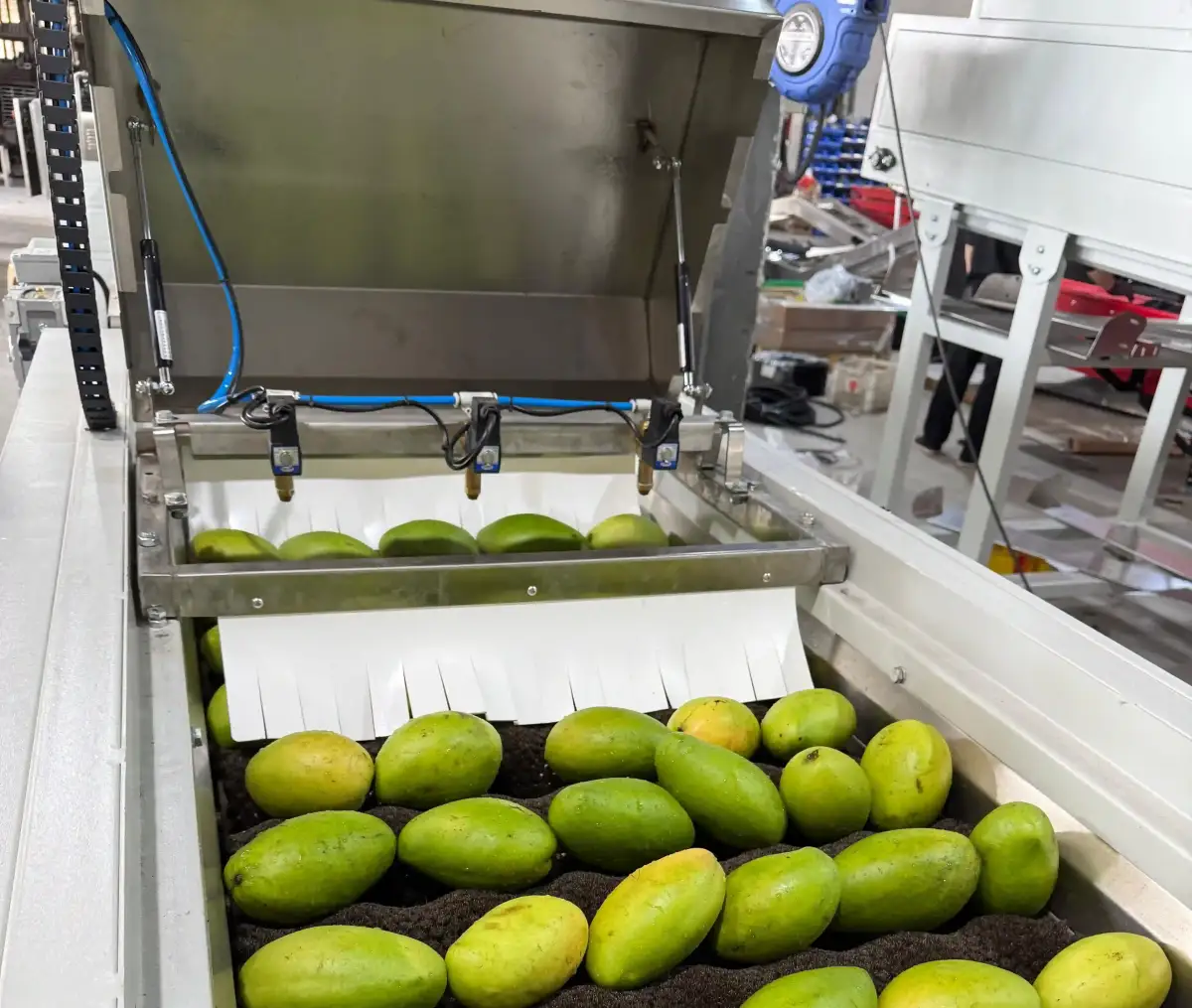
Purpose: Apply a thin protective film to reduce water loss, inhibit pathogens, and add gloss.
Common customer complaint: “The old waxer gives uneven coating and cannot adjust flow.”
Our waxer features:
· Adjustable flow & interval control – adapts to different varieties (Kent, Tommy Atkins, etc.) and surface humidity.
· Horsehair brush rollers – softer than nylon, spreads wax evenly for a mirror‑like shine, without damaging heat‑softened peel.
· Auto‑cleaning function – one‑button cleaning after daily operation prevents wax residue buildup.
· Patent‑pending wave design – ensures mangoes rotate fully for 100% coverage.
After waxing, the dryer further sets the wax film, then fruits go to grading.
Step 5 – Grading & Packing: Meet International “Count Size” Standards
The US and European markets often specify counts per box (e.g., 28#, 32#). This requires accurate weight‑based sorting.
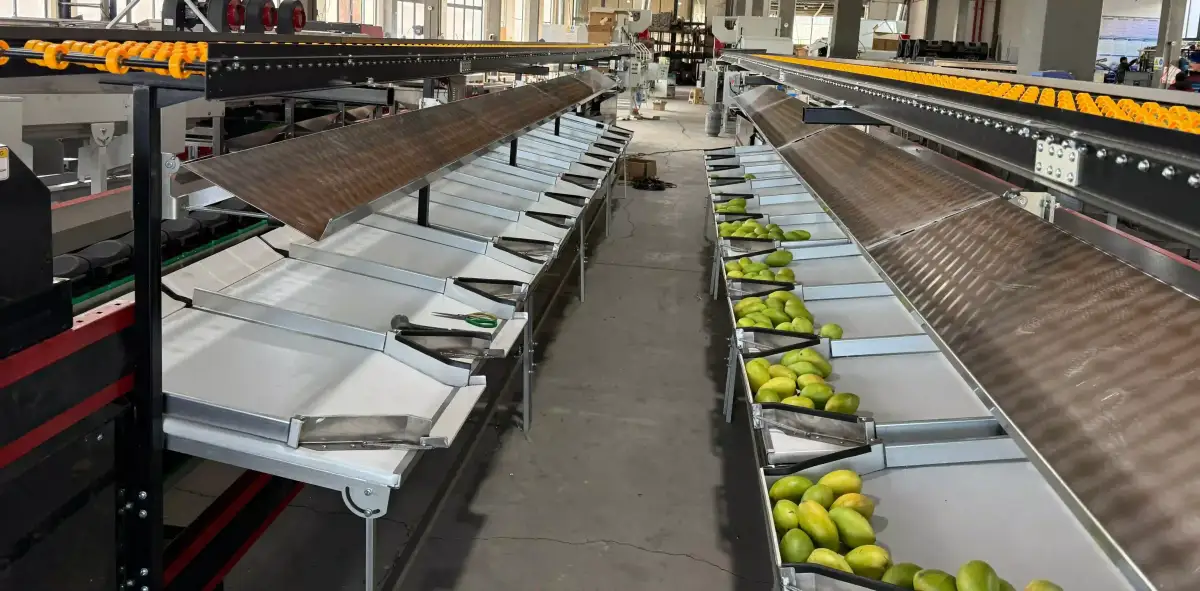
Our solution:
· Two‑lane electronic sorter – uses Scaime load cells with buffer and recirculation to avoid fruit overlap.
· Each lane divided into two sections – for manual color sorting or direct drop.
· Turning conveyor and splitter – allows L‑shaped or U‑shaped layout to save floor space and reduce congestion.
At our US client’s facility, the grading line interfaces directly with the post‑VHT packing area, where plant quarantine inspectors can check the fruit online before loading into reefers.
Technical Specifications(Reference)
Item | Specification |
Grading Accuracy | ±2g |
Processing Capacity | 16,000 – 19,000 pcs/h |
Number of Grades | Standard 12 exits (Customizable) |
Power Supply | 380V, 50Hz, 3-Phase (Customizable) |
Rated Power | Approx. 16.23kw - 25kw(depending on modules) |
Dimensions (L×W) | Approx. 38.6m \times 1.5m(Customizable per drawing) |
Main Material | Food-grade Stainless Steel & Carbon Steel Frame |
Frequently Asked Questions
Q1: What heat treatment time should I use for Kent mangoes?
It depends on your target market. For China (Egypt standard), use 48°C water until core reaches 46°C, then hold 15 minutes. However, many West African packinghouses (e.g., in Côte d‘Ivoire) use a more conservative protocol for Kent: heat in 48°C water until core reaches 46–47°C, then continue for another 60–90 minutes. We recommend pre‑grading by weight and performing a core temperature profile test on your specific fruit.
Q2: Do brushes damage mangoes?
It depends on brush type and usage. Soft brushes are generally safe for most varieties. However, some customers report that hard brushes can damage the skin and spread sap. That’s why we offer both soft brush rollers and adjustable high‑pressure spray nozzles – you can choose what suits your mango variety best. Many clients use soft brushes for general cleaning and add high‑pressure nozzles for targeted sap removal.
Q3: Can I use only air cooling instead of hydrocooling?
Absolutely. USDA allows both ambient and forced‑air cooling without penalizing the heat treatment time. You just need a larger cooling room or longer forced‑air tunnel.
Q4: Does your equipment meet FDA FSMA requirements?
Yes. The line we designed for our US client includes an automatic chlorine dosing system (maintains 100–200 ppm free chlorine), a roll‑rod washer to remove chlorine residues, and easy‑to‑clean sanitary design. It has passed local food safety audits.
Q5: Is hot water treatment mandatory for the EU market?
No – the EU does not mandate a specific treatment method. However, the EU requires an “effective post‑harvest treatment to ensure freedom from fruit flies.” In practice, hot water treatment is the most widely used method because it reliably meets this requirement and avoids reliance on chemical pesticides. We have successful references in Côte d‘Ivoire and Mali that use 48°C hot water / Kent parameters to export stably to Europe.
Why Choose Our Mango Processing Line?
· Global experience – Our equipment runs in Africa (Mali, Côte d’Ivoire), North America (USA), and South Asia (India) – adapting to local varieties and quarantine rules.
· Custom modifications – Tank length can be tailored to your building, we add medicated baths under brush washers, integrate with VHT or hot water tanks – you name it.
· Flexible cleaning options – Soft brushes, high‑pressure sprays, or a combination – we design what works for your mangoes.
· Soft‑wax technology – Horsehair brushes with adjustable flow – rare in the market.
· Complete solution – From elevator, washing, heat treatment support, cooling, waxing, to electronic grading – one supplier, full responsibility.
Need a tailored solution for your target export market and mango variety? Contact us for a consultation.
👉🏻If you want know more information of grading mangoes, please visit our product page of mango grading machine.