
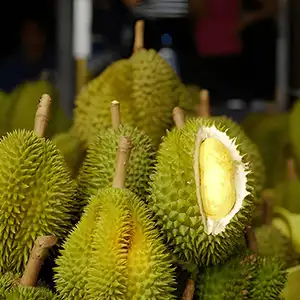
For durian processing, the belt grading system offers a straightforward, efficient way to sort fruits by weight. Here’s how it works: Durians move along a conveyor belt fitted with multiple "weighing stations." Each station has a mechanical tray linked to adjustable counterweights. As a durian enters a tray, its weight tips the balance—heavier fruits trigger larger counterweight shifts. The process is gentle, using padded surfaces to prevent bruising. This system relies on lever-and-fulcrum mechanics, avoiding complex electronics, making it robust for rugged farm environments.
For durian processing, the belt grading system offers a straightforward, efficient way to sort fruits by weight. Here’s how it works: Durians move along a conveyor belt fitted with multiple "weighing stations." Each station has a mechanical tray linked to adjustable counterweights. As a durian enters a tray, its weight tips the balance—heavier fruits trigger larger counterweight shifts. The process is gentle, using padded surfaces to prevent bruising. This system relies on lever-and-fulcrum mechanics, avoiding complex electronics, making it robust for rugged farm environments.

The belt grader’s biggest advantages are cost efficiency and ease of use. Unlike AI-driven optical sorters (which require cameras and software), this mechanical solution cuts upfront costs by 40–60% and needs minimal maintenance—ideal for small-scale operators. It’s also highly adaptable: farmers can adjust counterweights manually to match market standards . This makes it perfect for:
Small orchards & local cooperatives, starter processing units. Reducing labor by 50% compared to manual grading while ensuring export-compliant consistency. For most growers, the belt system remains the go-to balance of simplicity and reliability.