
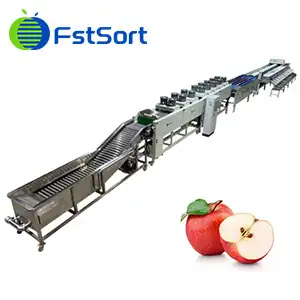
From orchard to export container — what does it take to get apples across borders while meeting the strict quality standards of international buyers?
The Global Apple Export Market
Every year, millions of tons of apples cross international borders. Major exporters like New Zealand, the United States, China, Chile, South Africa, and Italy ship apples to markets across Asia, North America, Europe, and the Middle East.
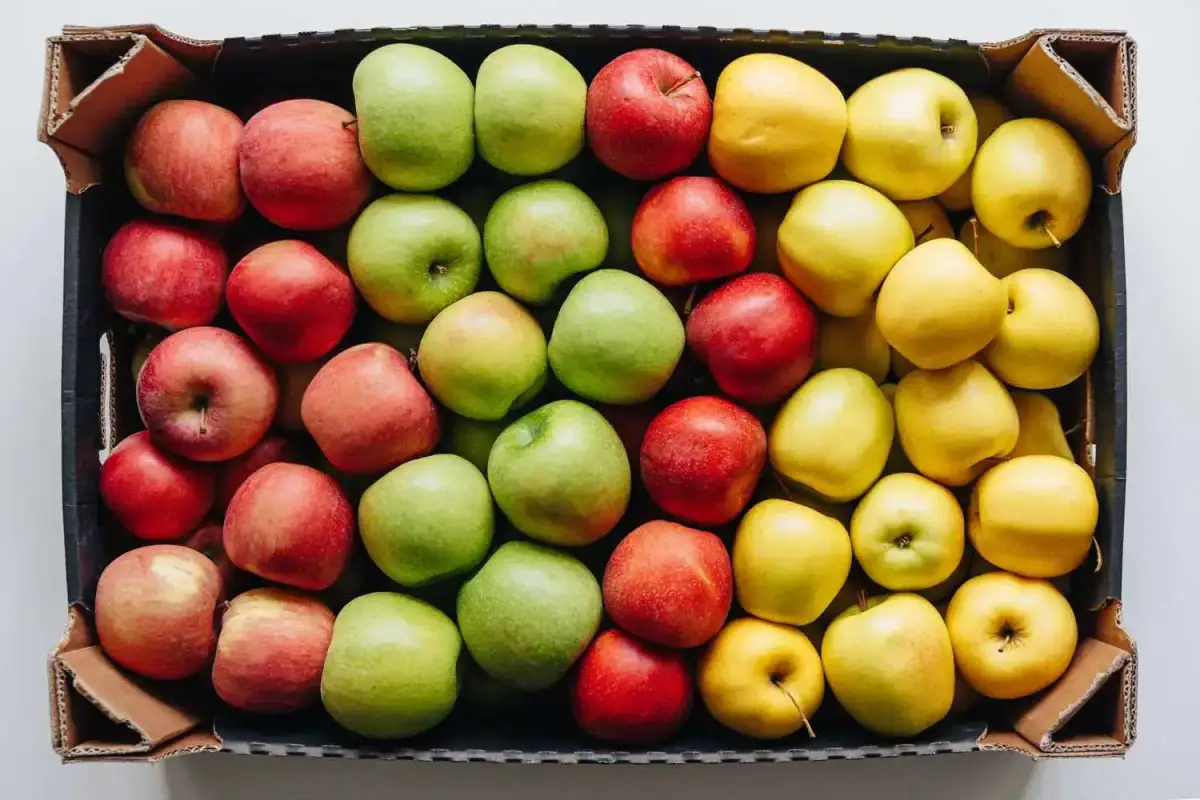
One recent example: T&G Global shipped the first export of the new season's New Zealand-grown Envy apples from Hawke's Bay. Throughout the season, about 2 million boxes of apples are expected to be exported to 60 countries across Asia, North America, the UK, and Europe.
But behind every successful export shipment lies a rigorous post-harvest process — one that ensures every apple meets the specifications of the destination market.
What Export Buyers Require
Export apples are held to much higher standards than domestic-grade fruit. The basic requirements are consistent across most markets:
· Complete and intact appearance — no cracks, no splits, no deformities
· No decay or deterioration — internal and external rot are strictly prohibited
· No insect pests or damage — any sign of pest activity results in rejection
· Size regulations — the European Union, for example, has specific size requirements for imported apples
Beyond these basics, different markets have different grade standards. A supermarket in London may require a different size and color profile than a wholesaler in Shanghai.
The takeaway: Export-grade apples need to be carefully picked, quickly graded after harvest, and able to withstand long-distance transportation and handling. This is where post-harvest processing becomes mission-critical.
The Export Apple Processing Line: Step by Step
For an apple to travel from orchard to export destination, it typically passes through a multi-stage processing line. Here's what that looks like in practice:
Step | Process | Purpose |
|---|---|---|
1. Washing | Bubble washing tank | Removes dirt, debris, and field residue from the fruit surface |
2. Drying | Polishing air dryer | Removes surface moisture to prepare apples for waxing |
3. Waxing | Wax application machine | Inhibits fruit respiration, reduces moisture loss, extends shelf life, and improves fruit smoothness and appearance |
4. Final drying | Drying machine | Sets the wax coating evenly across the fruit surface |
5. Grading | Electronic weight sorter | Sorts apples by weight with high precision — meeting export grade specifications |
6. Packing | Conveyor to packing station | Apples delivered to box filling or packing area |
The key difference between export-grade processing and domestic processing is precision. Export buyers don't accept mixed sizes or inconsistent weights. Every apple in a shipment must fall within a narrow specification range — and that requires equipment that can deliver consistent, accurate grading every time.
Why Precision Grading Matters for Exporters
For apple exporters, grading accuracy isn't just about quality — it's about economics.
· Rejected shipments are expensive — A container of apples that fails to meet grade specifications can be rejected at the destination port, resulting in massive losses
· Premium markets demand precision — Supermarkets in Europe, North America, and Asia pay premium prices for consistently graded fruit
· Brand reputation is on the line — One bad shipment can damage a grower's or exporter's reputation for years
Traditional mechanical graders — which rely on physical contact and mechanical sizing — often bruise apples or deliver inconsistent results. That's why many exporters are turning to electronic weight sorting.
Unlike traditional classifiers, electronic weight sorters can grade apples without physical damage. They measure each apple's weight individually, delivering ±2g accuracy that meets the tightest export specifications. The result: consistent grades, no bruising, and fewer rejected shipments.
A Smarter Way to Process Apples for Export
This is where Fstsort comes in.
Fstsort's apple sorting machines are designed with what we call “Apple-Standard Care” — the understanding that if a machine can handle delicate apples without bruising, it can handle any fruit. The system features water flume feeding (water acts as a natural cushion, eliminating bruising from dry dumping), soft-touch brushes that polish without micro-scratching, suspended weighing in deep ergonomic carriers, and low-drop discharge with soft landing surfaces.
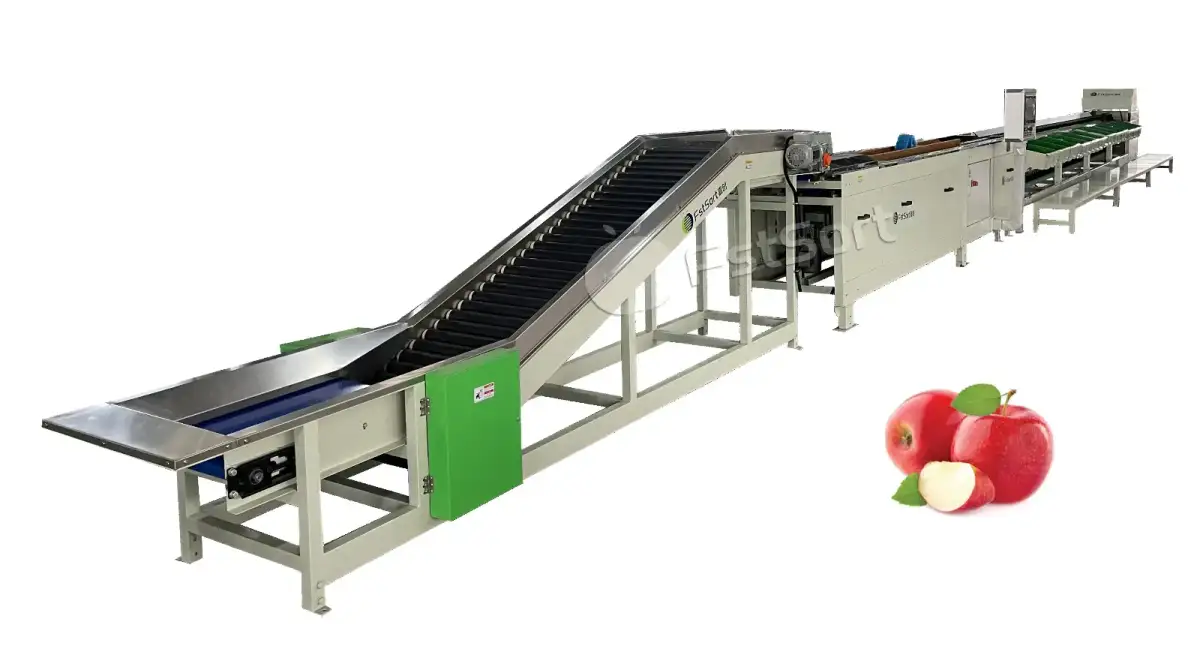
What it delivers for exporters:
· Export-grade precision — ±2g accuracy that meets the specifications of the world's most demanding markets
· Zero bruising — Apples leave the line in the same condition they entered, with minimized post-sorting browning
· Flexible configurations — From compact rotary sorters for small packers to high-capacity linear sorters (up to 100,000 pcs/h with 4 lanes) and optical sorters for color and defect detection
· Programmable standards — The system can be programmed to match any export grade standard — including custom specs for Gala, Fuji, Honeycrisp, Pink Lady, or local varieties
Fstsort has supplied apple sorting solutions to exporters across multiple markets, helping them meet the stringent requirements of buyers in Europe, North America, and Asia.
Want to see which sorter fits your export operation? Visit our apple sorting machines page for complete specifications and configuration options →
Is Your Apple Line Export-Ready?
Every apple that leaves your facility carries your reputation with it. In the export market, there's no room for error — and no substitute for precision.
The technology to process apples to export standards exists. The question is whether your line is ready for the journey.