
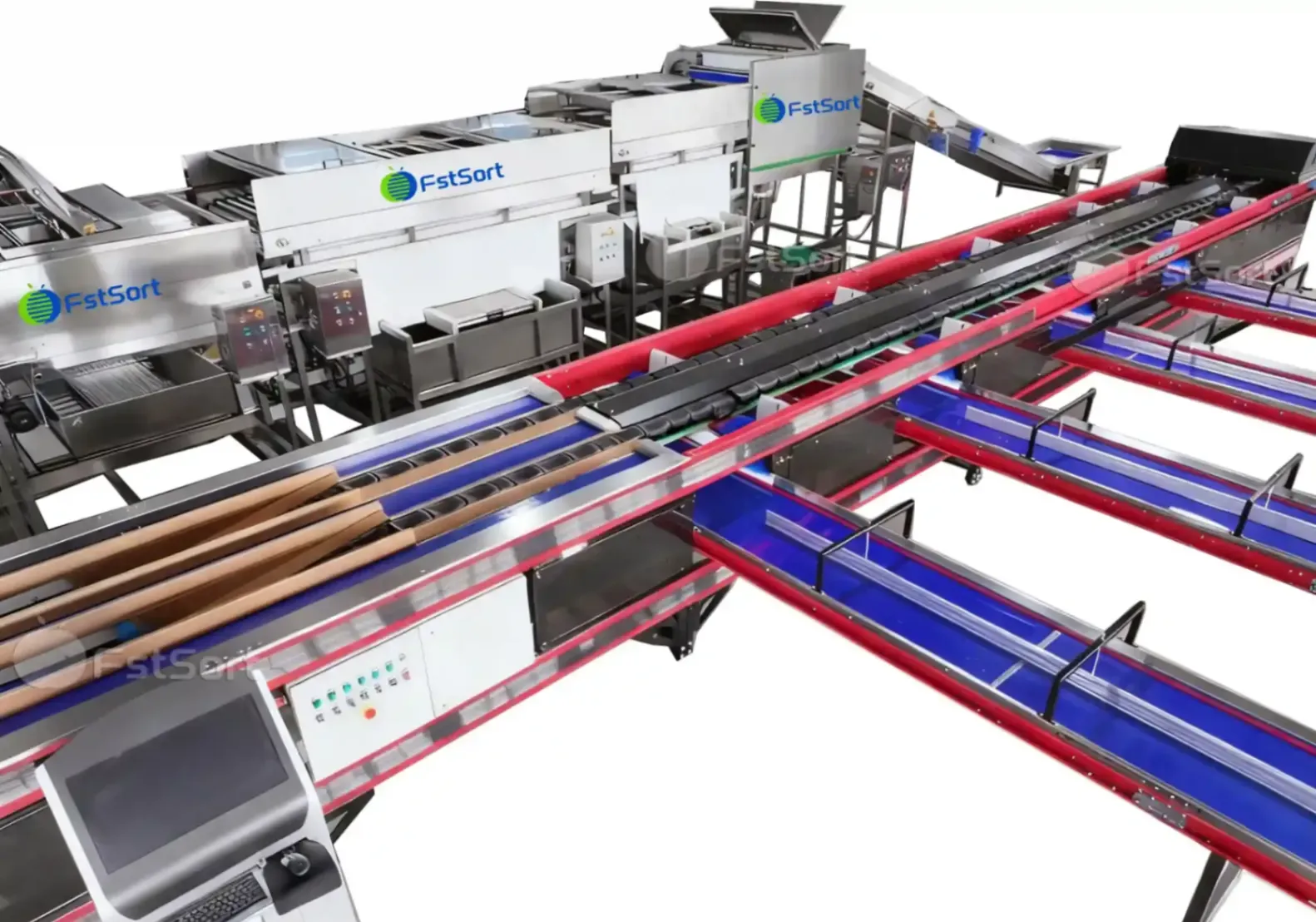
USDA/FSMA compliant, extended shelf life, pathogen control, fruit integrity preserved. US mango line: elevator, brush washer, hot water, disinfection machine (chlorinated water), roller washer, dryer, diverter, dual sorter.
Country / Region
America
Fruit / Material
Mango
Capacity
6~8t/h
Equipment Configuration
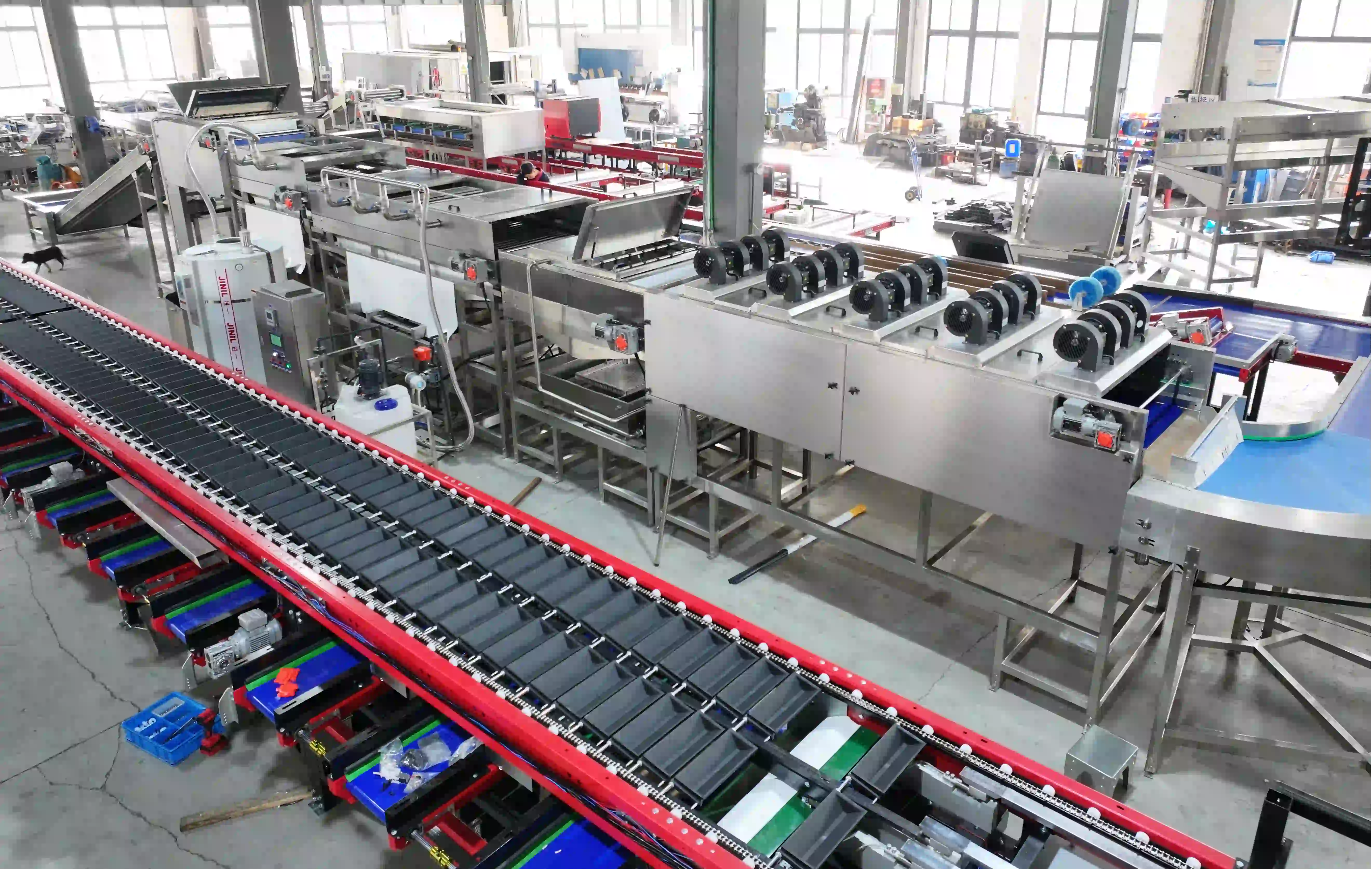
Elevator, brush washer, hot water treatment, disinfection device, roller washer, brush air dryer, turner, diverter machine, dual-channel sorter
The Challenge: Navigating US Import Regulations While Preserving Fruit Quality
Mango exporters targeting the US market face two major regulatory hurdles.
USDA APHIS hot water treatment requirements
To eliminate fruit fly risks, USDA APHIS mandates certified hot water treatment. Mangoes must be immersed at 115–116°F (46.1–46.5°C) for 65–110 minutes, depending on fruit weight and variety.
FDA FSMA chlorinated water mandates
The Food Safety Modernization Act requires maintaining specific free chlorine levels (typically 100–200 ppm, pH 6.5–7.5) in dump tanks and hydrocooling tanks. This prevents pathogens like Salmonella from entering the fruit through the stem scar.
Operational challenges on the ground
Beyond compliance, the client had to preserve fruit integrity through multi-stage processing, integrate complex treatment modules into a compact packing house layout, and ensure the system could be operated by local staff without specialized engineering support.
The Solution: A Fully Integrated, USDA-Ready Mango Processing Line
FstSort engineered a comprehensive processing line designed specifically to meet US import requirements. Each stage was carefully calibrated to balance food safety mandates with fruit quality preservation.
1. Lift Elevator
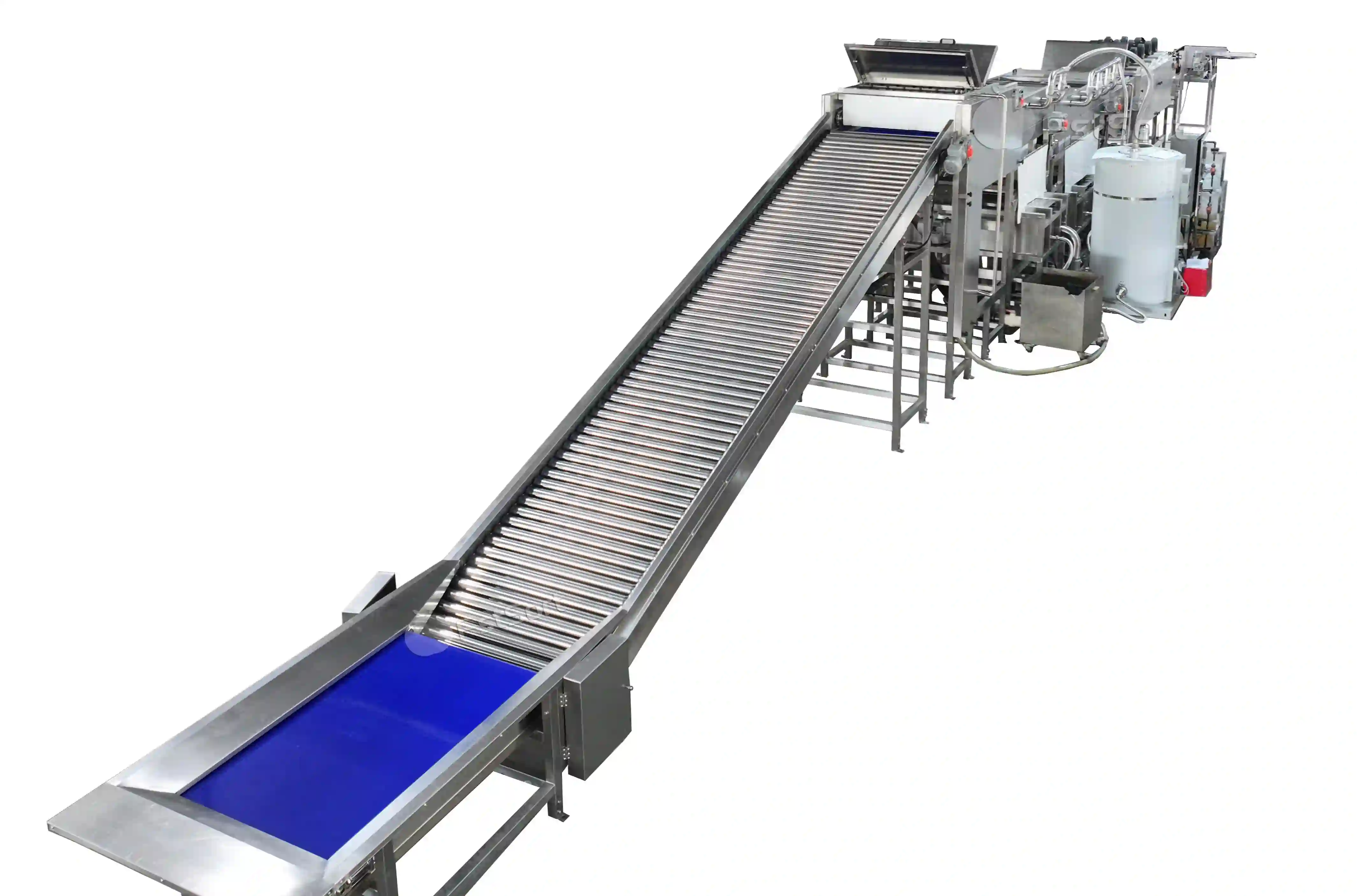
A variable-frequency-controlled incline elevator feeds mangoes into the line at a steady, adjustable rate. The independent electrical control box enables precise throughput management.
2. Brush Washer
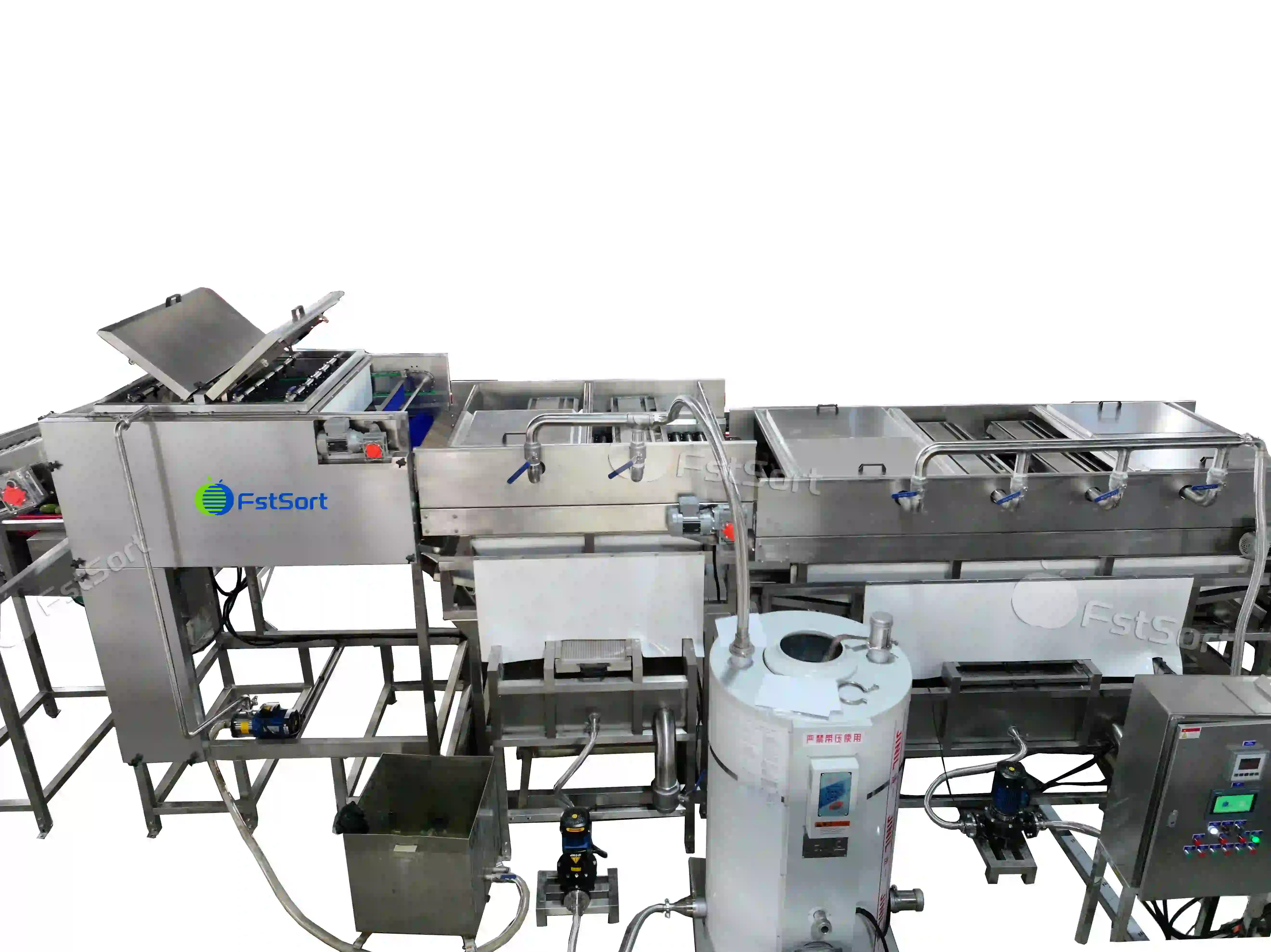
Four rows of spray pipes work in concert with soft brushes and fruit-rolling mechanisms. This removes sticky sap exuded from the stem area, surface debris, and helps suppress anthracnose development – a critical step given that latex burn is exacerbated by hot water treatment.
3. Hot Water Treatment System
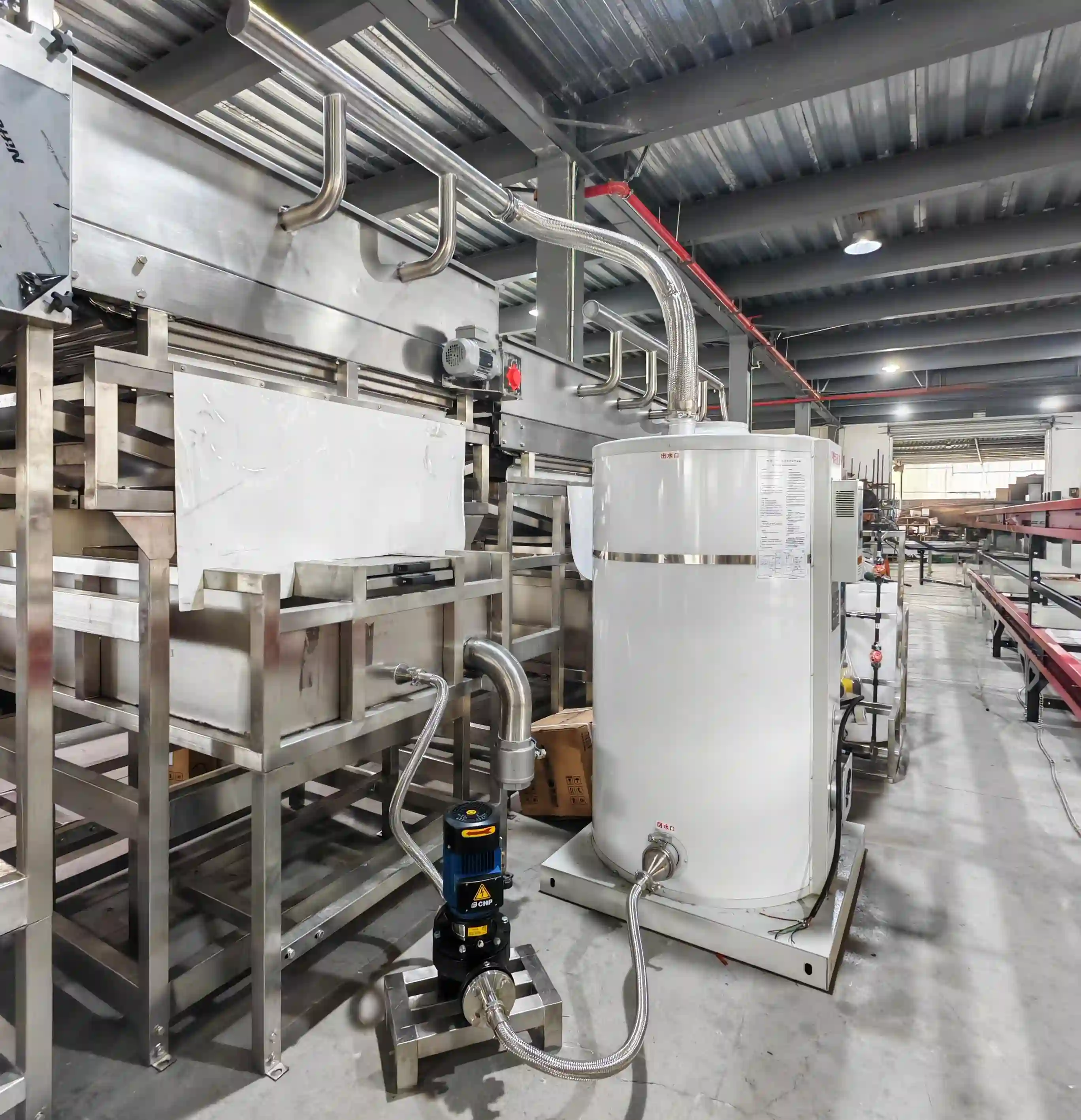
A boiler-driven system delivers two continuous waterfall curtains of hot water. The client selected the temperature range (60–85°C based on their specific requirements). This thermal process effectively kills surface fungal spores, dramatically extending post-harvest shelf life – the core reason for implementing heat treatment.
4. Disinfection Machine (Chlorinated Water)
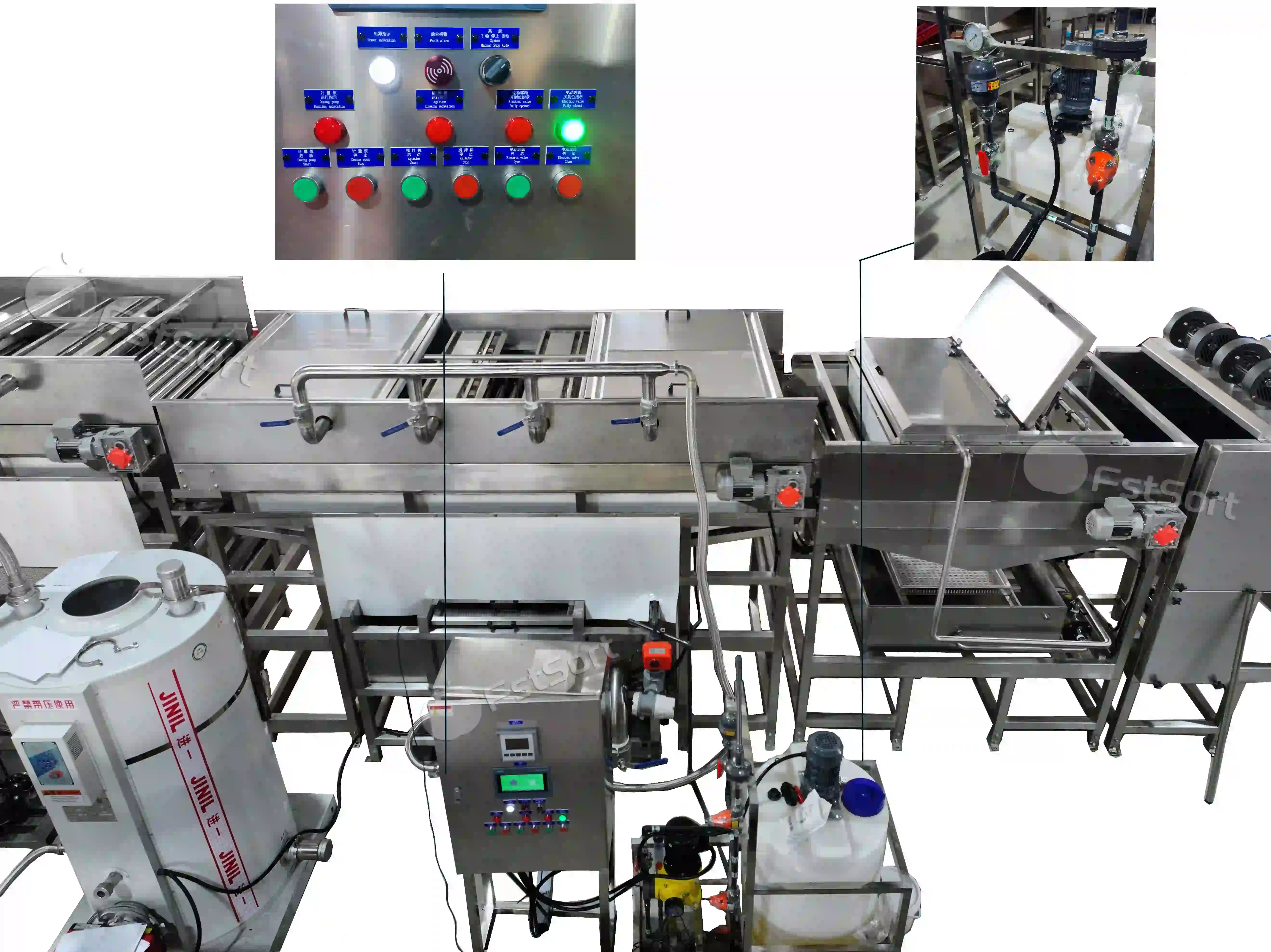
Four continuous water curtains paired with a recirculating tank and automatic chemical dosing system maintain 100–200 ppm free chlorine using chlorinated water. This FSMA-compliant setup eliminates bacterial pathogens and provides initial cooling after hot water treatment.
5. Roller Washer
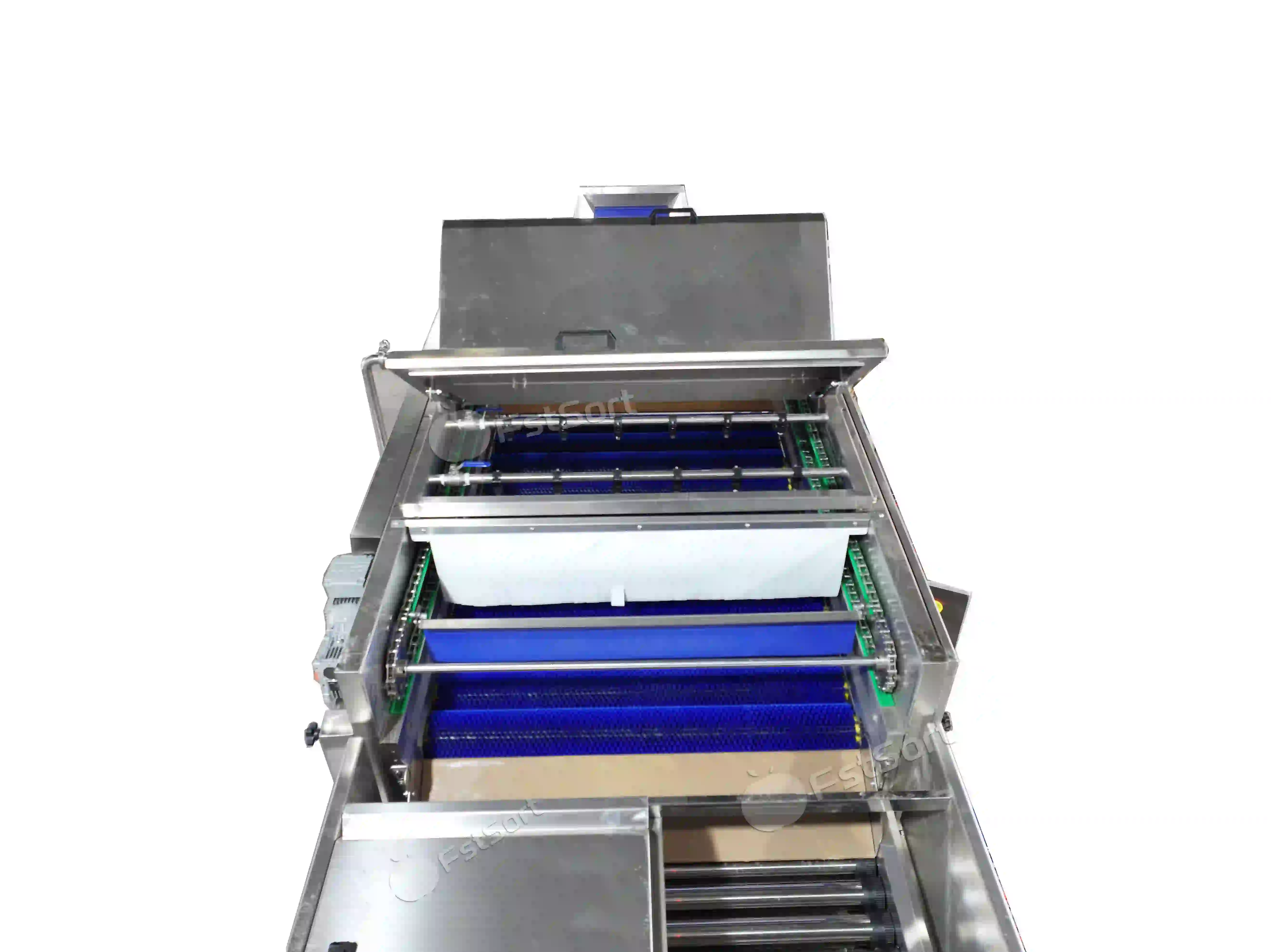
Four rows of recirculating sprays with an integrated water collection tank thoroughly rinse residual chlorine from mango surfaces – a critical food safety step before drying and packing.
6. Brush Air Dryer
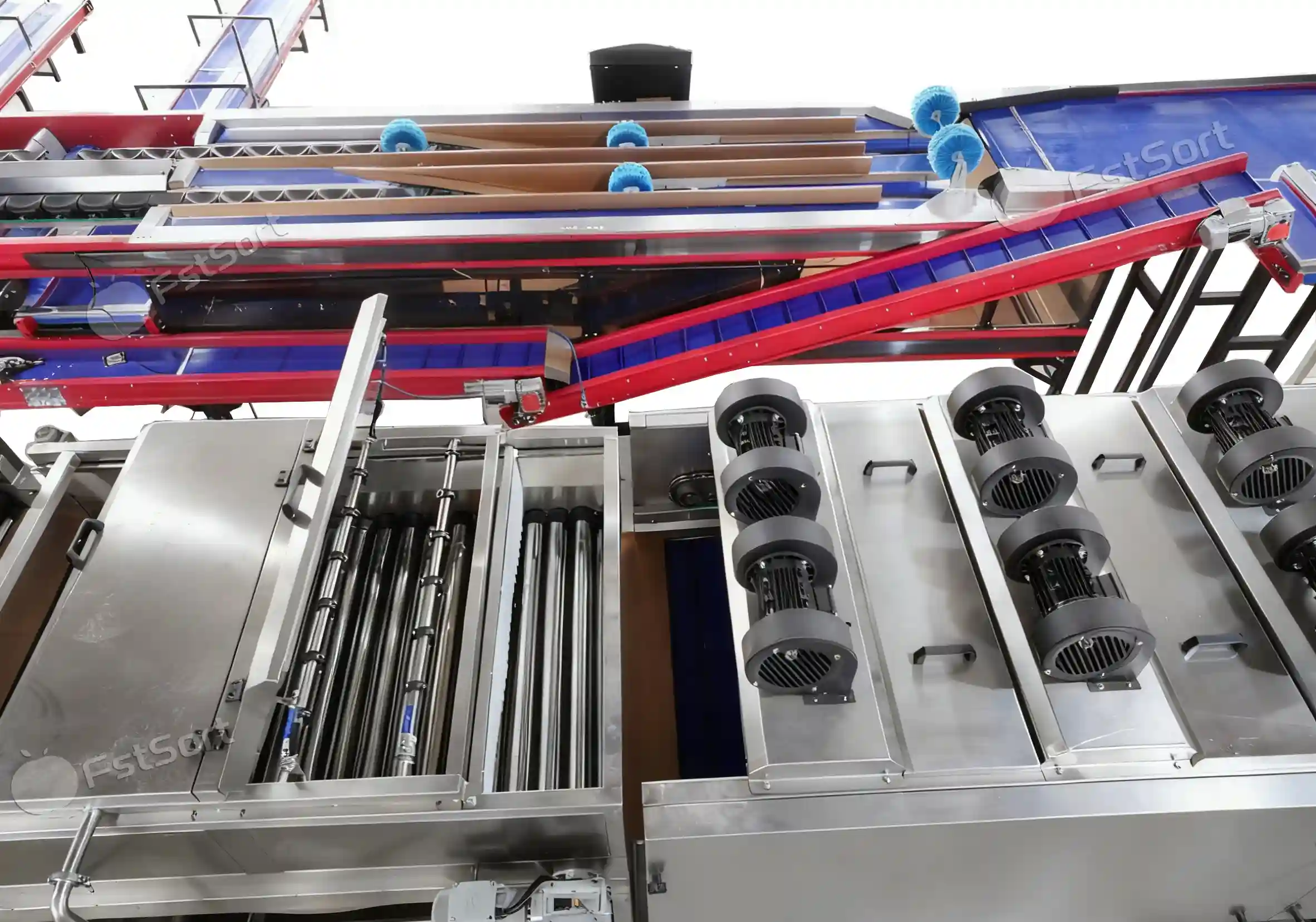
Multiple centrifugal fans combined with imported brushes and fruit-rolling mechanisms eliminate surface moisture, preventing mold growth once mangoes enter sealed cartons.
7. Turner & Diverter Machine
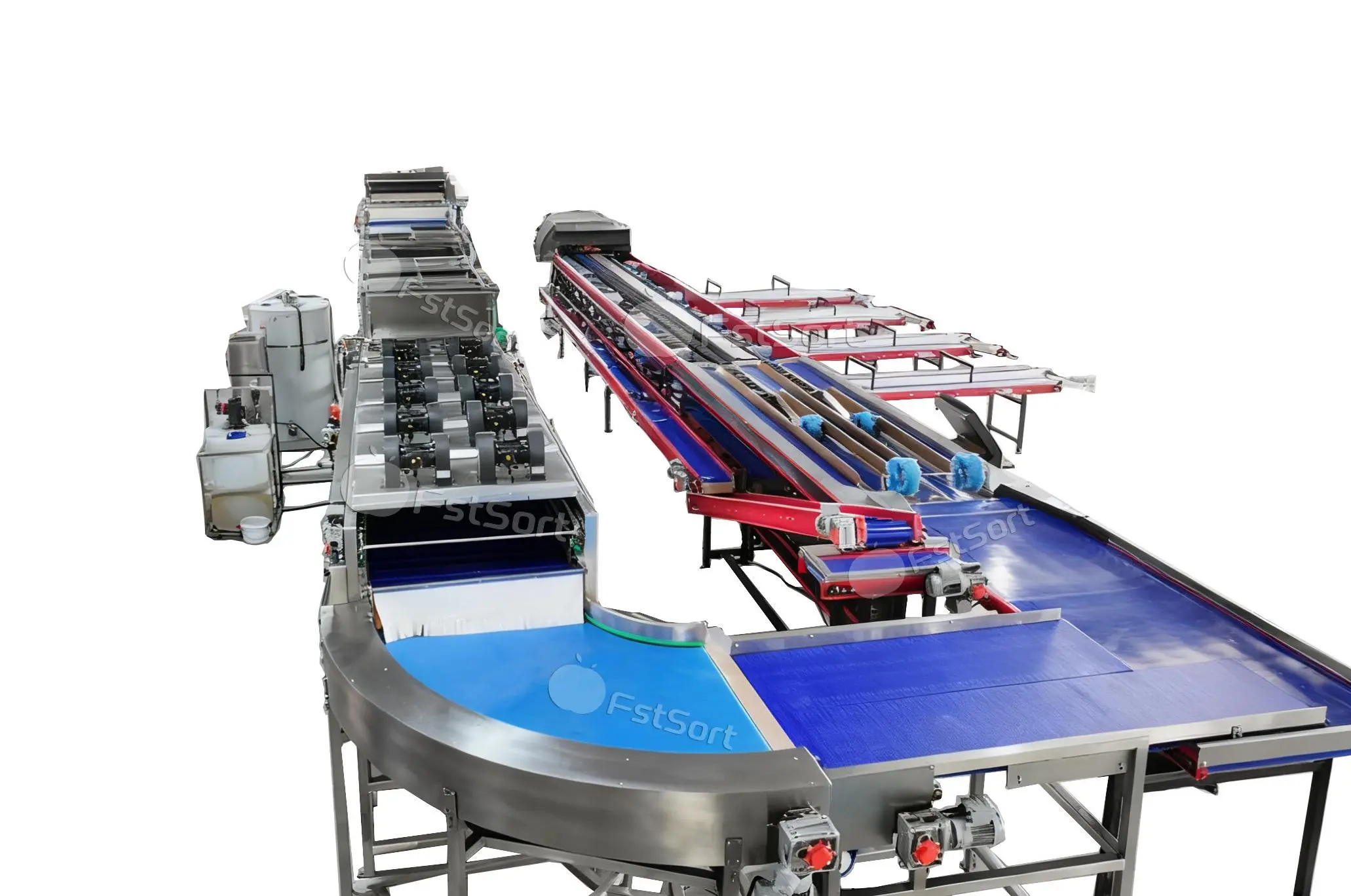
The turner accommodates L-shaped or U-shaped facility layouts, while the diverter machine evenly distributes mangoes onto dual tracks, reducing congestion and fruit stacking before precision weighing.
8. Dual-Channel Sorter
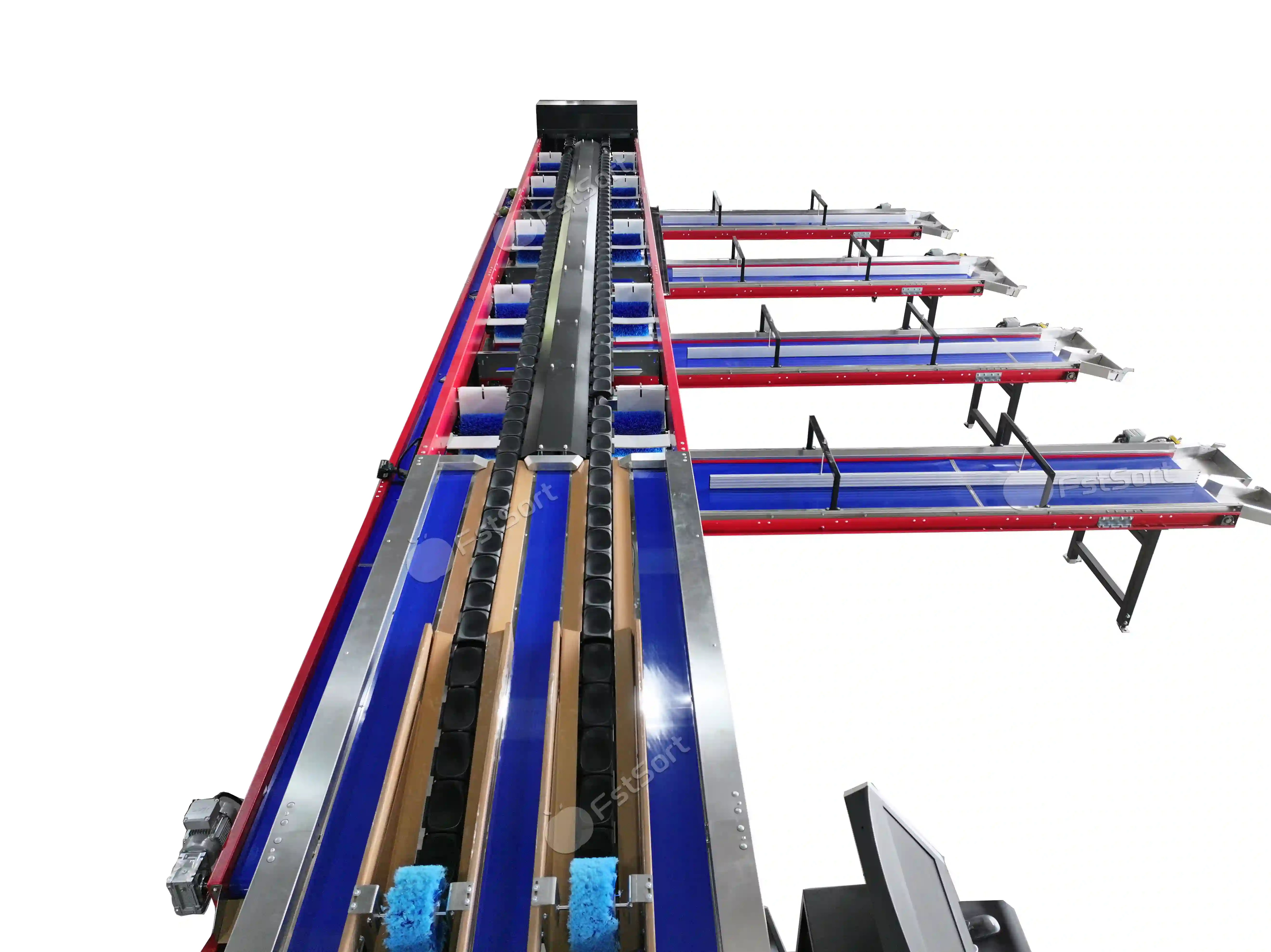
Featuring Scaime sensors, buffer design, and recirculation capability. Each discharge belt is divided into two sections to accommodate manual color sorting. The system perfectly aligns with international "Count Size" net-weight packing standards.
9. Control System
Centralized controls with variable frequency drives enable intuitive operation and real-time monitoring.
Operational Highlight: USDA-Ready Process Integration
The line incorporates all required elements for US market compliance – pre-treatment size grading (critical because smaller mangoes are more susceptible to heat injury), hot water treatment timing adjustable by fruit weight and variety, chlorinated disinfection at mandated free chlorine levels, and optional post-treatment hydrocooling with continuous monitoring.
Results & Business Impact
Following deployment, the system delivered measurable commercial benefits:
1. US Market Compliance Achieved - The line meets USDA APHIS hot water treatment certification requirements and FSMA chlorinated water mandates – eliminating phytosanitary barriers to US export.
2. Extended Shelf Life - Thermal treatment effectively kills surface fungal spores, significantly reducing post-harvest decay during long-haul ocean freight to US ports.
3. Pathogen Control - Maintained 100–200 ppm free chlorine through the disinfection machine prevents Salmonella and other pathogens from entering fruit through stem scars.
4. Fruit Integrity Preserved - Soft brush mechanisms, gentle fruit rolling, and buffer designs throughout the line minimize mechanical damage – critical given that heat-treated mangoes have reduced tolerance to additional handling stress.
5. Operational Simplicity - Centralized controls and intuitive design enable local staff to operate the line confidently without requiring on-site engineering support.
Scale Your Post-Harvest Infrastructure
We deliver customized, regulation-ready fruit processing lines for markets worldwide. Whether you need USDA-compliant mango treatment, FSMA-certified disinfection systems, or complete packing house solutions, contact our engineering team today for an optimized layout design and direct technical quote.
👉🏻If yo want to know more about the mango sorting machine, please visit our product page of mango precessing line