
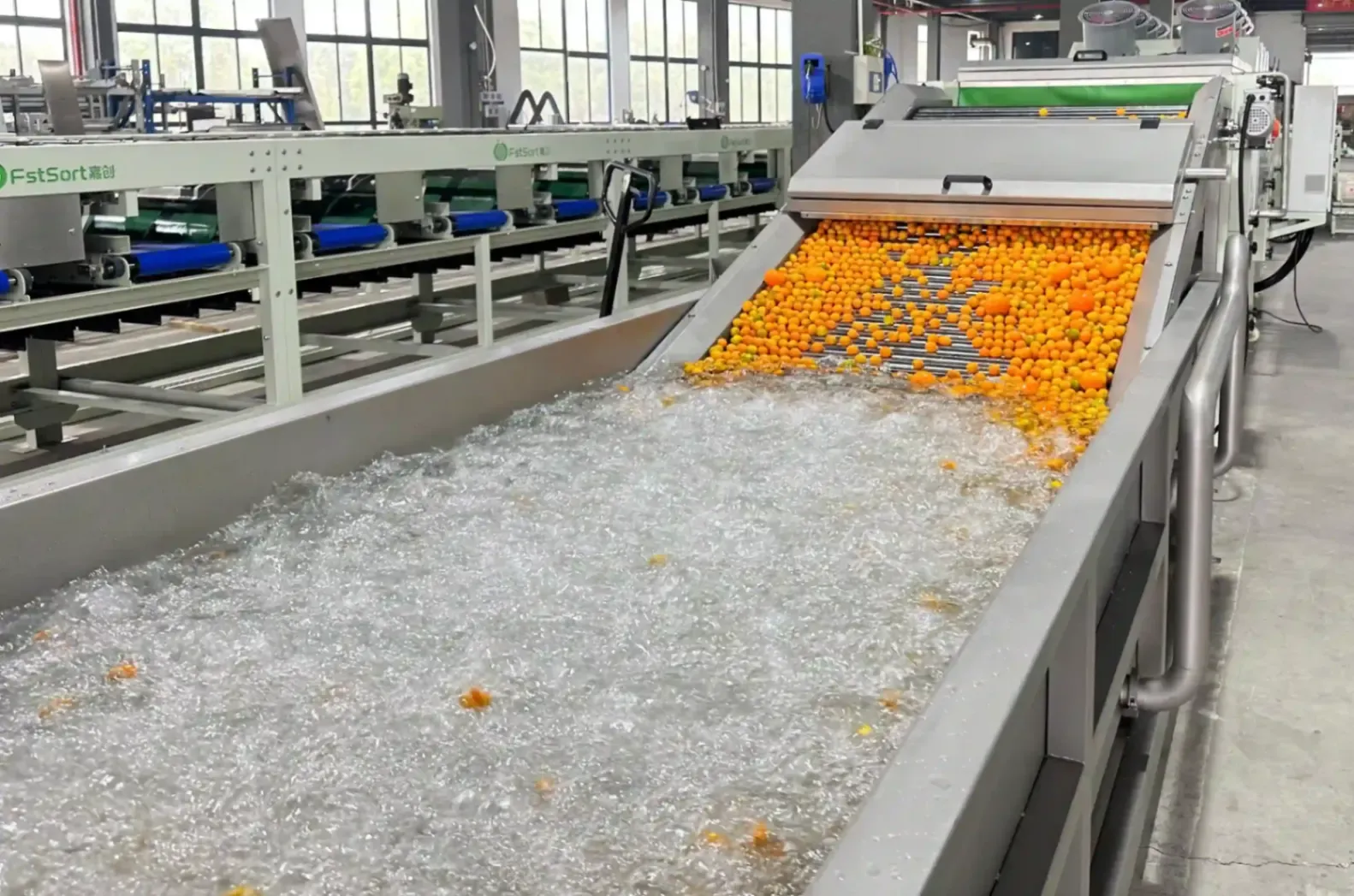
Fstsort bubble washer – configurable for any crop. Start with standard design for tomatoes, citrus, apples. Add rear spray for floating crops (bell peppers). Upgrade with filter screen + high-pressure sprays for nuts, or pneumatic lift + roller elevator for root crops. 3–5m length, 800–1200mm width. SUS304. Get quote.
Product Overview – Gentle, Versatile Bubble Washing
Our bubble washing machine uses turbulent water to gently yet effectively remove dirt, debris, and surface contaminants from a wide range of produce. The scrubbing action of rising bubbles loosens soil without damaging delicate fruits or vegetables.
Why choose our bubble washer?
✅ Gentle cleaning – no mechanical abrasion, preserves natural bloom
✅ Configurable design – from simple standard models to crop-specific solutions
✅ Custom sizes – 3–5m length, 800–1200mm inner width (other dimensions available)
How a Bubble Washer Works
Step | Process |
|---|---|
1 | Produce enters the water tank via elevator or conveyor |
2 | High-pressure bubble generator creates turbulent water |
3 | Rising bubbles lift and scrub dirt from all surfaces |
4 | Floating debris (leaves, stems) overflows into collection tray |
5 | Sinking debris (dirt, stones) settles in bottom discharge |
6 | Clean produce rises on elevator to next processing stage |
💡 The combination of bubble action and water flow ensures thorough cleaning without bruising or surface damage.
Design Configurations – From Simple to Specialized
Below are common design configurations in order of increasing complexity. Start with the standard model, then add features as needed for your specific crop.
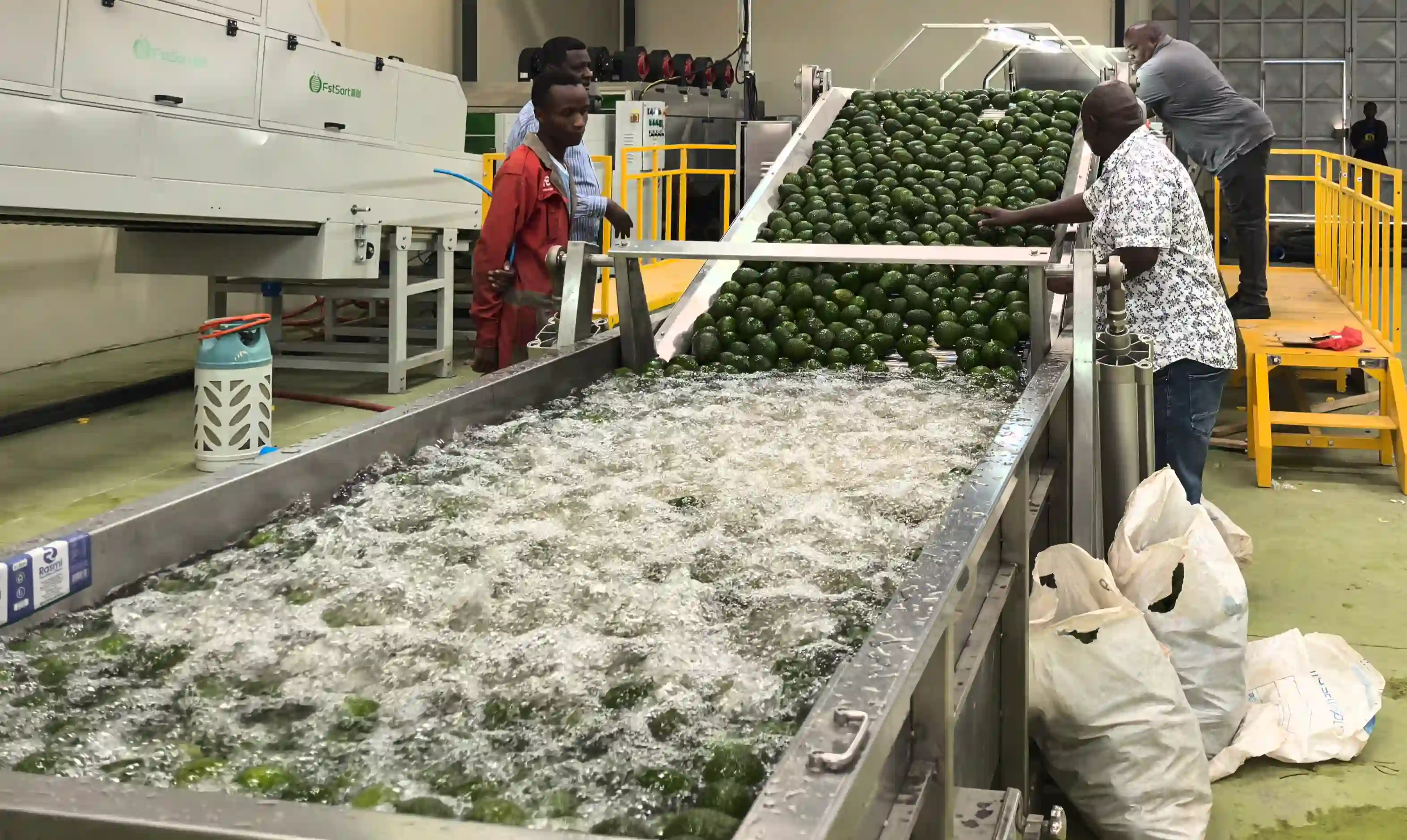
1. Standard Bubble Washer (For General Produce)
Best for: Tomatoes, citrus (oranges, lemons), avocadoes, apples, cucumbers, mangoes, dragon fruits, and other common fruits and vegetables with typical field dirt.
What‘s included:
Bubble tank
Standard roller or chain elevator
Overflow weir for floating debris
Bottom debris discharge
Feature | Benefit |
|---|---|
Simple, cost-effective | Lowest entry price |
Gentle bubble action | No damage to delicate fruit |
Enough for typical dirt | Handles most field soil |
✅ Perfect for packing houses that process a variety of general produce.
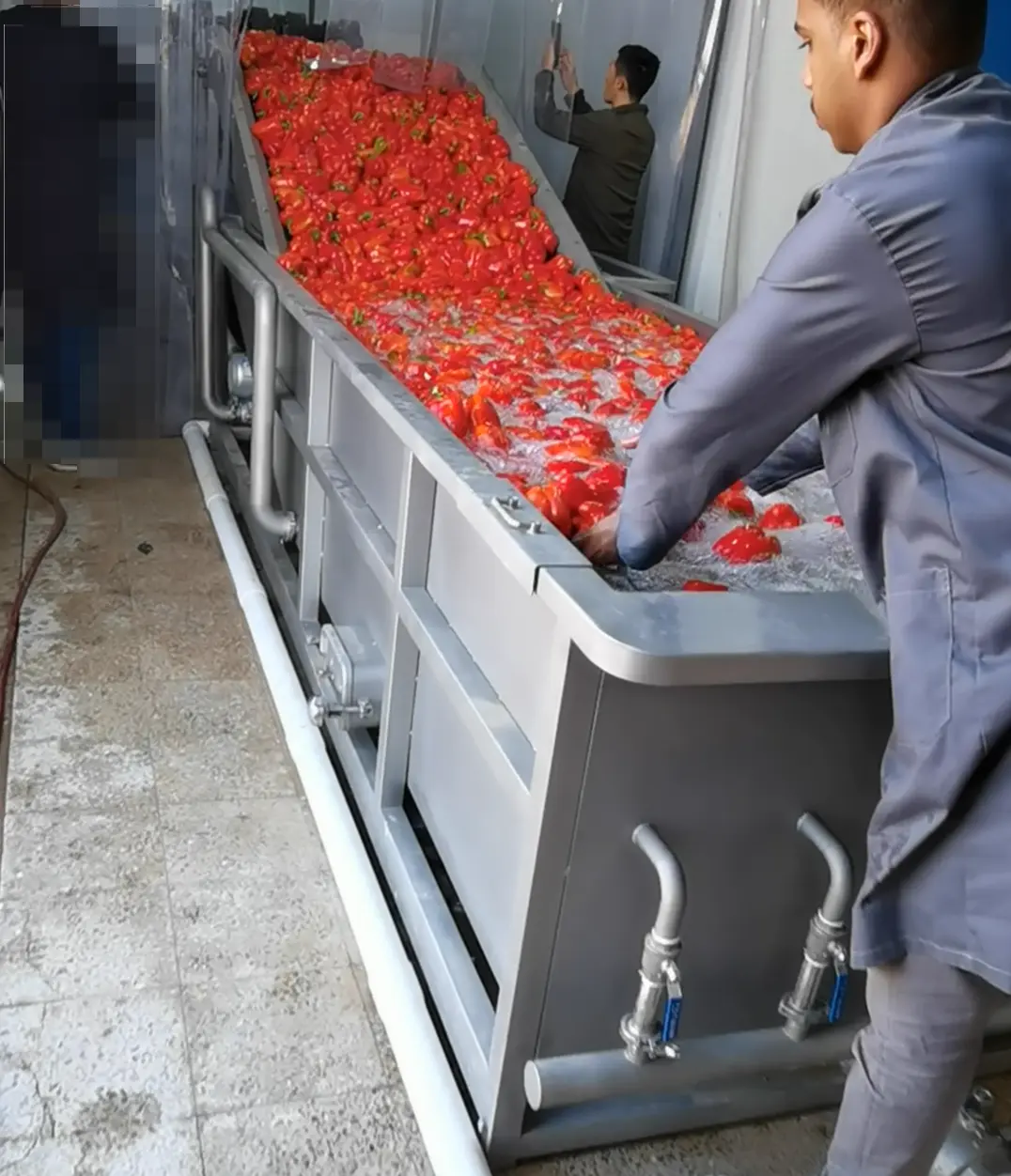
2. With Rear High-Pressure Spray (For Floating Crops)
Best for: Bell peppers, some squash varieties, eggplant, and any other produce that floats on water.
The problem: Floating crops will not move toward the elevator on their own – they just drift on the surface.
The solution: Add a rear high-pressure spray bar mounted at the infeed end, spraying water backward toward the elevator. The spray creates surface current that pushes floating crops forward.
Feature | Benefit |
|---|---|
Rear spray bar | Creates water flow that pushes floating crops to elevator |
Adjustable pressure | Gentle on delicate floating produce |
Simple but essential | Without this, floating crops never exit the tank |
💡 Without rear spray, floating crops simply drift on the surface and never reach the elevator. This simple addition solves the problem.
Typical crops: Bell peppers, squash, eggplant.
3. With Filter Screen + High-Pressure Sprays (For Small Nuts)
Best for: Chestnuts, macadamia nuts, almonds, walnuts, hazelnuts, and other small nuts.
The challenge: Nuts often arrive with broken shells, dust, and defective nuts. Good nuts sink; defective nuts and shell fragments float. These floating impurities must be removed without blocking the flow of good product.
💡 Physical principle: High-quality nuts are denser than water and sink to the bottom. Only defective nuts (insect-damaged, dried, moldy, broken) and shell fragments float on the surface. Our design uses this natural property for efficient separation.
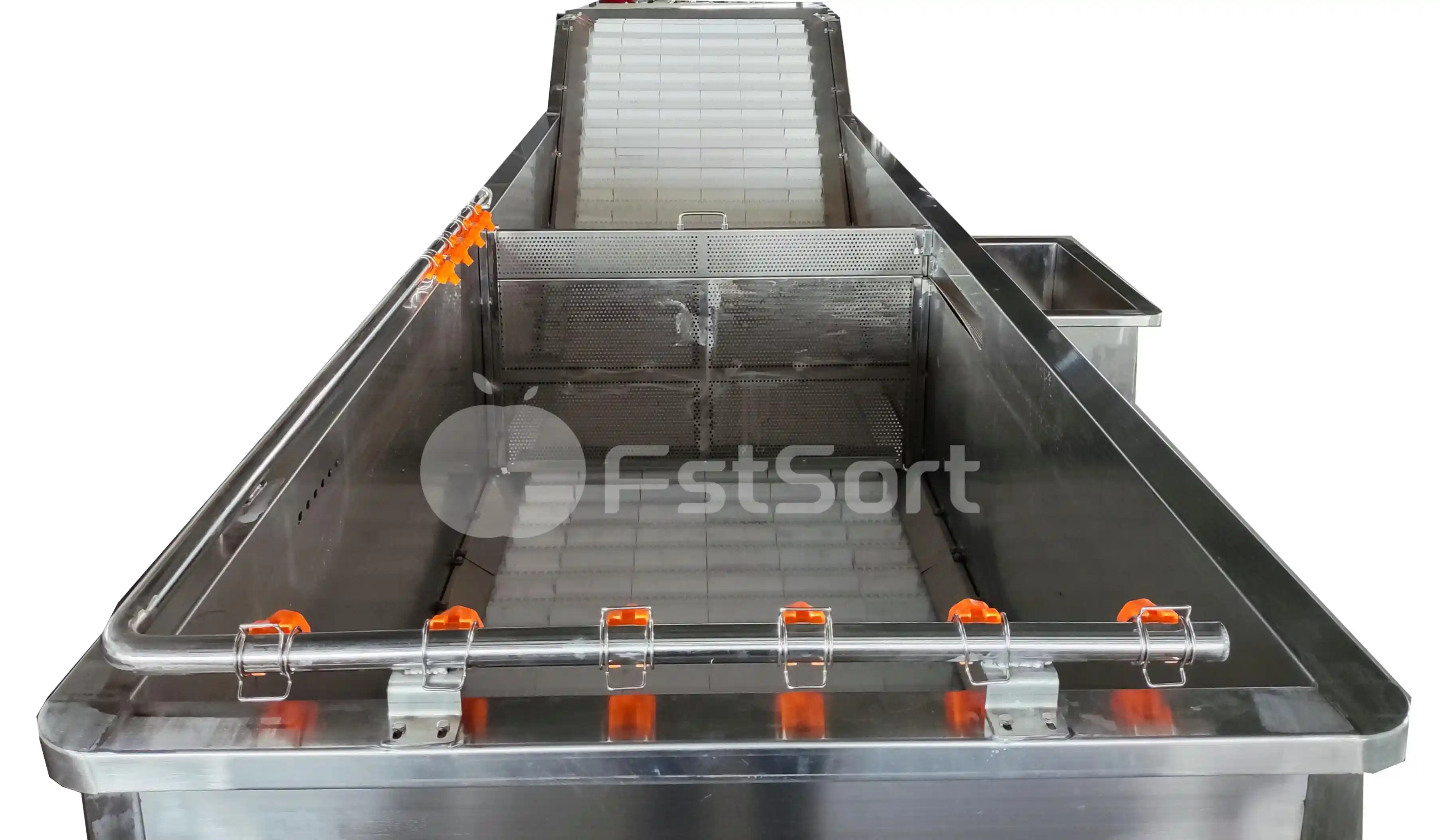
How the Nut Separation System Works
Component | Function |
|---|---|
Front spray bars | Push floating debris toward the side of the tank |
Intermediate filter screen | Installed with a gap above the elevator infeed – only floating debris is blocked; sinking nuts pass freely underneath |
Side spray bars | Work together with front sprays to direct floating debris into the side collection tank |
Side collection tank | Floating defective nuts and shells are trapped and collected for periodic removal |
White chain elevator | Smooth food-grade surface – no crevices for debris |
Complete Nut Debris Separation Flow
Step | Process | Explanation |
|---|---|---|
1 | Nuts are fed into the tank | Good nuts sink; defective nuts and shells float |
2 | Intermediate filter screen | Only floating debris is blocked – sinking nuts pass freely through the gap below and continue toward the elevator |
3 | Front spray bars + Side spray bars | Work together to push floating debris toward the side collection tank |
4 | Side collection tank | Floating defective nuts and shells are trapped and collected for periodic removal |
5 | Good nuts continue | Move forward through the elevator to the next processing stage |
✅ Result: Good nuts move downstream without obstruction. Defective nuts and shells are efficiently separated and removed. The main tank stays clean, reducing water change frequency.
Visual Representation
text
Nuts enter water tank
        │
        ├── Good nuts (sink) ──→ Pass freely under filter screen gap ──→ Move to elevator ──→ Next process
        │
        └── Defective nuts / shells (float) ──→ Blocked by filter screen
                                              │
                                              ├── Front spray pushes
                                              │
                                              └── Side spray pushes
                                                      │
                                                      ↓
                                              Collection in side tank
                                              (periodic removal)
💡 Only floating debris is blocked. Sinking nuts move freely under the screen and continue down the line.
Summary of Nut Configuration
Feature | Benefit |
|---|---|
Filter screen with gap | Only blocks floating debris – good nuts pass freely underneath |
Front spray bars | Push floating debris toward side of tank |
Side spray bars | Direct floating debris into side collection tank |
Side collection tank | Traps and collects floating shells and defective nuts |
White chain elevator | Smooth food-grade surface – no crevices for debris |
Result | Main tank stays clean – less frequent water changes |
For a complete post-washing solution, including drying, grading, and packing, check out our dedicated chestnut processing line 👉 Chestnut Washing, Drying & Grading Line →
4. With Roller Elevator + Pneumatic Lift (For Root Crops)
Best for: Potatoes, sweet potatoes, carrots, ginger, taro, and other root vegetables with heavy soil.
The problem: Traditional mesh chain elevators clog with mud and trap stems/leaves – very difficult to clean.
The solution:
Roller elevator – gaps between rollers allow mud, stones, and soil to fall through before entering the tank
Pneumatic lift system – the entire roller elevator and bottom frame lift hydraulically for thorough cleaning after use
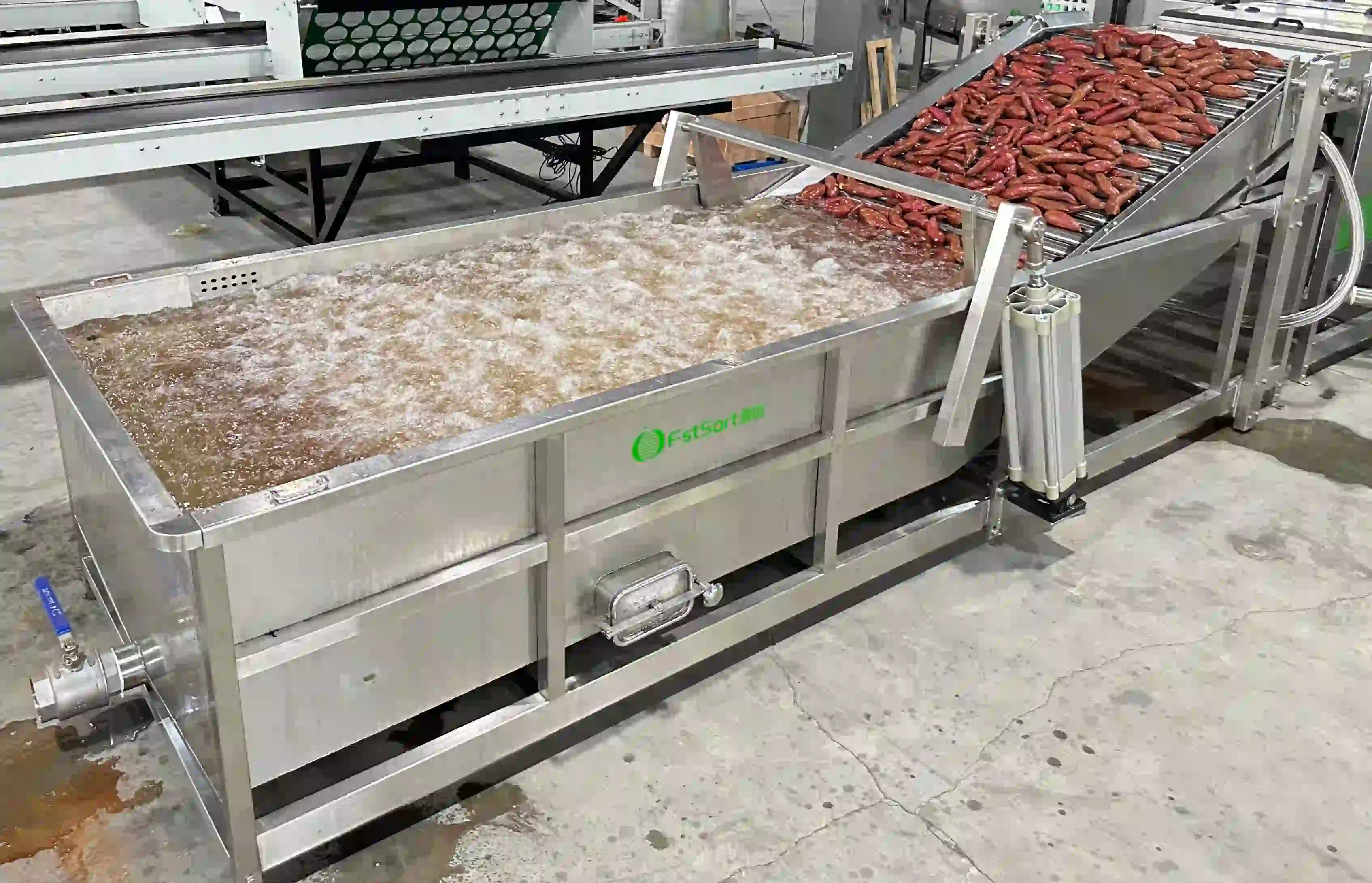
Feature | Benefit |
|---|---|
Roller elevator with gaps | Heavy soil drops through – less mud in tank |
Pneumatic lift | Tilt-up access for cleaning under rollers |
Easy to clean | Prevents buildup of sticky mud and debris |
💡 Solves the problem of clogged mesh elevators. Mud and debris fall through rollers – no trapping. Pneumatic lift gives full access for cleaning.
Typical crops: Potatoes, sweet potatoes, carrots, ginger, taro.
Technical Specifications (Customizable)
Parameter | Standard Range | Customizable |
|---|---|---|
Tank length | 3m – 5m | ✅ Yes |
Inner width | 800mm – 1200mm | ✅ Yes |
Overall dimensions | Depends on elevator type and crop type | ✅ Yes |
Material | SUS304 stainless steel (food-grade) | ✅ Yes |
Elevator type | Roller / Chain / White chain (food-grade) | ✅ Yes |
Pneumatic lift | Included on root crop configuration | Optional on others |
Filter screen | Included on nut configuration | Optional |
Rear high-pressure spray | Required for floating crops | Optional on others |
Side spray bars | Included on nut configuration | Optional |
Power supply | 380V / 50Hz (220V, 415V, 60Hz available) | ✅ Yes |
Capacity reference:
3m tank: approximately 2–4 tons/hour (depends on produce)
4m tank: approximately 3–6 tons/hour
5m tank: approximately 4–8 tons/hour
💡 All specifications are customizable. Contact us with your crop type and desired throughput for a tailored design.
Key Features (All Configurations)
Feature | Benefit |
|---|---|
SUS304 stainless steel | Food-grade, rust-proof, easy to clean |
High-pressure bubble generator | Gentle but powerful cleaning action |
Overflow weir for floating debris | Leaves and stems automatically removed |
Bottom debris discharge | Dirt and stones settle – easy flush-out |
Variable water flow control | Adjustable for different crop types |
Easy integration | Connects to existing grading or drying lines |
Complete Line Integration
The bubble washer integrates seamlessly with:
Inspection table – manual sorting after washing
Roller grader / weight sorter / optical sorter – size or defect grading
Air dryer / hot air dryer – removes surface moisture
Automatic packing line – clamshell or punnet filling
👉 See our [fruit and vegetable grading solutions →] for complete line configurations.
Why Choose Fstsort Bubble Washer?
Advantage | Detail |
|---|---|
Simple to advanced | Start with standard model; add features as needed |
Floating crop solution | Rear spray pushes produce to elevator – essential for bell peppers |
Nut-specific design | Filter screen removes broken shells; side/rear sprays clean crevices |
Root crop design | Roller elevator + pneumatic lift – no clogging, easy cleaning |
Gentle on all produce | Bubble action only – no mechanical damage |
Customizable dimensions | 3–5m length, 800–1200mm width – or custom |
SUS304 food-grade | Hygienic, durable, corrosion-resistant |
Frequently Asked Questions
Key questions customers usually ask before choosing this solution.
Why use a roller elevator with pneumatic lift for root crops?+
Mesh chains clog with mud – very difficult to clean. Roller elevators allow mud to fall through, and the pneumatic lift tilts the unit for full access underneath.
Can I add a drying section after washing?+
Yes. We offer air dryers and hot air dryers that integrate directly after the bubble washer.
How does the nut configuration work?+
💡 Physical principle: High-quality nuts (chestnuts, almonds, etc.) are denser than water and sink. Defective nuts and shell fragments float. Step-by-step process: Step What happens 1 Nuts enter the water tank – good nuts sink, bad nuts/shells float 2 Filter screen with gap – installed above the elevator infeed. Only floating debris is blocked; sinking nuts pass freely underneath and continue toward the elevator 3 Front spray bars push floating debris sideways 4 Side spray bars work together with front sprays to direct floating debris into the side collection tank 5 Side collection tank traps floating defective nuts and shells for periodic removal 6 Good nuts continue through the elevator to the next processing stage ✅ Result: Good nuts move downstream without obstruction. Defective nuts and shells are efficiently separated and removed. The main tank stays clean, reducing water change frequency.
How do I get a price?+
Contact us with your crop type, desired capacity, and space dimensions. We will recommend the right configuration and provide a custom quote within 48 hours.